
At first, replacing 10 windows might seem simple to budget for, but that changes once you start getting quotes from real companies, not online calculators. One contractor might charge $8,000, while another could ask for $14,000. Both prices can make sense depending on what’s included.
But most homeowners aren’t just asking how much 10 replacement windows cost. They want to know what affects that estimate and how to lower it. Window style, frame material, glass type, installation method, trim work, access, and the condition of your current windows can all change the total by thousands.
A simple vinyl window retrofit job usually stays on the lower end of the price range. But if you need full-frame replacements, custom sizes, upgraded glass, or premium materials, your budget can skyrocket.
So today, the Smart Constructs team is breaking down the budget you need to allocate for a standard 10-unit replacement project and what’s typically included in the quote.
What’s the Cost to Replace 10 Home Windows?
A typical 10-window replacement project usually starts around $7,000 to $12,000. If you use basic vinyl windows and retrofit installation, it might cost less. But if you choose full-frame installation, premium materials, bigger windows, or special custom-shaped models, the total can go well over $15,000.
According to Ecoline, a Canadian manufactured windows company, here are the typical price ranges for residential projects across NA:
| 10-window project | Typical scope | Approx. cost per window | Estimated total |
| Basic replacement | Standard vinyl windows, simple insert installation | $500 – $800 | $5,000 – $8,000 |
| Standard project | Vinyl or composite, mixed styles, professional installation | $700 – $1,100 | $7,000 – $11,000 |
| Full-frame project | Existing frames removed, new sealing and finish work | $1,000 – $1,600 | $10,000 – $16,000 |
| Premium/custom project | Fiberglass, wood-clad, oversized or specialty units | $1,500 – $2,500+ | $15,000 – $25,000+ |
However, these price ranges are approximate only, since every project is different. For example, replacing 10 standard double-hung windows is a very different job than replacing six double-hung windows, two casements, a large picture window, and a bay window.
The size of your windows and the condition of the existing frames also matter. If your frames are in good shape, the contractor has less work to do. But if they need to remove the whole window, fix damaged areas, add flashing, or replace trim, the job gets more complicated and expensive.
That’s why the advertised “price per window” can be misleading. What really matters is the installed cost for the specific mix of windows and work your home needs.
What Actually Makes Up a 10-Window Replacement Quote?
The window itself is just one part of the total cost. A full quote should also cover removal, installation labor, insulation, flashing, trim work, disposal, and any repairs found after removing the old windows. A typical 10-window estimate might look something like this:
| Cost component | Example amount |
| Window units | $6,500 |
| Removal and installation labor | $2,500 |
| Flashing, insulation, and sealants | $600 |
| Interior and exterior trim | $900 |
| Disposal | $300 |
| Access or equipment | $300 |
| Repair allowance | $900 |
| Total | $12,000 |
But the breakdown can change a lot depending on your house and how the windows are installed. For example, retrofit installations often need little finishing work since most of the existing frame and trim stay in place. Full-frame projects, by contrast, might mean removing interior trim, rebuilding parts of the opening, adding new flashing, and fixing up the exterior finishes.
Homeowners should also check if the quote covers smaller items that can add up when you’re replacing 10 windows:
- removal and disposal of the old windows
- spray foam, backer rod, sealants, and flashing materials
- exterior aluminum capping or new trim
- interior casing or drywall repairs
- second-story access or scaffolding
- permit fees where required
- repairs to damaged sills, framing, or sheathing
This is why two quotes for similar windows can end up very different. One contractor might include finishing and repair costs in the estimate, while another lists them as extra work. If you look only at the total price without checking these details, the lower quote might seem better than it is.
How Window Style Changes the Cost of Replacing 10 Windows
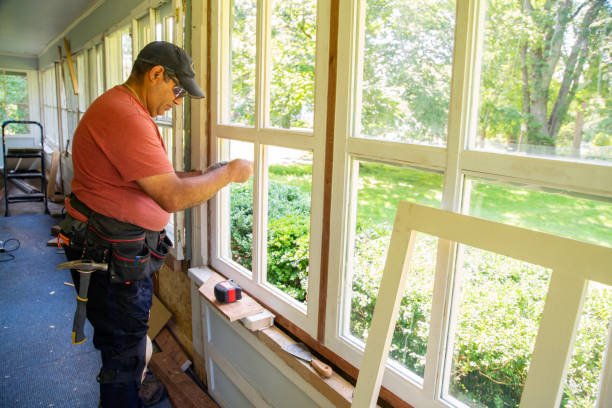
Window style can change the total cost even with the same frame material and glass. According to this research, a residential window costs about $517 on average: standard double-hung windows cost about $800 each, awning windows cost $500 to $950, and bay windows can range from about $1,500 to over $2,850, depending on size and installation difficulty.
This matters for a 10-window project because most homes have a mix of different window types, not just 10 of the same kind.
A straightforward project might include:
- 6 double-hung windows in bedrooms and common areas
- 2 picture windows where ventilation is unnecessary
- 2 sliding windows in smaller rooms
A more expensive configuration could combine:
- 5 double-hung windows
- 3 casement windows
- 1 oversized picture window
- 1 bay or bow window
Several design details push individual units higher:
- Operating hardware: Casement and awning windows require hinges, locks, and crank mechanisms.
- Size: Oversized glass requires more material and may need additional installers to handle.
- Projection: Bay and bow windows extend beyond the exterior wall and may require structural support, roofing, insulation, and additional finish work.
- Custom dimensions: Nonstandard openings reduce the availability of lower-priced stock configurations.
- Specialty shapes: Arches, circles, and other architectural units are typically custom fabricated.
Fixed picture windows are often structurally simpler because they have no operating hardware, although a very large picture window can still cost more than a smaller operable unit.
When budgeting, list the style and size of each window before you estimate the project. Just one bay window or a few large casements can affect your 10-window budget much more than the total number of windows.
Vinyl vs. Fiberglass vs. Wood: How Much Does Frame Material Matter?
Frame material can change your window replacement budget by several thousand dollars before even glass upgrades or installation complexity enter the equation. Current pricing data puts installed vinyl windows around $200 to $800 each, wood around $300 to $1,500, fiberglass around $300 to $2,000, and composite windows around $500 to $2,500.
These price ranges overlap because material is just one factor. Size, style, brand, glass type, finish, and installation can make a vinyl window cost more than a basic fiberglass or wood one.
Vinyl
Usually the most budget-friendly mainstream choice. A straightforward 10-window project might fall around $6,000 to $10,000 installed. Vinyl requires little maintenance and offers a wide selection of styles, which helps explain why vinyl with double-pane glass is the best-value combination in 2026 among homeowners.
Fiberglass
Expect a higher upfront price, often around $10,000 to $17,000 for 10 windows depending on the product line. Fiberglass has greater dimensional stability than vinyl and can support slimmer profiles in some designs.
Wood
A 10-window project can easily reach $12,000 to $20,000 or more. Wood is often chosen for traditional interiors, historic homes, or architectural projects where the frame’s appearance matters. It also requires more maintenance.
Composite Or Wood-Clad
These products generally sit toward the upper end of the market. Composite frames aim to combine dimensional stability with low maintenance, while wood-clad windows preserve a wood interior behind a more weather-resistant exterior.
For a whole-house project, think about maintenance, climate, your home’s style, and how long you plan to stay before choosing a material. Paying more for a certain frame only makes sense if you really need the extra durability, look, or performance.
Retrofit vs. Full-Frame Replacement: Why Installation Method Changes the Budget
How the windows are installed can affect the price just as much as the material. The main difference is how much of the old window assembly you keep or replace.
| Pocket replacement | Full-frame replacement | |
| Existing frame stays | Yes | No |
| Interior trim disturbance | Usually limited | Often required |
| Exterior finishing | Usually limited | More extensive |
| Installation time | Lower | Higher |
| Access to hidden damage | Limited | Much better |
| Best suited for | Sound, square existing frames | Damaged, leaking, warped, or deteriorated frames |
| Typical cost | Lower | 15% higher |
An insert installation, also called a pocket replacement, fits the new window inside the existing frame. It works best when that frame is still square, structurally sound, and free from rot or water damage. Because less material is removed, the job is usually faster and requires less trim and finish work. One trade-off is a small reduction in visible glass area because the new unit sits inside the old frame.
The Full-Frame Replacements Of Windows
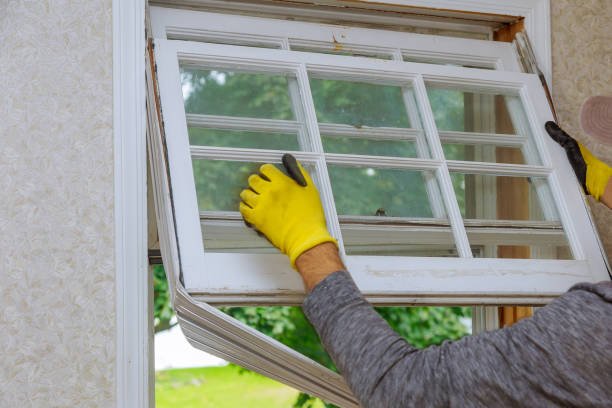
A full-frame replacement removes the existing window assembly down to the rough opening. That exposes the surrounding structure, giving the installer access to deteriorated framing, failed insulation, or water damage that an insert installation may leave concealed. It also allows more flexibility if the homeowner wants to change the window size, style, or configuration.
The higher price reflects the extra work. Full-frame projects often need more demolition, flashing, insulation, exterior repairs, and new interior trim. For 10 windows, these extra steps can add several thousand dollars.
That is also why two quotes for the same house can differ widely. The lower price might be for 10 insert replacements, while the higher one could include full frame removal and rebuilding. Before comparing totals, make sure you know which installation method each contractor is quoting.
Which Window Upgrades Increase the Price Most?
After you pick the window type and installation method, custom upgrades can add hundreds of dollars per window. Even small changes to the glass, finish, or hardware can raise the total cost by thousands across 10 windows. The most common price increases come from:
Triple-Pane Glass
Adds another layer of glass and insulating space. It is most useful in colder climates, homes with comfort problems near windows, or projects targeting lower U-factors. On average, triple-pane glass adds around 15% to the total cost.
Low-E Coatings
These coatings help control heat transfer and solar gain. The right configuration depends on climate and orientation, not simply on choosing the most expensive glass package.
Laminated Or Security Glass
Uses an interlayer between panes and can improve impact resistance, security, UV protection, and sound control. Adds 15% – 20% to your total estimate.
Custom Colors and Finishes
Dark exterior colors, specialty laminates, painted fiberglass, or wood interiors can carry a noticeable premium, bumping your quote by around 20% – 25% on average.
Grilles And Upgraded Hardware
Decorative grids, premium locks, handles, and hardware finishes usually have a smaller per-window impact but add up across 10 units, adding 5% – 7% per window.
Oversized Or Specialty Glass
Large picture windows, arches, circles, and other custom shapes often require special fabrication and more labor to handle. The price for uniquely shaped windows varies widely, but on average it’s at least 30% higher than standard window styles.
Is Replacing 10 Windows at Once Cheaper Than Replacing Them in Stages?
Replacing all 10 windows at once can lower the average cost because some expenses only happen once. The contractor can measure, order, deliver, set up, and clean up everything in a single job.
Not every contractor offers a formal volume discount, but bigger projects often make it easier to get package pricing than doing the work in smaller batches.
It can still make sense to do the work in stages if only a few windows need replacing, your budget is tight, or you’re renovating room by room. Keep in mind, though, that if you spread the project over several years, the manufacturer might change frame styles, hardware, colors, or grilles, making it harder to match everything later.
If your home has several windows of the same age, replacing them all at once is often easier for budgeting, scheduling, and keeping a consistent look.
Wrapping Up: What Should You Budget for 10 Replacement Windows?
For most homeowners, the best way to budget for 10 replacement windows is to start with the expected installed price and add extra for upgrades or special work. A simple vinyl project usually stays on the low end, but full-frame installation, premium materials, custom sizes, and upgraded glass can quickly raise the total.
Before you sign a contract, look at what each quote includes, not just the final price. Window style, frame condition, installation method, glass type, and finishing work usually explain most of the price difference. A detailed breakdown is much more helpful than a low advertised price per window.
FAQs
How much should I budget to replace 10 windows?
A practical 2026 planning budget is roughly $7,000 to $12,000 for a standard project using common replacement windows. Full-frame installation, fiberglass or wood frames, custom sizes, premium glazing, or complex openings can push the total to $15,000 to $25,000 or more.
Is $1,000 per window expensive?
Not necessarily. An installed price of around $1,000 per window can be reasonable depending on the window type, frame material, glass package, installation method, and finishing work. Compare what is included in the quote before judging whether the per-window price is high or low.
How long does it take to replace 10 windows?
Ten windows can often be installed in one day, especially when the existing frames are in good condition. Full-frame replacements, difficult access, custom units, trim restoration, or repairs around the openings can extend the project to two days or longer.
Does replacing all 10 windows at once save money?
It can. Completing the project at once may reduce repeated delivery, setup, disposal, and crew mobilization costs. Some contractors also offer better package pricing for larger projects. Savings vary, though, so homeowners should compare the total installed scope rather than assume a bulk discount applies.
