
A new asphalt driveway costs about 7–13 per square foot in 2026, replacement runs 8–15, and an overlay runs 3–7. A 600 sq ft two-car driveway costs roughly 4,200–7,800 new. Diesel and asphalt input costs jumped this year, so quotes may land toward the high end.
Key Numbers
- New: 7–13 per sq ft · Replacement: 8–15 · Overlay: 3–7
- Average total project: about $5,350 (typical 3,154–7,556)
- Lifespan: about 20 on average
- Typical asphalt thickness: at least 2 in over a compacted base
Here is the full picture, starting with the numbers.
Asphalt Driveway Cost at a Glance
A new asphalt driveway costs 7–13 per sq ft in 2026, replacement costs 8–15 and an overlay costs 3–7. A typical 600 sq ft two-car driveway runs 4,200–7,800 new. The ranges are wide because they multiply the low and high rates across the full size; real quotes usually land in between.
The most widely cited national cost data comes from Angi, which bases its figures on surveys of more than 10,000 customers plus Bureau of Labor Statistics research. NerdWallet publishes the same ranges. Angi last updated its install guide in April 2026, so treat these as published baselines and read the 2026 price-pressure section below before you budget.
| Driveway | Typical size | New ($7–13) | Replace ($8–15) | Overlay ($3–7) |
| 1-car | 12×25 = 300 sq ft | 2,100–3,900 | 2,400–4,500 | 900–2,100 |
| 2-car | 20×30 = 600 sq ft | 4,200–7,800 | 4,800–9,000 | 1,800–4,200 |
| 3-car | 30×30 = 900 sq ft | 6,300–11,700 | 7,200–13,500 | 2,700–6,300 |
| Long rural | 12×200 = 2,400 sq ft | 16,800–31,200 | 19,200–36,000 | 7,200–16,800 |
Why are the ranges so wide?
Each figure multiplies the low rate by the size, and the high rate by the size. Real quotes usually land inside the range, not at both ends. Small jobs also cost more per square foot, because some contractors set minimum charges of $2,000 or more.
These are baselines. This year, something pushed against them.
Why Are Asphalt Driveway Prices Under Pressure in 2026?
Asphalt prices are under pressure in 2026 because diesel hit record highs, the liquid asphalt producer price index is up 16.4% year over year, and construction wages are up about 5%. Published per-sq-ft ranges may lag these changes, so quotes can land toward the high end.
Hot-mix asphalt is made from aggregate and liquid asphalt binder, heated at a plant and hauled by truck. Fuel runs through almost every step.
- Diesel hit records. EIA data show the weekly national average peaked above $6.50 per gallon in late September 2026, versus about $3.75 a year earlier. Check EIA’s weekly diesel page for the current figure.
- Asphalt input costs rose. The Associated General Contractors of America reported the liquid asphalt producer price index up 16.4% year over year, with refinery-level diesel up 77.8% (August 2025 to August 2026). You can look up the series on the BLS producer price index pages.
- Labor costs are climbing. Construction hourly earnings are up about 5% year over year.
- Binder is not the whole story. Some state binder indexes have been roughly flat since July. West Virginia listed $694 per ton on October 1, and Idaho $687.50 per ton on October 5. The pressure is arriving through hauling, plant, and equipment costs rather than binder alone.
What you can do is ask smart questions:
- How long is this quote valid?
- Does the contract include a fuel surcharge clause?
Neither of those costs anything to ask.
To judge whether a quote is fair, you need to know what is inside the price.
What’s Inside the Price: Materials, Labor, Base and Thickness?
A driveway cost covers site prep, grading, base, asphalt, compaction and labor. For a new install, Angi puts materials at 2–6 per sq ft and labor at 5–7. Residential asphalt should be at least 2 inches compacted, which is about 7.2 tons for a 600 sq ft driveway.
A driveway is a layered system. The asphalt you see is the top layer; the compacted base underneath carries most of the load. A typical job has six steps: site prep and removal, grading and drainage, base installation, asphalt placement, compaction and curing.
Materials vs. labor
Angi splits new-install pricing into 2–6 per sq ft for materials and 5–7 for labor.
Add-ons that change the total.
A gravel base layer adds about 0.50–1 per sq ft. Grading adds 5–10 per sq ft when the ground needs reshaping.
Thickness
Residential guidance generally calls for at least 2 inches of compacted asphalt over a properly compacted base. Heavier vehicles such as delivery trucks or RVs call for 3–4 inches. The exact number depends on the traffic and soil.
Confirm the compacted thickness in writing, and cross-check with the Asphalt Institute or your state transportation department.
Tonnage in plain English. Tons needed = square feet × inches of thickness × 0.00604 (based on a typical mix density of 145 lb per cubic foot).
- 600 sq ft at 2 in ≈ 7.2 tons
- 600 sq ft at 3 in ≈ 10.9 tons
This matches Angi’s rule of thumb of about 80 sq ft of coverage per ton at 2 inches. Ask each contractor how many tons they plan to use; wildly different numbers for the same driveway are a warning sign.
The same driveway still costs different amounts in different places.
What Makes Your Driveway Cost Different: Size, Site, Region and Season?
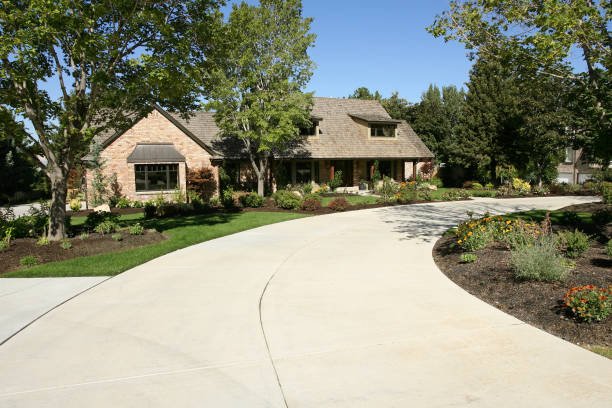
Your price depends on driveway size, thickness, soil and drainage, old-driveway removal, shape and slope, climate and region. Curves or slopes add about 15–30%, harsh climates 10–20%, and high-wage metros cost more. Compare three local quotes with identical specs.
| Factor | Effect on Driveway Cost |
| Size | Larger drives lower the per-sq-ft rate; very small jobs hit minimum charges |
| Thickness and base | Thicker asphalt and deeper base cost more |
| Soil and drainage | Soft or wet soil needs more excavation and stone |
| Removal | Existing driveway removal: about 1–2 per sq ft (Angi) |
| Shape and slope | Curves or slopes add about 15–30% |
| Climate | Harsh climates add about 10–20%; winter work may save 10–15% where available |
| Add-ons | Features such as edging or aprons often add 500–2,000 each |
Effect of region on asphalt driveway cost
Labor, hauling distance, plant availability, and local wages all change asphalt driveway construction cost. Dense, high-wage metros such as New York cost more; low-cost markets cost less.
For a guide to how geography changes construction budgets, read Smart Constructs’ US regional estimating guide.
Effect of season on asphalt driveway cost
Asphalt crews are busiest in warm months. Spring and fall shoulder seasons can mean easier scheduling, but cold or wet weather limits when asphalt can be placed and compacted properly. Ask your project manager which temperature and moisture limits they follow.
Next, decide which type of job you actually need.
New Vs. Overlay Vs. Replacement: Which Do You Need?
Choose a new install when no driveway exists (7–13 per sq ft), replacement when the base has failed (8–15), and an overlay when the base is sound and only the surface is worn (3–7). Overlays usually save about 20–30% versus asphalt driveway replacement.
| Project | What it involves | Best when | Cost per sq ft |
| New installation | Excavate, build base, pave | No driveway yet, or gravel/dirt | 7–13 |
| Replacement | Remove old asphalt, rebuild | Base failure, widespread alligator cracking | 8–15 |
| Overlay (resurfacing) | New layer over existing pavement | Base is sound, surface is worn | 3–7 |
An overlay usually saves about 20–30% versus replacement, but only if the pavement underneath is structurally sound. Contractors repair holes and soft spots first and apply a tack coat so the layers bond. Skip those steps and old cracks can “print through” the new surface within a season or two. Paving asphalt over concrete runs about 3–7 per sq ft, but the new layer may crack along the old joints.
Once you know the job type, choose the kind of asphalt.
Types of Asphalt Driveways and What They Cost
Standard hot mix is the most common type at $7–$13 per sq ft. Recycled asphalt runs about $6.20–$8.75, porous $3–$8, stamped or colored $10–$17, and heated driveways $12–$25. Get a local quote for specialty types.
| Type | Cost per sq ft | Notes |
| Standard hot mix | $7–$13 | Most common residential choice |
| Recycled (RAP) | $6.20–$8.75 | Lower cost; may need more upkeep |
| Porous | $3–$8 | Handles stormwater; needs specialist installers |
| Stamped or colored | $10–$17 | Decorative finish |
| Heated | $12–$25 | Snow melt system adds cost |
Hot, warm and cold mix
- Hot mix is produced at high temperature and is the standard for new driveways.
- Warm mix is made at lower temperatures, which can cut fuel use and extend the paving season.
- Cold mix needs no heating and is used for patching potholes, not for paving a whole driveway.
Let’s Get In Touch
Plan your driveway budget with confidence – get accurate construction cost estimates from Smart Constructs. Contact us now!
The type is chosen. Now, what will the quote leave out?
Asphalt Driveway Extra Costs Quotes Often Leave Out
Quotes often leave out permits (fees vary by city), grading ($5–$10 per sq ft), clearing ($1,500–$5,100), old-driveway removal ($1–$2 per sq ft), drainage, edging and utility locating. Ask for each as a separate line item.
Permits and Rules
Many towns regulate driveway width, setbacks, drainage and where a driveway meets the public road. HOAs may add their own material or color rules. Permit fees vary widely by city, so check your municipality’s fee schedule before budgeting.
Grading, drainage and clearing
Grading runs about 5–10 per sq ft, and clearing a wooded lot can cost 1,500–5,100. Poor drainage is the number-one reason asphalt fails early. If your lot slopes toward the house or the ground is soft, pay for a proper grading and drainage plan. Civil drafting services can produce site grading and drainage plans that contractors and permit offices can work from.
Other items to confirm
Removal and disposal of old material (1–2 per sq ft), edging, utility locating and a property-line check before work starts.
Planning a bigger or commercial paving job?Smart Constructs prepares accurate construction estimates and quantity takeoffs for contractors across the US. |
With the full price in view, is asphalt even the right material?
Asphalt Vs. Concrete, Gravel, Pavers and Tar-and-Chip
Asphalt ($7–$13 per sq ft) and concrete ($6–$15) cost about the same upfront, but concrete lasts longer (30–40 years vs. about 20). Per year, concrete can come out cheaper: about $103–$257 vs. $210–$390 for a 600 sq ft driveway, before maintenance.
| Material | Installed cost per sq ft | Typical lifespan |
| Asphalt | $7–$13 | 15–30 years |
| Concrete | $6–$15 | 30–40 years |
| Gravel | $1–$3 | Needs regular regrading |
| Tar and chip | $2–$5 | 7–10 years |
| Pavers | $10–$30 | Long, but highest upfront cost |
For a deeper look at concrete pricing, see Smart Constructs’ guide to concrete slab costs in 2026.
Cost per year (600 sq ft, installation only). Divide installed cost by lifespan:
| Material | Assumptions | Cost per year |
| Asphalt | 4,200–7,800 ÷ 20 years | 210–390 |
| Concrete | 3,600–9,000 ÷ 35 years | 103–257 |
| Tar and chip | 1,200–3,000 ÷ 8.5 years | 141–353 |
These figures exclude maintenance, repairs and removal. If the lifespans hold, concrete can win on cost per year, while asphalt offers easier repairs and cold-climate flexibility. Pick based on your budget horizon, climate and how long you plan to stay.
If asphalt wins for you, here is how to compare bids.
How to Read and Compare Paving Quotes?
Get at least three written quotes with identical specs and compare compacted thickness, base depth, estimated tons, drainage, removal, permits, warranty, price validity, and fuel surcharge terms. A bid far below the rest, or one that skips compacted thickness, is a red flag.
Get at least three written quotes with identical specs. Each should state:
- Compacted asphalt thickness and base depth
- Mix type and estimated tons
- What happens at soft spots
- Drainage and slope plan
- Removal and disposal
- Tack coat (for overlays)
- Edges and aprons
- Who pulls permits
- Start and finish dates
- Warranty terms
- Quote validity and any fuel surcharge
- Payment schedule
Red Flags
- Door-to-door offers using “leftover asphalt”
- A bid far below the others
- The quote that skips compacted thickness
- The demand for large cash payments upfront
Use the tonnage formula above as a smell test: if a contractor’s tons don’t match your square footage and thickness, ask why. Contractors who want to compare scopes line by line must rely on professional construction cost estimating services to price a job independently.
Good quotes in hand, here is how to lower the total honestly.
How to Save Money Without Cutting Corners?
You can lower the price honestly by choosing an overlay when the base is sound, using recycled asphalt, keeping the shape simple, paving in the shoulder season and comparing three identical-spec quotes. Don’t skimp on base, drainage or compaction; those failures cost more later.
- Choose an overlay when the base is sound.
- Ask about recycled asphalt.
- Keep the shape simple and size the driveway sensibly.
- Schedule in the shoulder season when crews have gaps.
- Bundle with neighbors’ or related work.
- Compare three quotes on identical specs.
DIY vs. Pro.
Homeowners can reasonably buy materials, apply for permits and seal the surface later. The paving itself needs a roller, a paver or skilled hand-raking, and fast work before the mix cools. Poor compaction is the usual DIY failure. Hire a pro for the paving.
Once it is paved, the real costs are timing and upkeep.
Let’s Get In Touch
Plan your driveway budget with confidence—get accurate construction cost estimates from Smart Constructs. Contact us now!
Asphalt Driveway Timeline, Curing and Maintenance Costs
Most driveways take 1–3 days to install, can take cars after about 24–48 hours (about a week for heavy vehicles), and should be sealed at least six months later. Sealing costs roughly $1–$2 per sq ft. Always follow your contractor’s instructions.
Most residential jobs take 1–3 days. Most residential jobs take 1–3 days. Cars can usually drive on the new surface after 24–48 hours in mild weather, and heavy vehicles should wait about a week. Follow your contractor’s instructions. Follow your contractor’s instructions.
When to seal?
Wait at least six months after paving, then reseal every 2–3 years. Sealing costs about $1–$2 per sq ft. Residential sealing is mostly labor, which is why small driveways cost more per foot.
| Maintenance task | Typical cost |
| Crack filling | $1–$3 per linear ft |
| Patching | $2–$5 per sq ft |
| Small repairs | $100–$400 |
| Major repairs | $600–$3,000 |
Maintenance only goes so far. When is it time to replace?
Repair, Resurface or Replace?
Seal or overlay for surface wear, patch localized damage, and replace when you see alligator cracking, base failure, or repeated problems on a driveway older than about 20 years.
Watch for cracks that keep returning, potholes, crumbling edges, pooling water, sunken sections and age past 20 years.
| What you see | Likely fix |
| Surface wear, minor cracks | Seal or overlay |
| Localized damage | Patch |
| Alligator cracking or base failure | Replace |
Here is how those decisions turn into real budgets.
Estimate Your Own Driveway Project Cost
Multiply length by width, apply 7–13 per sq ft for new work (8–15 for replacement, 3–7 for an overlay), add extras for removal, grading, drainage, and permits, then add a 10–15% buffer. A 600 sq ft new driveway comes to 4,200–7,800 before extras.
- Measure length × width.
- Choose project type.
- Add extras (removal, grading, drainage, permits).
- Add a 10–15% buffer for price volatility.
- 600 sq ft new driveway: 4,200–7,800; about 7.2 tons at 2 in.
- 600 sq ft replacement: 4,800–9,000, including 1–2 per sq ft for removal.
- 200-ft rural drive (2,400 sq ft): 16,800–31,200 new; about 29 tons at 2 in. Large jobs may earn a lower per-foot rate, so negotiate.
Next Steps
Measure your driveway, get three written quotes with identical specs, confirm thickness and tonnage, and ask about quote validity and fuel surcharges before you sign.
Measure, get three written quotes, confirm thickness and tonnage, and ask about fuel surcharges. Then, if you are a contractor pricing paving work, or you want a second opinion, Smart Constructs can help.
Frequently Asked Questions
Is blacktop the same as asphalt?
Yes, in everyday use, blacktop and asphalt mean the same thing: asphalt pavement. Tarmac is an older term for tar-bound macadam, though people now use it loosely for any dark paved surface like driveways, roads or parking lots.
Can asphalt be laid in cold or wet weather?
Not well. Asphalt should not be laid in cold or rainy conditions because the mix cools too fast and compacts poorly, which shortens pavement life. Ask your contractor which temperature and moisture limits they follow before scheduling.
Can I pave over an existing gravel driveway?
Yes, usually. The existing gravel must first be graded, checked for soft spots and compacted into a stable base. Weak or uneven gravel can make the new asphalt crack early, so ask your contractor to inspect it.
Can I replace just part of my driveway?
Yes, you can replace just one section. The contractor saw-cuts clean, straight edges and ties the new pavement into the old. Joints can be weak spots, so ask how they will be sealed and whether thickness matches.
How much does it cost to widen or extend a driveway?
Widening costs the same per-square-foot rate as the main driveway (7–13 for new asphalt), plus grading, edging and any permit fees. Ask for the extension as a separate line item so quotes are easy to compare.
Does a new asphalt driveway add home value?
It can add some value through curb appeal, but we found no reliable national figure. A local real estate agent can tell you what buyers in your area expect and whether repaving would pay off.
Can I use salt or ice melt on asphalt?
Rock salt is best avoided because it can damage asphalt over time. Use safer options such as sand or products labeled safe for pavement, and avoid sharp metal plow blades. Ask your contractor which ice melts suit new pavement.
Will asphalt soften in summer heat?
Yes, asphalt can soften and show tire marks on very hot days, especially while new pavement is still curing. Avoid turning wheels while stationary, and keep heavy vehicles off it until your contractor says it is ready.
Can I paint or color an existing driveway?
Yes, you can coat existing asphalt with special acrylic paint made for pavement, but upkeep is higher because the color wears. Ask a contractor about product choices, surface prep and how often to reapply.
What licenses and insurance should a contractor have?
A contractor should hold any license your state requires, plus liability and workers’ compensation insurance. Verify the license with your state lookup tool and ask for a current insurance certificate in writing before work begins.
Are there financing options?
Yes, some contractors and lenders offer financing for driveway projects, such as payment plans or home-improvement loans. Compare interest rates, fees and total repayment cost before you sign. This is general information, not financial advice.
Are there rebates or tax breaks?
Sometimes. Some cities offer stormwater incentives for permeable paving, but programs vary widely by location, so check with your local government. Confirm any tax treatment with a tax professional before assuming a deduction.
Should I pave now or wait for prices to fall?
There is no guaranteed drop, so waiting is a gamble. Diesel and binder costs may ease or rise, while a failing base gets worse. Get quotes now, compare validity periods and check your local weather window.
What if my new driveway cracks or puddles in year one?
Document it and contact the contractor in writing; first-year problems may be covered by your warranty. Photograph the problem with dates and ask for an inspection. Standing water or sunken spots often point to base or drainage issues.
Need Accurate Estimates for Your Next Paving or Construction Project?Asphalt prices move with fuel, labor, and local conditions, and a rough per-square-foot number is not a bid. Smart Constructs provides construction estimating services across the US, with quantity takeoffs, cost estimates and CAD support delivered in as little as 10–48 hours. Contractors use them to bid more projects without adding payroll. Call (518) 263-0827 |
