
The cost to install vinyl planking in 2026 ranges from $3.50 to $13.50 per square foot in standard markets, reaching up to $16.00 per square foot in high-cost Tier 1 metropolitan areas. The final figure depends on wear layer, core type, subfloor condition, and local labor rates. Material alone spans $1.50 to $9.00 per square foot.
According to the U.S. Bureau of Labor Statistics, flooring installers and tile and stone setters held about 112,300 jobs in 2024, and employment is projected to grow 6% from 2024 to 2034. Skilled labor stays in demand. The vinyl plank flooring installation cost you pay reflects moisture testing, leveling, and waste, not just the planks. This guide itemizes each line.
What Is Vinyl Plank Flooring?
Vinyl plank flooring is a multilayer resilient floor made of PVC, mineral or wood-flour fillers, and a printed wood-look film. Most planks run 6 to 9 inches wide and 36 to 72 inches long. Luxury vinyl plank (LVP) and luxury vinyl tile (LVT) share the same construction; only the shape differs. Installers lay both glue-down (dry-back) and click-lock floating (loose-lay) floors.
ASTM F1700 governs solid vinyl tile and flexible LVT/LVP without a rigid core. ASTM F3261 governs resilient flooring with a rigid polymeric core, including dimensional stability, curl, and lock strength. Core density, wear layer thickness, and attached padding drive the luxury vinyl plank flooring cost more than color or brand does.
Five facts guide every estimate:
- Water resistance: PVC does not absorb water, so planks resist swelling. Wet subfloors still cause adhesive and seam failures.
- Dimensional stability: Rigid cores resist expansion. Installers still leave a 1/4- to 3/8-inch perimeter gap.
- Wear rating: 6 to 12 mil suits light residential use, 20 mil suits heavy residential and light retail, and 28 to 30+ mil suits healthcare and education.
- Acoustics: Attached IXPE or EVA pads cut footfall noise. Multifamily codes typically target IIC 50 and STC 50, and mid- to high-rise HOAs often require IIC 55.
- Installation flexibility: Floating planks quickly cover sound subfloors. Glue-down holds under rolling loads.
What Layers Does a Vinyl Plank Contain, and What Does Each Do?
A vinyl plank contains five functional layers: a UV coating, a wear layer, a print film, a core, and an attached pad. Each layer adds one performance property and one cost driver.
UV Coating: The Scuff and Stain Shield
A cured urethane topcoat sits above the wear layer. It resists scuffs, stains, and cleaning chemicals, and it sets the sheen level.
Wear Layer: The Traffic Buffer
The wear layer is a clear urethane or aluminum-oxide-enhanced film measured in mils, where 1 mil equals 1/1000 inch. A thicker wear layer raises the cost of vinyl plank flooring because more clear compound goes into every plank. Light residential floors use 6 to 12 mil. Heavy residential and light retail use 20 mil. Healthcare and high-volume retail use 28 to 30+ mil.
Print Film: The Wood-Look Layer
A high-resolution film carries the grain pattern. It adds no strength. Embossing in the register lines the surface texture up with the printed grain.
Core: The Structural Backbone
SPC (stone plastic composite) blends limestone (CaCO3), PVC, and stabilizers. It resists dents, impact, and temperature movement. WPC (wood plastic composite) uses recycled wood flour, virgin vinyl, and foaming agents. It feels softer and deadens sound better, but it has lower density. Core choice shapes the cost of luxury vinyl flooring through density, thickness, and warranty terms.
Attached Pad: The Built-In Underlayment
Factory-bonded IXPE (irradiated cross-linked polyethylene) or EVA (ethylene-vinyl acetate) foam improves comfort. It also lowers impact noise (IIC) and airborne noise (STC). A pre-attached pad removes a separate underlayment line of $0.35 to $0.85 per square foot from the vinyl flooring installation cost. Stacking an unapproved second underlayment/pad always voids manufacturer warranties and causes locking mechanism failure.
Which Types of Vinyl Plank Flooring Can You Install?
Five types cover most jobs: SPC, WPC, click-lock, glue-down, and loose-lay. Core composition defines the first two. The installation method defines the last three.
SPC Rigid-Core Planks
SPC uses a limestone-PVC core with high dimensional stability. It resists dents and handles temperature swings. Commercial and high-traffic residential projects use it most.
WPC Planks
WPC has a foamed, wood-flour core. It feels softer underfoot and improves IIC and STC performance. Density runs slightly below SPC. Bedrooms and upper floors benefit most.
Click-Lock Floating Planks
Click-lock planks (uniclick or drop-lock) float over the subfloor without adhesive. The floating format keeps the cost of installing vinyl planking lower because it skips adhesive, saving $0.30 to $0.60 per square foot. Walls and fixed objects still need a 1/4- to 3/8-inch expansion gap.
Glue-Down (Dry-Back) Planks
Dry-back planks bond with pressure-sensitive acrylic adhesive, such as Henry 647 or Mapei Ultrabond ECO 373. Adhesive and extra labor increase the cost of plank vinyl flooring, with labor ranging from $2.50 to $4.50 per square foot. Commercial floors choose this method for rolling-load stability.
Loose-Lay Planks
Loose-lay planks stay put thanks to a heavy-friction backing. Installers glue only perimeters and seams when the manufacturer requires it. They suit sound, flat, dry subfloors.
How Much Does Vinyl Plank Flooring Cost to Install in 2026?
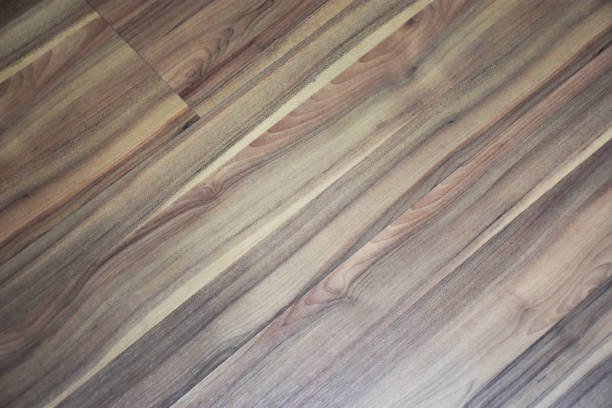
Installed pricing runs $3.50 to $13.50 per square foot in standard markets, reaching up to $16.00 per square foot in Tier 1 metros in 2026, before subfloor prep and old floor removal. Smart Constructs Estimators, when asked how much to install vinyl plank flooring, add four lines: material, labor, trim, and overhead and profit.
Searches such as “cost to install vinyl plank flooring” show that owners want a single number. A single number hides three variables: the wear layer, the installation method, and the subfloor condition.
The average cost to install mid-grade vinyl plank flooring ranges from $5.00 to $9.75 per square foot. Premium commercial planks reach $13.50 because 20 to 30 mil wear layers and glue-down labor stack together.
Material pricing for luxury vinyl plank flooring ranges from $1.50 to $9.00 per square foot, depending on the wear layer. Totals combine the component ranges above. Estimators bill these items separately:
| Grade | Material ($/sq ft) | Standard Labor ($/sq ft) | Metro Labor ($/sq ft) | Standard Installed Total ($/sq ft) | High-Cost Metro Total ($/sq ft) |
| Budget (6–12 mil) | 1.50–2.75 | 2.00–3.75 | 3.50–5.00 | 3.50–6.50 | 5.00–7.75 |
| Mid-grade (12–20 mil) | 3.00–5.25 | 2.00–4.50 | 4.00–6.00 | 5.00–9.75 | 7.00–11.25 |
| Premium / Commercial (20–30 mil) | 5.50–9.00 | 2.50–4.50 | 4.00–7.00 | 8.00–13.50 | 9.50–16.00 |
- Subfloor leveling or patching: $0.75 to $2.50 per square foot
- Old floor removal and disposal: $1.00 to $2.25 per square foot
- Underlayment, when not pre-attached: $0.35 to $0.85 per square foot
- Shoe molding or quarter round: $1.50 to $3.00 per linear foot
Let’s Get In Touch
Request your precise flooring takeoff & estimate from the Smart Constructs team.
What Factors Affect the Cost of Installing Vinyl Planking?
Subfloor condition, product grade, layout, labor market, and site conditions move the final bill most.
Subfloor Condition and Moisture
Subfloor prep takes 20% to 40% of professional labor cost. Concrete must pass ASTM F2170 in-situ relative humidity testing, with standard limits set at 75% RH for basic installations (or 85% to 90% RH for specific rigid core/SPC products), and up to 95%–99% only when using specialty moisture-mitigation epoxy adhesives.
ASTM F1869 (Calcium Chloride test) caps the Moisture Vapor Emission Rate (MVER) at 3.0 lbs/1,000 sq ft/24 hours for standard products, or up to 5.0 lbs/1,000 sq ft/24 hours for select rigid core products. ASTM F710 requires removing curing compounds, sealers, and oils, and it limits variance to 3/16 inch over 10 feet.
Failed tests: add moisture-mitigation coatings that meet ASTM F3010. That step significantly increases the cost of vinyl plank floor installation. Self-leveling compound adds $1.50 to $3.50 per square foot.
Wood subfloors follow ASTM F1482. Deflection must stay under L/360, and ring-shank fasteners must sit flush. Patch joints with cementitious compound, not gypsum.
Product Grade and Wear Layer
The average cost of vinyl plank flooring material ranges from $1.50 to $2.75 at 6 to 12 mil and from $5.50 to $9.00 at 20 to 30 mil. Commercial grades also face fire testing. ASTM E648 and NFPA 253 measure critical radiant flux, with Class I at 0.45 W/cm² and Class II at 0.22 W/cm².
Layout and Waste
The pattern choice affects the cost of installing vinyl plank flooring. Straight lay needs 5% to 10% waste. Diagonal and herringbone layouts require 12% to 15% more material, and the extra cuts add crew hours.
Regional Labor Rates
The labor cost to install vinyl plank flooring reaches $4.00 to $7.00 per square foot in Tier 1 metros such as NYC, the SF Bay Area, Seattle, and Chicago. Prevailing wages, workers’ compensation insurance, and overhead drive that gap. Sunbelt, Midwest, and rural markets run $1.75 to $3.50.
Burden shows how fast hourly rates move. A $45 base wage with a 40 percent burden costs $63 per hour, according to this guide to US regional construction estimating and challenges. The same guide explains how union density, prevailing wage rules, and permit fees shift rates by state.
Site Access and Climate
Manufacturers require 65°F to 85°F and 35% to 55% relative humidity for 48 hours before, during, and after installation. Unconditioned sites in hot-humid or freeze-thaw climates are at risk of buckling, disengagement, and gapping. Buildings without freight elevators add $0.25 to $0.50 per square foot per flight of stairs. Staircases cost $45 to $90 per step because crews cut, scribe, and set adhesive on each tread.
Which Material Options Most Affect a Vinyl Plank Budget?
The wear layer grade, underlayment, adhesive, and trim drive the budget the most. Waste factors then set the order quantity.
The cost of vinyl flooring and installation equals base materials plus subfloor prep, direct labor, trims and accessories, and overhead and profit.
For whole buildings, materials account for 40% to 60% of the total cost, and labor accounts for 20% to 40%, as this breakdown of building construction cost calculation explains. The same guide describes the quantity takeoff method, which multiplies measured quantities by current unit rates and prevents over-ordering.
- Budget LVP (6–12 mil), 1.50–2.75: Thin wear layers limit service to bedrooms and low-traffic rooms.
- Mid-grade LVP (12–20 mil), 3.00–5.25: This grade balances scuff resistance with price in family homes.
- Premium or commercial LVP (20–30 mil), 5.50–$ 9.00: The thicker layer spreads the cost over a longer service life under retail, healthcare, and education traffic.
- Underlayment, 0.35–0.85: High-density acoustic rubber or IXPE foam applies only when no pad is pre-attached.
- Adhesive, 0.30–0.60: Pressure-sensitive acrylic covers glue-down jobs.
- Trim: T-molding, reducers, and end caps cost $15 to $30 per 94-inch piece. Stair nose costs $35 to $75 per tread.
Waste raises the average cost for vinyl plank flooring on every order, so estimators apply material-specific factors:
| Material | Waste factor |
| LVP, straight lay | 5%–10% |
| LVP, diagonal lay | 12%–15% |
| LVP, herringbone | 12%–15% |
| Underlayment rolls | 5% |
| Adhesive | 5% |
| Trim and moldings | 10% |
| Self-leveling compound | 5% |
How Do Installers Lay Vinyl Plank Step by Step?
Installers follow seven steps: acclimate, test, remove and screen, prepare, plan, lay, and finish.
Step 1: Acclimate the Planks and Space
Hold the room at 65-85°F and 35-55% relative humidity for 48 hours. Keep boxes flat inside the room.
Step 2: Test Moisture and Flatness
Run ASTM F2170 or F1869 on concrete. Check flatness against 3/16 inch over 10 feet. Every failed reading adds mitigation or leveling and raises the cost of vinyl floor installation.
Step 3: Remove Old Flooring and Screen for Asbestos
Remove carpet, pad, and failed adhesive. Test resilient flooring or mastic installed before 1986 by polarized light microscopy (PLM) under EPA AHERA rules. EPA’s Asbestos NESHAP guidance on floor tile and mastic covers how federal rules treat removal of asbestos-containing tile and mastic, so testing comes first. Abatement adds $3 to $8 per square foot.
Step 4: Prepare the Subfloor
Grind high spots at $100 to $180 per hour, or about $1.50 per square foot. Pour self-leveling underlayment over primed concrete. Lay 6-mil polyethylene under floating floors, or apply an ASTM F3010 epoxy coating. Add 1/4-inch plywood underlayment at $2.20 to $3.50 per square foot, as needed.
Step 5: Plan the Layout
Snap a centerline and dry-fit the first rows. Stagger end joints. Split the width so the last row is not a sliver. Set spacers for the 1/4- to 3/8-inch gap.
Step 6: Lay the Planks
Click-lock planks: angle and lock row by row. Glue-down planks are laid onto troweled adhesive within its open time, then rolled to the maker’s specification. A skilled crew finishes floating rooms faster, which keeps the cost of installing vinyl plank flooring down.
Step 7: Fit Trim and Inspect
Install reducers, T-molding, and end caps. Fasten base trim to the wall, never through the floor. Commercial transitions must meet ADA Section 302 limits of 1/4 inch vertical, or 1/2 inch when beveled at 1:2.
How Does Vinyl Plank Compare With Hardwood, Laminate, Tile, and Carpet?
Vinyl plank beats laminate in water resistance and costs less than installed hardwood or tile. At $3.50 to $16.00 installed, vinyl plank flooring costs sit between laminate and tile at the top end.
| Floor type | Installed ($/sq ft) | Water performance | Subfloor demand | Sound | Method |
| Vinyl plank (SPC/WPC) | 3.50–16.00 | Waterproof planks, seam limit | 3/16 in. over 10 ft (ASTM F710) | IIC/STC through pad | Floating or glue-down |
| Laminate | 3–8 | Edges swell when wet | Tight flatness | Good with underlayment | Floating |
| Hardwood | 8–15 | Cups and gaps with moisture | Plywood, moisture control | Moderate | Nail or glue |
| Tile | 8–20 | Waterproof tile, porous grout | Rigid, deflection-sensitive | Hard, loud | Thinset |
| Carpet | 3–7 | Absorbs moisture | Tolerates minor flaws | Quietest | Stretch or glue |
Should You Install Vinyl Plank Yourself or Hire a Professional?
DIY saves $2.00 to $4.50 per square foot in labor. Moisture, flatness, and warranty rules favor professionals on concrete and large rooms.
DIY
Luxury vinyl plank installation cost drops by $2.00 to $4.50 per square foot when owners supply the labor. DIY floating floors in small rooms work best over sound, flat, dry subfloors. Basic tools include a tapping block, pull bar, spacers, and a miter saw.
Professionals
The cost of vinyl plank installation by a crew covers insurance, tools, moisture testing, and warranty documentation. Many manufacturers require documented moisture results for warranty claims. Crews also handle leveling, glue-down, stairs, ADA transitions, and asbestos protocols.
| Factor | DIY | Professional |
| Labor | $0 | 2.00–4.50/sq ft |
| Moisture testing | Often skipped | Documented per ASTM F2170/F1869 |
| Stairs | Slow, high waste | 45–90 per step |
| Warranty | At risk without records | Supported by records |
| Best fit | Small floating rooms | Slabs, glue-down, commercial |
How Can You Cut Vinyl Plank Installation Costs Without Cutting Corners?
Order precisely, prep once, and match the wear layer to traffic. Smart buyers lower the cost of luxury vinyl plank flooring with six technical moves:
- Match wear layer to traffic. Use 12 mil in bedrooms and 20 mil in living areas. Reserve 28 mil and above for commercial use.
- Pick a pre-attached pad. It removes $0.35 to $0.85 per square foot of underlayment.
- Choose click-lock over glue-down when the subfloor allows. It saves $0.30 to $0.60 in adhesive and $0.50 to $0.75 in labor.
- Use straight lay. Waste drops from 12%–15% to 5%–10%.
- Test moisture before ordering. ASTM F2170 results prevent mitigation surprises.
- Request itemized takeoffs, and have the team build flooring takeoffs that separate material, labor, prep, trim, and waste so bidders price the same scope.
How Much Does a Vinyl Plank Floor Cost by Room Size?
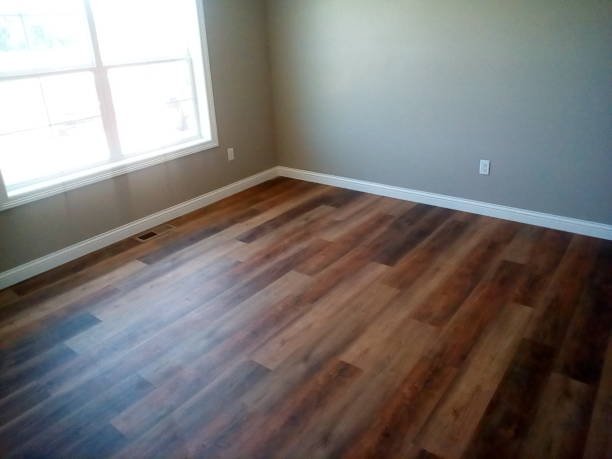
At mid-grade pricing of $5.00 to $9.75 per square foot, rooms range from about $225 for a bathroom to nearly $5,850 for an open floor plan.
Bathroom (About 45 sq ft)
Expect $225 to $439. Cuts around the toilet and vanity slow production, so small rooms carry higher labor per foot.
Bedroom (About 150 sq ft)
Expect $750 to $1,463 at mid-grade pricing ($5.00 to $9.75 per square foot). If subfloor preparation ($0.75 to $2.50) and old floor removal ($1.00 to $2.25) are required, the total turnkey cost rises to $1,013 to $2,175.
Kitchen (About 200 sq ft)
Expect $1,000 to $1,950. Appliance moves and toe-kick cuts add time. Waterproof planks handle spills.
Living Room (About 300 sq ft)
Expect $1,500 to $2,925 at mid-grade pricing ($5.00 to $9.75 per square foot). If subfloor preparation ($0.75 to $2.50) and old floor removal ($1.00 to $2.25) are required, the total turnkey cost rises to $2,025 to $4,350.
Let’s Get In Touch
Request your precise flooring takeoff & estimate from the Smart Constructs team.
Open-Plan Main Floor (About 600 sq ft)
Expect $3,000 to $5,850. Long continuous runs may need expansion breaks, and the gap grows with run size.
| Room | Area | Installed range |
| Bathroom | 45 sq ft | 225–439 |
| Bedroom | 150 sq ft | 750–1,463 |
| Kitchen | 200 sq ft | 1,000–1,950 |
| Living room | 300 sq ft | 1,500–2,925 |
| Open plan | 600 sq ft | 3,000–5,850 |
Add $1.75 to $4.75 per square foot when subfloor prep and old floor removal both apply. Larger projects benefit from professional construction estimating services that price every line before work starts.
Lock In Your Vinyl Plank Budget: Request an Accurate Takeoff Today
Vinyl plank installs cost $3.50 to $16.00 per square foot in 2026. Subfloor testing, wear layer, layout, and local labor decide where a job lands. Moisture tests, flatness checks, and waste factors protect both the warranty and the budget. Smart Constructs company delivers line-item flooring takeoffs and estimates that expose each cost driver before bidding.
Request your precise flooring takeoff and estimate today.
Frequently Asked Questions
What is the labor cost to install vinyl plank flooring?
Labor runs $2.00 to $3.75 per square foot for floating floors and $2.50 to $4.50 for glue-down. Tier 1 metros charge $4.00 to $7.00 per square foot. Subfloor prep costs extra.
What is the average installation cost for vinyl plank flooring?
Mid-grade planks average $5.00 to $9.75 per square foot installed. Budget grades start near $3.50, and premium commercial planks reach $13.50 in standard markets (up to $16.00 in Tier 1 metros) before subfloor prep or old floor removal.
What is the cost of luxury vinyl plank flooring installed in a 300 sq ft room?
Mid-grade planks cost $1,500 to $2,925 for 300 square feet installed. Add up to $4.75 per square foot when prep and removal apply. Premium grades cost more still.
Does vinyl plank flooring need a moisture test on concrete?
Yes. ASTM F2170 tests relative humidity, and ASTM F1869 measures vapor emissions. Standard limits cap at 75–85% RH and 3.0–5.0 lbs MVER. Higher levels require ASTM F3010 epoxy mitigation.
What is the price to install vinyl plank flooring on stairs?
Stairs cost $45 to $90 per step for labor. Installers cut and scribe each tread and riser. Stair nose profiles add $35 to $75 per tread. Plan for both lines.
