
Picture this: three weeks into the job, and the subcontractor you were counting on shows up with a lack of staff. The contingency reserve that was supposed to last the whole project is already half gone. That is not a worst-case scenario. It is a random Tuesday on thousands of job sites across the country.
Construction projects rarely fail because of one dramatic event. They fail due to one skipped step at a time. This guide breaks down the ten most common construction mistakes responsible for blown schedules and budget overruns. Besides, we will also highlight practical steps to avoid each of these, so your next project finishes on the terms you set.
1. Rushing Pre-Construction Planning
A lot of projects start moving before anyone has actually finished thinking them through. Ground gets broken before the scope of work and specifications are fully coordinated because owners want to see progress. This is where the trouble starts. Every gap in the plans becomes a request for information (RFI) later, and every RFI costs time waiting for an answer while crews stand around or work off assumptions.
This is also where value engineering should happen, while changes are still cheap. A structural revision on paper costs a redline and a conversation. The same revision discovered after concrete is poured costs demolition and a schedule reset that ripples through every downstream trade. Owners who insist on an accelerated notice to proceed before design is fully coordinated are essentially betting that nothing will need to change later.
How to Avoid This Mistake
- Treat pre-construction as its own phase with defined deliverables and formal sign-off.
- Run a constructability review before mobilization to catch conflicts between structural, mechanical, electrical, and plumbing drawings.
- Resolve open design questions before pricing, so estimators work from a clean baseline.
- Push value engineering discussions into the design phase, not after construction has started.
2. Underfunding the Contingency Reserve
Tight budgets look great in a proposal and terrible on a job site. Owners and contractors alike tend to price the expected version of a project and skip the reserve for the version that actually happens due to unforeseen conditions.
A contingency reserve is not padding but a risk management tool tied to the level of uncertainty in the scope. This is exactly where getting construction estimating services from professionals pays off. They provide a detailed estimate that gives you a realistic number to build a contingency around, instead of a guess.
| Project Risk Level | Typical Contingency Reserve | Common Drivers |
| Low (renovation, well-defined scope, complete design) | 5%–10% of hard costs | Minor unforeseen conditions, small design tweaks |
| Medium (new construction, standard site conditions) | 10%–15% of hard costs | Material escalation, moderate design changes |
| High (complex sites, fast-track design, tight permitting timeline) | 15%–25% of hard costs | Unknown subsurface conditions, incomplete design at bid, schedule compression |
How to Avoid This Mistake
- Set the contingency percentage based on the project’s actual risk level, not a flat industry rule of thumb.
- Keep contingency separate from an escalation allowance for known material and labor price volatility.
- Revisit the reserve at each design milestone as scope certainty improves.
- Get owner sign-off on the contingency line item before the budget is finalized, not after it is spent.
3. Choosing a Contractor on Price Alone
Low-bid awards seem like a good financial choice, but that price does not tell the contractor’s experience and ability to complete the job. Likewise, hiring a subcontractor who is working on many projects at once or one who has a weak record when it comes to safety is a risk no matter how good the number looks on the page.
Putting it simply, the cheapest bid that causes delays or leads to a mid-project default ends up costing more than the real number from a company that is properly qualified.
How to Avoid This Mistake
- Prequalify bidders on bonding capacity, safety record (including experience modification rate), and current workload.
- Call two or three references from comparable past projects and ask about actual field performance.
- Weight qualifications alongside price when scoring construction bids, not as a tiebreaker.
- Confirm financial stability before award, especially on projects with a long duration.
4. Skipping Proper Site Investigation
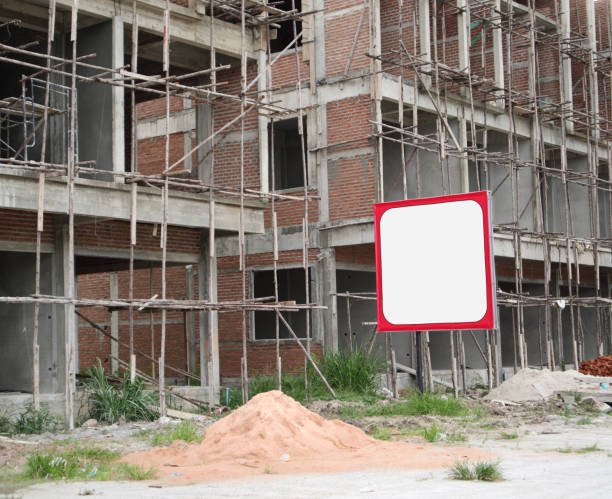
Subsurface conditions are one of the most common sources of costly surprises in construction projects. Skipping an investigation and an environmental site assessment leaves the design team working from assumptions instead of data.
Unexpected rock, contaminated soil, high groundwater, or an undocumented utility line can stop work entirely while the design team scrambles for a redesign and a change order. A thorough investigation costs a fraction of what a mid‑project surprise does. It gives engineers real data to design against instead of a regional assumption.
How to Avoid This Mistake
- Commission a geotechnical investigation before finalizing foundation design.
- Order utility locates and cross-check them against as-built drawings before excavation.
- Include an environmental site assessment for any site with a prior industrial or commercial use.
- Feed boring logs, soil bearing capacity, and groundwater depth directly into structural and civil design.
5. Letting Documentation and Communication Slip
Construction projects generate a stream of decisions. This decision-making happens through RFIs, submittals, meeting minutes, field directives, and design clarifications. When information does not get logged and distributed, the same question consistently gets asked twice and accountability disappears.
Teams that treat documentation as optional always end up relitigating decisions weeks or months after decisions were supposedly settled. Cloud‑based project management platforms make this easier to enforce. The platform only works if the whole team actually uses it consistently rather than defaulting back to a group text thread whenever things get busy.
How to Avoid This Mistake
- Maintain a live RFI log and submittal log that every stakeholder can access.
- Hold weekly owner-architect-contractor (OAC) meetings and distribute minutes within 24 hours.
- Put every verbal field directive in writing before the related work proceeds.
- Use one shared project management platform instead of scattering decisions across email and text threads.
6. Ignoring Labor and Workforce Availability
Even a well-designed schedule falls apart if the crews are not there to execute it. Workforce shortages remain the single most common cause of construction project delays in the United States.
According to the Associated General Contractors of America and NCCER’s 2026 Workforce Survey, 42% of contractors report that shortages of their own workers or their subcontractors’ workers delayed a project, and only 26% of firms report no significant project delays at all.
Demand from sectors like data-center construction has pulled skilled trades toward the highest-paying work in recent years. This makes a general contractor’s assumed crew count from last year’s proposal a guess rather than a plan.
How to Avoid This Mistake
- Confirm subcontractor staffing commitments in writing before relying on them in the critical path.
- Build labor availability into the schedule the same way material lead times are built in.
- Revisit staffing assumptions at each schedule update rather than trusting the original proposal.
7. Treating Permits as an Afterthought
Permitting timelines can be different depending on where your construction project sits. Thinking that a permit will be approved fast is a mistake that can disrupt your schedule before construction even begins. Building permits, zoning approvals, environmental clearances, and utility connection approvals all have their review times. Some of these reviews must be done one after the other.
Problems with code compliance found during construction are more expensive to fix than if they were spotted earlier in the design phase. Issues like egress or energy code violations can cause delays and additional building construction costs. Sometimes one missing approval from an agency can stop the entire project from getting a certificate of occupancy, even if everything else is complete.
How to Avoid This Mistake
- Bring a code consultant or plan reviewer into the design process early.
- Confirm jurisdiction-specific requirements before finalizing drawings.
- Keep a running log of every required agency approval and its expected review window.
- Build realistic permitting lead time into the master schedule instead of treating it as a formality.
8. Underinvesting in Jobsite Safety
Safety planning is not a compliance checkbox. On the contrary, it directly affects the schedule and liability of the construction project. A serious incident can shut a site down, trigger an OSHA (Occupational Safety and Health Administration) investigation, and stall a project for weeks while the cause gets sorted out. And like every other mistake on this list, safety failures are not random. They cluster around the same handful of gaps year after year, which is exactly what OSHA’s citation data shows.
According to OSHA’s Top 10 Most Frequently Cited Standards, Fall Protection – General Requirements has been the single most cited standard in the country for 15 consecutive fiscal years, with 6,992 citations recorded in the finalized fiscal year 2025 data. The rest of the list tells the same story: crews are still getting hurt by hazards that a basic safety plan is built to catch.
| Rank | Cited Standard | CFR Reference | Hazard Area |
| 1 | Fall Protection – General Requirements | 29 CFR 1926.501 | Falls from height |
| 3 | Ladders | 29 CFR 1926.1053 | Falls, improper ladder use |
| 6 | Scaffolding | 29 CFR 1926.451 | Falls, structural failure |
| 7 | Fall Protection – Training Requirements | 29 CFR 1926.503 | Inadequate worker training |
| 9 | Eye and Face Protection | 29 CFR 1926.102 | Struck-by and debris hazards |
How to Avoid This Mistake
- Put a written safety plan in place before work begins, not after an incident.
- Name a competent person for fall protection and document their site walkthroughs.
- Run toolbox talks on a fixed schedule and log attendance and topics covered.
- Budget for safety equipment and training upfront rather than as a reactive expense.
9. Letting Change Orders Go Unmanaged
Some change is unavoidable on every project, but unmanaged change orders quietly erode margin and stretch timelines far more than most teams realize.
According to Dodge Construction Network’s 2026 change order research, released through BusinessWire, 96% of general contractors say a lack of change order visibility affects their ability to control project costs, and 91% report sometimes not getting paid the full change order amount. Most often due to disputed pricing, incomplete documentation, or scope disagreements with trade partners.
Scope creep accumulates invisibly until the final invoice reveals the damage without a disciplined tracking process. And by then, there is rarely a good way to trace where the margin actually went.
How to Avoid This Mistake
- Require written approval before executing any change, no exceptions for “small” items.
- Tie every change order to a specific cost impact and schedule impact.
- Maintain a single live change order log instead of scattered approvals across email.
- Review the log on a fixed cadence, not just at closeout.
10. Rushing Quality Control and Closeout

The final part of a project is when people tend to take shortcuts because everyone is eager to hand over the project and move on. Not doing a walkthrough of the punch list, rushing through inspections, or putting off the built documentation causes issues that only appear after the owner has moved into the space.
Substantial completion is not the end; a properly documented closing is. Giving the retention money before the punch list and all the paperwork are truly done takes away the power that keeps the contractor involved with the details, and a quick handover almost always leads to a lot of warranty calls that no one planned for.
How to Avoid This Mistake
- Schedule quality inspections at defined hold points throughout construction.
- Run a formal punch list process that assigns an owner and a completion date to every item.
- Make closeout documentation a contractual deliverable with its own deadline.
- Hold retention until the punch list and documentation are fully complete.
Quick Reference: Mistakes and Fixes at a Glance
| Mistake | Root Cause | Preventive Action |
| Rushed pre-construction planning | Pressure to show progress fast | Formal constructability review before mobilization |
| Underfunded contingency | No risk-based reserve | Set contingency by project risk level |
| Lowest-bid selection | Price weighted over qualifications | Prequalify on safety, bonding, and references |
| Skipped site investigation | Trying to save on soft costs | Geotechnical and utility investigation upfront |
| Weak documentation | No standardized tracking process | RFI and submittal logs, weekly OAC minutes |
| Ignoring workforce availability | Assuming labor will be there | Confirm staffing before scheduling milestones |
| Late permitting | Underestimating review timelines | Engage code consultant early, build in lead time |
| Weak safety planning | Treating safety as a checkbox | Site-specific plan, named competent person |
| Unmanaged change orders | No disciplined tracking process | Written approval and a live change order log |
| Rushed closeout | Wanting to move on quickly | Contractual closeout deadline and punch list process |
Conclusion
None of these ten mistakes are complicated to understand, and that is exactly the point. Poor planning, budgets, weak communication, and rushed closeouts do not need bad luck to happen. They happen when teams move fast and ignore processes that everyone already knows. The fix is not paperwork for its own sake. The fix is discipline.
Prequalifying contractors and considering budget contingency can help you complete your construction projects. Also, tracking every RFI and treating safety as contractual deliverables instead of afterthoughts is important. Projects that build these habits from day one consistently finish closer to their budget and schedule than projects that do not.
Thus, construction success is not about avoiding every problem. It is about catching the predictable ones early, before they turn into a change order, a safety incident, or a closeout nobody wants to deal with. At Smart Constructs, we help project teams get ahead of these mistakes with accurate estimating, drafting, and BIM support before ground ever breaks.
Frequently Asked Questions
What is the single biggest cause of construction project delays?
Workforce and subcontractor shortages are currently the most commonly reported cause of delays in the United States. After that, permitting and material lead-time issues create problems in completing the construction project.
How much contingency should I budget for a construction project?
It depends on risk.
- 5%–10% for well-defined renovation work
- 10%–15% for standard new construction
- Up to 15%–25% for complex or fast-tracked projects with incomplete design at bid time
Why is the lowest bid not always the best choice for a contractor?
Price alone doesn’t reflect safety record, bonding capacity, current workload, or past performance, and a low bid that leads to delays or rework typically costs more in the end.
What is the most commonly cited OSHA violation in construction?
Fall Protection – General Requirements (29 CFR 1926.501) has topped OSHA’s list of most frequently cited standards for 15 consecutive fiscal years.
How can change orders be managed without derailing a budget?
Require written approval before work begins, log every change order with its cost and schedule impact, and review that log on a fixed schedule instead of letting it accumulate until closeout.
