
The cost estimation of building in 2026 is more intricate than ever. Prices of inputs are increasing, labor supply is declining, and markets for materials are fluctuating. The inflation in the construction industry will be in the range of 4%-5% this year, although overall inflation in the economy will decrease.
The majority of cost overruns occur due to the fact that individuals use cost per square foot at the beginning of the planning process. That measure can provide you a rough starting point but it does not present the entire picture unless you are aware of how to subdivide it with actual figures and techniques. At the conclusion of this guide, you will know the correct formula to use, realistic price ranges to use on various types of projects and the pitfalls that can add tens of thousands to budgets.
The average cost to construct a new house in the U.S. is about $162 per square foot at present, according to 2026 pricing data. Although in coastal regions and other expensive cities, it can be over $230 per square foot. These values do not include land and general contractor costs, and proper estimating is even more essential prior to entering into an agreement.
In this article, you’ll learn:
- A definite formula to estimate the cost per square foot of a project.
- Real world residential, commercial, and custom building cost estimates.
- Why it is easy to mislead your budget by using simple averages.
- Step-by-step techniques of professional estimators.
- Calculations you can use in real life today.
What Does “Construction Cost Per Square Foot” Mean in 2026?
Construction cost per square foot is in basic terms an average cost incurred to construct one square foot of a structure. It is calculated by dividing the total cost of construction with the total area of the building by the contractors. This approach assists homeowners, builders and developers in estimating the budgets at a fast rate before the detailed planning begins.
This figure will be more important in 2026 since construction pricing is changing more rapidly than earlier. The forecasts in the industry indicate that inflation in the construction sector remains at about 4%-5%, and this has driven the prices of labor and materials to be high in most parts of the U.S. This is why the estimates in terms of cost-per-square-foot should contain reasonable market prices rather than the old versions of the average prices.
What’s Usually Included in Cost Per Square Foot?
The calculation of most construction costs per square foot is based on direct and indirect building costs, which include:
- Framing and supporting work.
- Trade and subcontracting labor costs.
- Roofing, insulation, drywall and finishes.
- Installation of electrical, plumbing and HVAC.
- Compliance Costs: Permits, inspections and compliance costs.
- Contractor overhead and profit margin.
- Equipment and on-site supervision.
What’s Usually NOT Included?
Cost-per-square-foot pricing is a misconception among many people, as they believe it is all-inclusive. The costs are usually out of the estimate in reality:
- Land purchase cost
- Interest and financing charges on loans.
- Furniture and appliances are like interiors.
- Outdoor and landscaping improvements.
- Design enhancements such as luxurious flooring or unique specifications.
- Connection charges to the utility in certain localities
Building Cost vs Total Project Cost (Important Difference)
Here is the main difference: building cost is concerned only with construction work and total project cost is concerned with everything it takes to complete the project up to move-in. To illustrate, you may have estimated a home at $200 per sq ft, with land, permits, design upgrades and financing, the actual price may go up 20% to 40% depending on where it is and how complicated it is.
Why Cost Per Square Foot Is Still the Fastest Estimation Method But Not the Most Accurate?
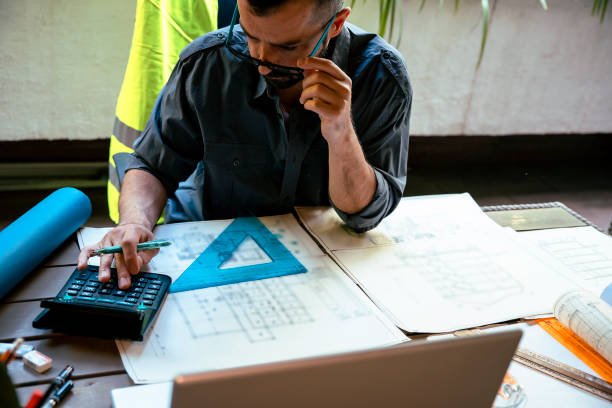
The cost per square foot method is one of the popular methods since it provides a quick estimate in minutes. It is commonly applied by contractors when doing their initial planning, feasibility studies and pre-design budgeting. It assists you in making decisions on the financial viability of a project before engaging in the expenditure of money on drawings and engineering.
Nevertheless, the technique cannot work under the following conditions: the project involves a tailored architecture, fine materials, sophisticated MEP systems, or problematic site conditions. Two homes of different sizes could be one and the same in size, yet their finishing and mechanical expenses would cause a huge price difference. The industry data on construction costs of premium finishes state that the total build prices may be raised by 25% to 50% based on the material and the level of customization.
Basic Build vs Luxury Build
| Build Type | Size (Sq Ft) | Cost Per Sq Ft | Total Cost |
| Basic Build | 2000 | $170 | $340000 |
| Luxury Build | 2000 | $300 | $600000 |
2026 Construction Cost Per Square Foot
The price ranges differ drastically in 2026 since the prices of materials change and skilled labor is costly. Frequently, many contractors revise estimates in 30 to 60 days due to the rapid change in prices.
To aid you in estimating quicker, the following are real national averages according to the average pricing in the market in the US.
2026 Cost Per Square Foot by Project Type
| Project Type | Average Cost/Sq Ft (2026) | What Impacts Cost Most |
| Standard Residential Home | $150–$230 | labor rates + finish level |
| Custom Home | $250–$450 | architecture + premium materials |
| Commercial Office | $200–$400 | HVAC loads + compliance |
| Warehouse / Industrial | $110–$200 | slab thickness + steel framing |
| Retail Space | $180–$350 | interior build-out + MEP |
| Multi-Family Apartments | $170–$320 | fire rating + plumbing density |
Above-Ground vs Underground Costs
Underground construction may be 2 times the cost of above-ground construction. Excavation, waterproofing, ventilation and structural reinforcement escalate the price rapidly.
Urban vs Rural Cost Difference
The price of urban projects is typically 15 to 30% higher because of labor premiums, site access constraints, permits and complexity of schedules.
The Step-by-Step Formula to Estimate Construction Costs Per Square Foot in 2026
To get precise results, you must have a precise formula. Most of the contractors make the guesses by looking at previous jobs, professional estimators adhere to a systematic calculation guided by construction cost estimation logic.
Main Formula
Total Construction Cost ÷ Total Building Area = Cost Per Sq Ft
Expanded Cost Breakdown
In computing total construction cost, add:
- Materials
- Labor
- Equipment
- Subcontractors
- Permits
- Overhead
- Profit
- Contingency
Simple Cost Distribution Example
Majorities of the projects are percentage based such as:
| Cost Category | Typical Share |
| Materials | 45% |
| Labor | 35% |
| Equipment | 5% |
| Permits | 3% |
| Overhead + Profit | 10% |
| Contingency | 2% |
How to Estimate Construction Costs Using the Square Foot Method?
The square foot construction cost method is best when a quick estimate is needed before the actual drawing. It may be used to make early budgets, approximate proposals, or investment planning.
Step-by-Step Process
- Select your project type, like home, office, retail or warehouse
- Determine a realistic price range for your type of building.
- Multiply the rate by the total square feet.
- Modify according to your location, expenses in cities are higher
- Include a buffer in case of unexpectedness.
Quick Example
A 2000 sq ft home at $180 per sq ft:
2000 × $180 = $360,000
Add 10% contingency:
$360,000 + $36,000 = $396,000
This technique provides a dependable base budget, although you must still have takeoff-based prices before the construction.
The Most Accurate Construction Estimation Methods Used by Professionals
There are various methods that are used by Smart Constructs estimators based on the stage of the project. The objective remains understated: to increase precision and decrease risk. In 2026, the majority of contractors are consolidating software and historical cost information to obtain more reliable numbers with the help of construction estimating methodologies.
Square Foot Estimating Method
Most suitable when the budget is required early and when time is of the essence.
Unit Cost Estimating Method
Most suitable to contractors who charge individual materials and tasks.
Assembly Estimating Method
Best in designing stage estimates with building systems.
Parametric Estimating
Bases projections on past project data and indexes of costs.
Detailed Quantity Takeoff (Most Accurate)
Enhances all material amounts and utilizes labor productivity rates.
| Method | Accuracy | Best Use | Time Required |
| Square Foot | Medium | early planning | low |
| Unit Cost | High | bid proposals | medium |
| Assembly | High | design stage | medium |
| Parametric | Medium-High | forecasting | low-medium |
| Quantity Takeoff | Very High | final estimating | high |
How to Do a Quantity Takeoff for Cost Estimation?
A quantity takeoff is the measure and enumeration of all materials needed in a project. It is used by contractors to determine the correct costs rather than using averages.
You calculate two parts:
- Material takeoff (quantity of material you require)
- Labor takeoff (hours required to install)
What Do You Measure in a Takeoff?
- Concrete volume
- Steel tonnage
- Lumber framing quantities
- Drywall sheets
- Roofing area
- Flooring square footage
- Electrical fixtures
- Plumbing fixtures
Takeoff Checklist Box
- Foundation concrete
- Structural framing
- Roof system
- Doors and windows
- Electrical rough-in + fixtures
- Plumbing rough-in + fixtures
- HVAC system
- Interior finishes
A small error in takeoff might increase the cost of the project by 5-15% particularly in a commercial work.
Let’s Get In Touch
Get the Most Accurate Construction Costs Per Square Foot Estimates Now!
Key Factors That Change Construction Cost Per Square Foot in 2026
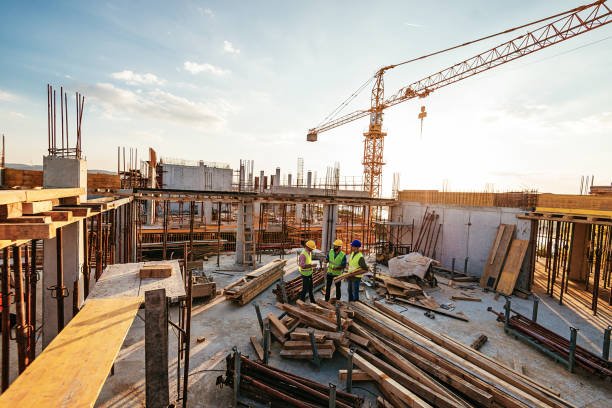
Costs vary even with the same size of the building since various factors affect costs. In 2026, market volatility continues to impact bids and project schedules, especially for building cost per square foot planning.
Location & Regional Labor Rates
The cities are more expensive since skilled workers are more expensive. Cities also experience more stringent permit/scheduling regulations.
Material Prices and Supply Chain Volatility
The prices of steel, concrete and lumber change very often. Contractors have started to include escalation provisions since the material quotes tend to lapse after 30 days.
Design Complexity
A basic rectangle structure is cheaper than a complicated plan with roof valleys, cantilevers and structural spans.
Site Conditions
Hilly terrain, poor soil, and drainage may add a lot of cost to excavations.
Permits, Codes & Inspections
Project costs may be increased by thousands of dollars because of fire-rated walls, ADA compliance and zoning.
Finish Level (Basic vs Mid vs Luxury)
Finishing with luxury will increase cost in a short time. Home pricing can be boosted by high-end kitchens and bathrooms by up to $30000 to $80000 based on the choice.
Construction Cost Breakdown Per Square Foot
You need to know what happens to money in order to estimate. In the majority of budgets, there is a division of trades. This table can assist you in planning smarter with construction cost breakdown strategy.
Typical Trade Cost Breakdown in 2026
| Trade | Typical % of Budget | Cost/Sq Ft Range |
| Sitework | 5%–10% | $10–$30 |
| Foundation | 8%–15% | $15–$45 |
| Framing | 12%–20% | $25–$60 |
| Roofing | 4%–8% | $8–$25 |
| Windows & Doors | 5%–12% | $10–$35 |
| MEP (HVAC/Plumbing/Electrical) | 20%–35% | $40–$120 |
| Insulation | 2%–5% | $4–$12 |
| Drywall & Painting | 6%–12% | $12–$35 |
| Flooring | 4%–10% | $8–$30 |
| Fixtures | 3%–8% | $6–$25 |
| Exterior Finishes | 6%–15% | $12–$45 |
MEP typically makes the costliest part, particularly in commercial structures.
How to Adjust Cost Estimates for Inflation in 2026?
Construction is more vulnerable to inflation than other industries are. This is the reason why contractors revise estimates regularly. Prices are now maintained by many suppliers at a period of 15-30 days. You ought to increase or decrease the estimates with the aid of cost indexes to keep the construction cost inflation accurate.
Cost Escalation Formula
New Estimate = Old Estimate × (Current Index ÷ Old Index)
When You Should Update Pricing
- 30-day update for commercial projects
- 60-day update for residential builds
- 90-day update only if pricing stays stable
Even a small inflation jump of 5% can add $25000 to a $500000 project.
Residential Construction Cost Per Square Foot in 2026
Pricing of residential homes is extremely dependent on design, materials, and finishes. Estimating this is best done by tier. This renders your residential construction cost per square foot planing more realistic.
Basic Home Build Cost in 2026
$150–$220 per sq ft
What you get:
- simple roof design
- standard flooring
- builder-grade cabinets
- basic HVAC system
- minimal upgrades
Mid-Range Home Build Cost in 2026
$220–$320 per sq ft
What you get:
- upgraded flooring
- better windows and insulation
- modern kitchens and bathrooms
- improved HVAC efficiency
- stronger curb appeal finishes
Luxury Home Build Cost
$320–$550+ per sq ft
What you get:
- custom architecture
- smart home systems
- premium countertops and flooring
- high-end HVAC zoning
- luxury bathrooms and lighting
Let’s Get In Touch
Get the Most Accurate Construction Costs Per Square Foot Estimates Now!
Commercial Construction Cost Per Square Foot in 2026
Commercial work is prone to be more expensive due to the need for strict code, higher MEP loads, and fire-rated assemblies. Many contractors plan commercial pricing using commercial construction cost per square foot benchmarks.
Commercial Cost Ranges in 2026
- Office buildings: $200–$400 per sq ft
- Retail spaces: $180–$350 per sq ft
- Warehouses: $110–$200 per sq ft
- Restaurants: $250–$500 per sq ft
- Healthcare: $350–$700 per sq ft
Restaurants and healthcare are more expensive since the density of the mechanical and plumbing system is growing exponentially. Compliance costs are also increased by fire-rated systems and inspections.
Real Example Calculations
Real-life examples create credibility and make readers perceive the math. These failures demonstrate the way in which contractors estimate properly under construction cost per square foot 2026 pricing.
Example 1 – 2000 Sq Ft House Estimate
Suppose that the average build cost is $190 per sq ft:
2000 × $190 = $380000
Add contingency (10%):
$380000 + $38000 = $418000
| Category | Estimated Cost |
| Materials | $188,100 |
| Labor | $146,300 |
| Permits | $12,500 |
| Overhead/Profit | $41,800 |
| Contingency | $29,300 |
| Total | $418,000 |
Example 2 – 5,000 Sq Ft Commercial Fit-Out Estimate
Assume $260 per sq ft:
5,000 × $260 = $1,300,000
MEP often takes 30%–40% of commercial fit-out costs.
| Category | Estimated Cost |
| MEP Systems | $455000 |
| Interior Finishes | $320000 |
| Labor | $360000 |
| Permits/Inspections | $45000 |
| Overhead/Profit | $120000 |
| Total | $1300000 |
Example 3 – 50,000 Sq Ft Warehouse Estimate
Assume $145 per sq ft:
50,000 × $145 = $7,250,000
Commercial fit-out costs are frequently reduced by 30-40% by MEP.
| Category | Estimated Cost |
| Concrete Slab/Foundation | $1700000 |
| Steel Structure | $2400000 |
| Roofing | $900000 |
| Electrical/Lighting | $850000 |
| Labor | $1050000 |
| Overhead/Profit | $350000 |
| Total | $7250000 |
Common Construction Cost Estimation Mistakes That Cause Budget Overruns
A lot of contractors end up losing money due to omission of concealed costs. To get the right prices, eliminate these typical construction estimating errors.
Mistakes Checklist Box
- Ignoring grading and excavation
- Underestimating permit and inspection costs
- Forgetting equipment rentals
- Miscalculating labor productivity
- Skipping contingency planning
- Not adding waste factors for materials
- Using outdated material pricing
Even a small estimating error of 8% can add $40000 to a $500000 build.
Best Construction Cost Estimation Software & Tools in 2026
Technology assists estimators to work quicker and less error. In the year 2026, contractors use digital tools to make takeoffs and pricing databases. Construction estimating software is rapid and accurate and is used by many professionals.
Popular Tools Contractors Use
- PlanSwift (fast takeoff system)
- Bluebeam Revu (PDF measurement + markups)
- ProEst (cloud estimating and bidding)
- RSMeans (pricing database benchmark)
- Buildertrend (project management + cost tracking)
- Excel templates (manual but flexible)
Software is better in estimating quickness yet manual review is still important since the circumstances in the job site can alter the price.
Free Construction Cost Per Square Foot Template
A template will assist you in estimating quicker and evading categories. An effective construction estimate template must have columns that group all the costs together.
What Your Template Should Include
- Material name
- Quantity
- Unit price
- Labor hours
- Labor rate
- Subcontractor quotes
- Equipment cost
- Permit fees
- Contingency percentage
- Total cost summary
A downloadable template will prolong time on page and your blog will receive backlinks with the help of contractors and homeowners.
Final Checklist Before You Finalize Your Estimate
This construction estimate checklist will help you to prevent unexpected expenses before you sign a contract or submit a bid.
- Check project scope and inclusions.
- Check material quote validity dates.
- Gather pricing in writing with the subcontractors.
- Permits and inspection of checks.
- Use concrete, tile, and lumber waste factors.
- Add contingency (5%–15%)
- Include overhead and profit margins
- Review schedule effects and availability of labor.
This checklist will save thousands of money since it will help avoid surprise expenses along the way.
Conclusion
Using the cost of construction per square foot in 2026 is a good place to start but this should not be your ultimate budget. The actual precision is achieved through comprehensive takeoff, trade level pricing and intelligent contingency planning. Combining square foot benchmarks and real market pricing is always a sure way of obtaining reliable estimates.
In case you require some professional assistance in budgeting, takeoffs or cost estimation, in detail, address our team today. Our construction estimating services are ideal if your don’t want terrible surprises throughout your project’s timeline.
FAQs
What is the average construction cost per square foot in 2026?
The majority of residential constructions are between $150 to $320 per sq ft according to finishes and location. Development projects have an initial cost of around $180 per sq ft, and may run to over $600 in specialized construction such as medical facilities.
What is the accuracy of cost per square foot estimation?
Cost per square foot is effective in early budgeting but can be affected by 20 to 40% due to design, site factors and finishings. To be precise, quantity takeoffs and trade-level pricing are employed by contractors.
What are the prices of per square foot construction without costs?
Most per sq ft pricing does not include land purchase, interest on loans, furniture, appliances, landscaping and significant design upgrades. Never rely on cost per sq ft as a final budget without talking to your contractor about what he or she includes.
What is the cost of labor per square foot?
Division of total labor cost by total square footage of building. For example, if labor costs $120000 on a $2000 sq ft home, labor cost per sq ft equals $60. The price of labor varies depending on location and complexity of a project.
How large should construction estimates contingency be in 2026?
The general rule of thumb is to add 5% to 10% contingency to typical projects. Complex constructions or reconstructions can have 15% contingency since unseen circumstances and the alteration in the prices of materials can add expenses in an unforeseen manner.
What will the cost of a custom home be per sq ft to build?
In general, custom homes cost between $250 and $550 or more per sq ft based on architecture, materials, smart home systems and finish quality. Homes of this luxury are pricier since they need special labor and fabrication.
What is the method that contractors use to estimate the cost of construction?
Contractors rely on square foot standards, past project information and estimating programs. This is followed by them adjusting it by location, material choice and labor rates. In final bids, they do a complete quantity takeoff.
Which is the cheapest type of building to build in 2026?
Warehouses and simple rectangular buildings are the least expensive as they employ open layouts and few finishes. The variability of many warehouse projects is between $110 and $200 per sq ft based on the slab strength and steel framing.
