
How many shingles in a bundle depends on the shingle type. A 3-tab bundle holds 26 to 29 pieces. An architectural bundle holds 20 to 22. Both cover about 33.3 square feet, so three bundles make one 100-square-foot roofing square. Bundle weight sets those counts. Makers keep bundles between 45 and 80 pounds so one roofer can lift them. That matters because the U.S. Bureau of Labor Statistics recorded 844 fatal falls, slips, and trips in 2024. This guide covers the math, codes & waste factors behind every bundle count.
How Many Shingles Are in a Bundle by Shingle Type?
Thickness decides the piece count. Thicker shingles weigh more, so makers pack fewer pieces. Most asphalt bundles hold 10 to 29 pieces.
| Shingle type | Pieces per bundle | Weight per bundle | Coverage per bundle | Bundles per square |
| 3-tab | 26 to 29 | 45 to 60 lb | 33.3 sq ft | 3 |
| Architectural | 20 to 22 | 60 to 80 lb | 33.3 sq ft | 3 (4 for heavy lines) |
| Luxury | 10 to 16 | Over 80 lb | 20 to 25 sq ft | 4 to 5 |
3-Tab Shingles
Three-tab shingles are flat and thin. Each piece measures 12 by 36 inches. A bundle holds 26 to 29 pieces and weighs 45 to 60 pounds. Three bundles cover one square. These shingles suit simple roofs and tight budgets.
Architectural Shingles
Architectural shingles have two layers bonded as one. That adds thickness and weight. A bundle holds 20 to 22 pieces and weighs 60 to 80 pounds. Most lines need three bundles per square, but heavy-duty lines need four.
Luxury Shingles
Luxury shingles are the thickest. A bundle holds only 10 to 16 pieces and weighs over 80 pounds. Each bundle covers 20 to 25 square feet, so one square takes four to five bundles.
Wood and Metal
Cedar shakes also ship in bundles, though coverage varies by length and exposure, while metal roofing is sold by the panel. Always check the product data sheet—the 33.3-square-foot rule applies strictly to asphalt.
How Many Square Feet Does One Bundle Cover?
One bundle covers about 33.3 square feet of finished roof. That figure comes from dividing a 100 square foot roofing square by three bundles. Luxury lines cover less.
Flat Versus Covered
Coverage is not flat size. A 12-by-36-inch shingle measures 3 square feet flat. Overlap hides most of it. A 26-piece bundle measures 78 square feet laid flat but covers only 33.3. That gap shows how many sqft in a bundle of shingles you really get.
Wrapper Numbers
Coverage shifts a little by product line. Luxury bundles list 20 to 25 square feet. Some architectural lines list slightly less than 33.3. The printed wrapper value always beats a rule of thumb.
Quick Formula
Divide total roof area by 33.3 to get bundles. A 2,000 square foot roof gives 60 bundles. That matches the three-per-square rule, because 20 squares times three also equals 60.
Triple Coverage
Headlap is the overlap between courses. It creates triple coverage along each lap line. That stack sheds wind-driven rain. It also explains why a bundle’s coverage looks small next to its flat size.
Why Do Exposure and Shingle Size Set the Bundle Count?
Exposure is the visible height of each shingle & it sets how many pieces one square needs. Divide 100 square feet by the exposed area of one piece. Then divide by three bundles.
Exposure Math
Exposed area equals shingle length times exposure. A 3-tab piece shows 36 by 5 inches, or 1.25 square feet. Headlap, usually 2 inches, hides the rest. One square needs 80 pieces, so each of three bundles holds about 27.
| Shingle | Size (in) | Exposure (in) | Exposed area | Pieces per square | Pieces per bundle |
| 3-tab | 12 x 36 | 5 | 1.25 sq ft | 80 | About 27 |
| Architectural | 13.25 x 39.375 | 5.625 | 1.54 sq ft | 65 | About 22 |
Brand Differences
Brands trim sizes by fractions of an inch. A longer piece or wider exposure shifts the count. That is why how many shingles in a bundle changes from maker to maker. Order by coverage, never by piece count.
Why Do Online Guides Give Different Bundle Counts?
Guides disagree because they mix product lines, brands & rounded ranges. Some list architectural bundles at 10 to 16 pieces. That range fits luxury lines.
Mixed Lines
Many guides lump 3-tab, architectural, and luxury data into a single range, leaving readers with a confusing 10-to-33-piece spread. Always match the piece count to your exact shingle line.
Rounded Ranges
Writers round counts to simple ranges. Real bundles hold whole pieces set by size and exposure. The exposure table above gives the true figure for each shingle size.
Fast Check
Take any claim and test it. Divide 100 square feet by the exposed area of one piece. Then divide by three. If the answer differs by more than two pieces, read the wrapper.
What Is a Roofing Square and How Do Bundles Fit?
A roofing square is 100 square feet of roof, a 10-by-10-foot patch. Contractors price and order in squares.
- Three bundles cover one square in most asphalt lines.
- 1 bundle of shingles covers one third of a square, or 33.3 square feet.
- Luxury lines need four to five bundles per square.
- Round partial squares up to the next whole square.
- 1,000 square feet equals 10 squares, or 30 bundles.
- 2,500 square feet equals 25 squares, or 75 bundles.
- 3,200 square feet equals 32 squares, or 96 bundles.
- A 20-by-20-foot roof section is 4 squares, or 12 bundles.
- A 40-by-40-foot roof section is 16 squares, or 48 bundles.
- Many homes land between 15 and 40 squares.
- Roofing estimating services list roof area in squares and edges in linear feet.
How Do You Measure Roof Area Step by Step?
The Smart Constructs team measures each roof plane, applies the pitch factor, then divides by 100 to get squares. Steeper roofs need more shingles than the floor plan suggests.
Plane Areas
Measure the length and width of every roof plane in feet. Multiply them to get each area. Add all planes, including dormers and porch roofs. A simple gable roof has two main planes. A hip roof has four.
Pitch Factor
Pitch measures vertical rise in inches per 12 inches of horizontal run. Because a steeper roof increases actual surface area, multiply the flat area by a pitch multiplier, calculated as the square root of one plus rise over 12, squared.
| Pitch | Factor | Extra area |
| 4:12 | 1.054 | 5.4% |
| 6:12 | 1.118 | 11.8% |
| 8:12 | 1.202 | 20.2% |
| 12:12 | 1.414 | 41.4% |
Safe Measuring
Ladders and steep roofs carry real fall risk. Use ground tools, drone photos, or aerial reports when you can. Measure the footprint from the ground, then apply the pitch factor.
Complex Roofs
Break dormers, valleys & hips into separate planes. Measure each plane and use its own pitch factor. Then add the sloped areas. Chimneys and skylights add cuts, so subtract only very large openings.
Squares to Bundles
Divide the sloped area by 100. Round up to a whole square. Multiply by three for standard asphalt lines. Then add waste. Aerial reports from material takeoff services list each roof plane and its pitch.
How Does Roof Pitch Change the Bundle Count?
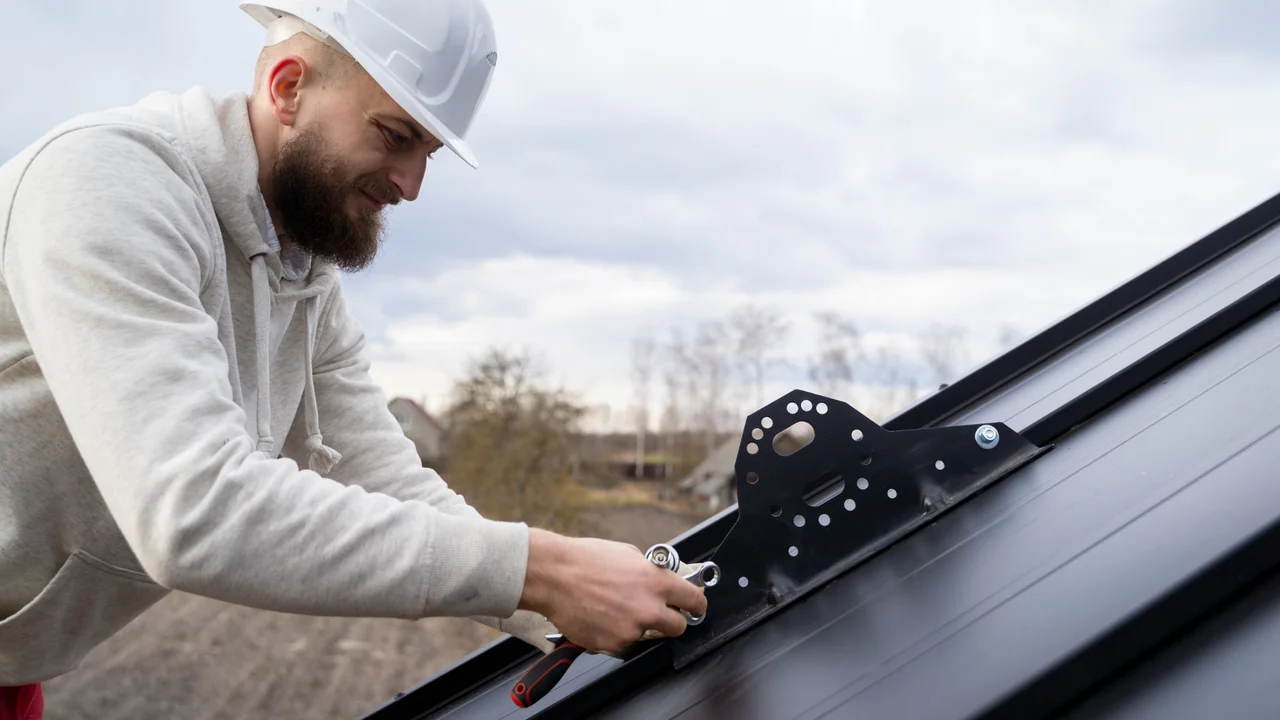
Steeper pitch raises the bundle count because it adds roof surface. A 2,000-square-foot footprint needs 66 bundles at 4:12 but 87 at 12:12.
Same Footprint
The table below uses one footprint at four pitches. It rounds squares up and multiplies by three. Waste is not included, so add 10% to 20% on top. Pitch alone adds 21 bundles to this footprint, from 66 to 87.
| Pitch | Roof surface | Squares | Bundles |
| 4:12 | 2,108 sq ft | 22 | 66 |
| 6:12 | 2,236 sq ft | 23 | 69 |
| 8:12 | 2,404 sq ft | 25 | 75 |
| 12:12 | 2,828 sq ft | 29 | 87 |
Steep Roof Rules
Steep roofs need more than extra shingles. Manufacturers call for hand-sealing on slopes steeper than 12:12. Very steep roofs often need six nails per piece. Crews also need safer staging for bundles.
Low Slope Limits
Shingles are not allowed below a 2:12 slope. From 2:12 up to 4:12, code requires two layers of underlayment. Low slopes need extra underlayment rolls, not extra shingle bundles.
How Many Bundles Does a Real Roof Need?
Real roofs need three bundles per square plus waste. Each example rounds squares up, multiplies by three, adds waste & rounds up again.
- A 12-by-12-foot shed has 144 square feet. That is 2 squares and 6 bundles, or 7 with 10% waste.
- A 24-by-24-foot garage with a 4:12 gable has 576 x 1.054 = 607 square feet. That is 7 squares and 21 bundles, or 24 with 10% waste.
- A simple gable roof with 1,200 square feet of surface has 12 squares and 36 bundles, or 40 with 10% waste.
- A 1,500-square-foot ranch at 4:12 has 1,581 square feet of roof. That is 16 squares and 48 bundles, or 53 with 10% waste.
- A 2,000 square foot footprint with a 6:12 hip roof has 2,236 square feet. That is 23 squares and 69 bundles, or 78 with 12% waste.
- A 2,400 square foot footprint with an 8:12 cut-up roof has 2,885 square feet. That is 29 squares and 87 bundles, or 103 with 18% waste.
- A 1,800-square-foot footprint with a 6:12 gable has 2,012 square feet. That is 21 squares and 63 bundles, or 70 with 10% waste.
- Luxury shingles on 20 squares need 80 to 100 bundles before waste.
- Add extras after field bundles. 250 feet of eave and rake needs 3 starter bundles at 100 feet each. 140 feet of ridge and hip needs 5 cap bundles at 30 feet each.
- A reverse check helps. Fifty-six bundles equal 18.7 squares, or about 1,867 square feet.
The table below gives bundle counts for common roof surface areas. Use sloped surface area, not footprint.
| Roof surface | Squares | Bundles | With 10% waste | With 15% waste | With 20% waste |
| 1,000 sq ft | 10 | 30 | 33 | 35 | 36 |
| 1,500 sq ft | 15 | 45 | 50 | 52 | 54 |
| 2,000 sq ft | 20 | 60 | 66 | 69 | 72 |
| 2,500 sq ft | 25 | 75 | 83 | 87 | 90 |
| 3,000 sq ft | 30 | 90 | 99 | 104 | 108 |
| 3,500 sq ft | 35 | 105 | 116 | 121 | 126 |
How Much Extra Should You Order for Waste?
Order 10% extra for simple gable roofs and up to 20% for cut-up roofs. Waste comes from angled cuts at hips, valleys, rakes & starter courses.
Waste does not change how many shingles in a bundle, but it does change how many bundles you buy.
| Item | Typical allowance | Why it is lost |
| Shingles, simple gable | 10% | Few cuts at rakes and ridge |
| Shingles, standard hip | 12% to 15% | Angled cuts at four hips |
| Shingles, cut-up roof | 15% to 20% | Many valley and dormer cuts |
| Starter strips | 10% | Corner and rake trimming |
| Hip and ridge caps | 5% to 10% | Broken tabs and end trims |
| Underlayment | 10% | Laps and valley cuts |
| Ice barrier | 10% | Side and end laps |
| Drip edge | 5% | 2-inch overlaps at joints |
| Roofing nails | 5% | Dropped and bent nails |
A 2,000-square-foot flat area with 15% waste adds 9 bundles to the base 60.
Shingle ranges are common in the trade. Accessory numbers are typical, so ask your supplier to confirm them. The Smart Constructs company applies these ranges in its construction estimating services.
Why Waste Differs
Hips and valleys force diagonal cuts. Each cut leaves a triangle you cannot reuse. Rake edges and starter courses add trims. More roof planes mean more cuts.
Leftover Bundles
Keep one or two spare bundles for repairs. Colors shift between production lots. A bundle from the same lot saves a patch job later. Store spares flat and dry.
Request an accurate shingle takeoff for your roof today from the Smart Constructs team.
How Many Bundles of Starter and Ridge Cap Shingles?
One starter bundle covers about 100 to 120 linear feet. One hip and ridge bundle covers about 20 to 36 linear feet, based on exposure. Both are separate products from field shingles.
Starter Strips
Starters run along eaves and rakes. Add those edges in linear feet and divide by bundle coverage. A roof with 180 feet of eave and rake needs 2 bundles at 100 feet each.
Ridge Caps
Caps cover peaks and hips. Add every ridge and hip length. A roof with 120 feet of ridge and hip needs 4 bundles at 30 feet each. Add one spare for trims.
Cap Types
Some makers sell purpose-made cap shingles. Others sell caps cut from field shingles. Bundle coverage differs, so read the label for exposure. A wider exposure covers more linear feet per bundle.
Why Separate Counts
Field bundles cover the area. Starters and caps cover length. Mixing the two counts leads to shortages. Run each count on its own, then add waste from the table above.
How Much Does a Bundle of Shingles Weigh?
1 bundle of shingles weighs 45 to 80 pounds & luxury bundles can exceed 80 pounds. Weight limits piece counts and drive roof loads, truck loads & lifting risk.
- 3-tab bundles weigh 45 to 60 pounds.
- Architectural bundles weigh 60 to 80 pounds.
- Luxury bundles weigh over 80 pounds.
- A 23-square roof in 3-tab at 60 pounds per bundle carries 4,140 pounds of shingles in 69 bundles.
- The same roof in architecture at 70 pounds per bundle carries 4,830 pounds.
- A truck with a 1,500-pound payload carries about 21 bundles at 70 pounds each.
- Spread bundles across several spots instead of one pile.
- Keep stacks away from roof edges and valleys.
- Lift with your legs and hold the bundle close to your body.
- Check the wrapper weight before loading a truck or lift.
How Should You Store and Stack Bundles Before Installation?
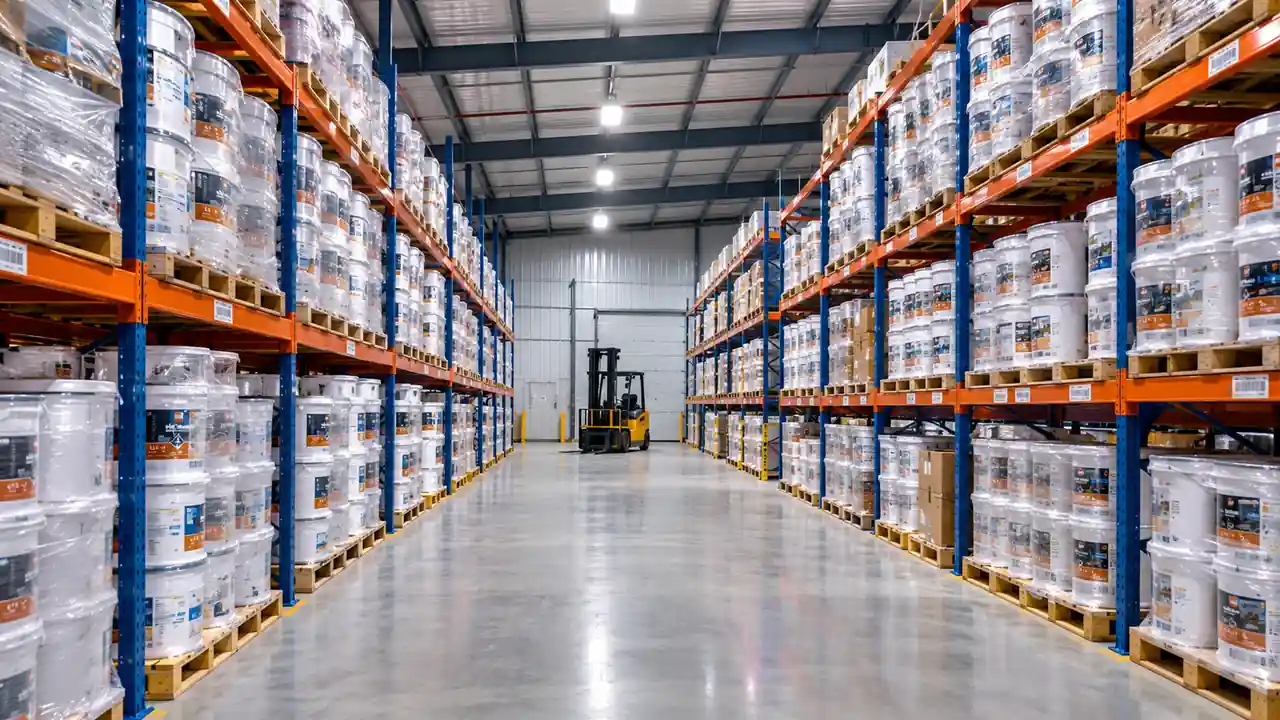
Store bundles flat, dry & shaded until installation. Heat, moisture & crushed edges damage shingles before they reach the roof.
- Store bundles flat on a pallet or level boards, never on bare ground.
- Cover stacks with a breathable tarp. Plastic sheeting traps moisture.
- Keep stacks out of direct sun. Heat can seal bundles together.
- Stack no higher than the delivery pallet.
- Keep bundles in the original wrapper until use.
- Keep bundles away from heat sources and fuel.
- Keep bundles from the same lot together for a color match.
- Use older spare bundles first & check them for curling.
- Never drag or drop bundles. Edges crack & granules scuff.
- Move bundles to the roof only when work starts that day.
How Many Roofing Nails Does Each Bundle Need?
Four nails per shingle means about 88 to 116 nails per bundle. The International Residential Code sets four nails as the minimum for strip shingles.
- Four nails per piece is the code minimum for strip shingles (IRC R905.2.6).
- Six nails per piece suits high-wind areas, many wind warranties & very steep roofs.
- A 3-tab square holds 80 pieces. That is 320 nails at four per piece and 480 at six.
- A 27-piece 3-tab bundle takes 108 nails at four per piece.
- A 22-piece architectural bundle takes 88 nails at four and 132 at six.
- Use galvanized steel, stainless steel, aluminum, or copper nails (IRC R905.2.5).
- Nail shanks must be at least 12 gauge, with heads at least 3/8 inch wide.
- Nails must go 3/4 inch into solid wood or through the deck.
- On laminated shingles, drive nails through the nailing zone so they pass both layers.
- Round nail boxes up, because bent nails and misses add about 5% loss.
What Information Does the Bundle Wrapper Label Give You?
The wrapper lists the numbers that beat any rule of thumb. Read it before you place an order.
- Pieces per bundle.
- Coverage per bundle in square feet.
- Bundles per square.
- Weight per bundle.
- Exposure in inches.
- Wind class under ASTM D7158 or ASTM D3161.
- Fire and impact ratings, such as UL 790 Class A or UL 2218 Class 4.
- Manufacturer name and product line.
- Lot number for color matching.
- Nail count and nailing zone diagram.
Ratings on the wrapper point to the tests below.
| Standard | What it tests | Key ratings |
| ASTM D3462 | Tear strength and makeup of fiberglass-mat shingles | Minimum tear strength of 1,700 grams |
| ASTM D7158 | Wind uplift on sealed shingles | Class D 90 mph, G 120 mph, H 150 mph |
| ASTM D3161 | Wind resistance by fan test | Class A 60 mph, D 90 mph, F 110 mph |
| UL 790 and ASTM E108 | Fire spread and burning brands | Class A is the highest |
| UL 2218 | Hail impact with steel balls | Class 4 uses a 2-inch ball from 20 feet |
How Do Tear-Off and Overlay Jobs Change Your Order?
Tear-offs and overlays use the same bundle math, but overlays carry limits and extra risks.
Tear-Off Jobs
A tear-off strips old shingles to the deck. Crews inspect the decking, re-nail loose boards & replace rot. Bundle counts stay the same, but clean decks cut waste and surprises.
Overlay Jobs
An overlay adds new shingles over one old layer. Codes bar going over two or more layers. Telegraphing can show old surface flaws through new shingles. Wet or damaged decking rules out an overlay.
Deck Repairs
Rotted decking needs new sheathing before shingles go on. Typical decks use 7/16 inch OSB or 1/2 inch plywood. Repairs over 100 square feet usually need a permit and an inspection.
Request an accurate shingle takeoff for your roof today from the Smart Constructs team.
What Do Building Codes Say About Shingle Bundles?
Codes do not set bundle counts. They set material standards, fastening, and layers. Local rules can add more.
- ASTM D3462 covers fiberglass-mat asphalt shingles (IRC R905.2.4).
- Shingles are not allowed below a 2:12 slope.
- Slopes from 2:12 up to 4:12 need two layers of underlayment.
- An ice barrier is required where January averages 25°F or lower (IRC R905.1.2). It runs 24 inches inside the wall line.
- Drip edge goes on eaves and rakes, with 2-inch overlaps (IRC R905.2.8.5).
- Most codes bar a new roof over two or more existing layers (IRC R908.3.1.1).
- Attic ventilation needs 1 square foot of net free area per 150 square feet of ceiling (IRC R806).
- Flashing must be corrosion-resistant metal, at least 0.019 inch thick (IRC R903.2.1).
- A chimney wider than 30 inches needs a cricket to shed water.
- Tear-offs and deck repairs over 100 square feet usually need a permit.
- Inspectors check nails, flashing & underlayment at dry-in and at final.
- Local building offices and maker rules can be stricter.
How Do Climate and Local Rules Change Your Bundle Order?
Wind, hail, snow, fire & humidity change the product you order and how you install it.
Hurricane Zones
Miami-Dade and Broward need shingles with a Miami-Dade NOA approval. Crews use six nails per shingle and re-nail decks with 8d ring-shank nails at 6 inches on center. Roof cement goes under starters, rakes & valley laps.
Hail Belt
Hail states like Texas, Colorado, Oklahoma, Nebraska & Kansas favor Class 4 impact shingles (UL 2218). According to IBHS research, strong sealant is a key factor in resisting wind damage, most of all after hail.
Snow Zones
Cold regions often extend ice barriers past 24 inches, to two full courses. Below 40°F, the sun cannot activate sealant strips. Crews hand-seal tabs with quarter-sized dabs of roof cement.
Wildfire Zones
Fire zones need Class A roofs. UL 790 sets that rating. California Chapter 7A zones are one example. Vents need metal mesh of 1/8 inch or finer.
Windy Plains and Coasts
Open plains fall under ASCE 7 Exposure C. Flat coastal land within 600 feet of open water falls under Exposure D. Exposure D needs design wind speeds of 130 to 150 mph and tighter fastening at roof edges.
Humid Zones
Gulf Coast and Southeast roofs face black algae streaks. Copper-coated granules fight them. California Title 24 asks for reflective granules in some climate zones.
What Mistakes Make Bundle Counts Go Wrong?
Most miscounts come from skipped steps, not hard math.
- Ordering by piece count instead of coverage.
- Measuring the floor plan and skipping the pitch factor.
- Rounding squares down instead of up.
- Skipping waste on hip and valley roofs.
- Forgetting starter and ridge bundles.
- Counting luxury shingles at three bundles per square.
- Mixing production lots, which shifts color.
- Trusting rules of thumb over the wrapper.
- Forgetting extra nails for six-nail patterns.
- Ignoring dormers, chimneys & skylights that add cuts.
- Buying zero spare bundles.
How Do You Check Your Order Before You Buy?
Run every count two ways, then compare. A second pass catches most errors before they reach the invoice.
- Measure each roof plane twice.
- Compare your numbers with an aerial report.
- Check the math both ways: squares times three & area divided by 33.3.
- Apply the right pitch factor to each plane.
- Add waste by roof type.
- Round up on every product.
- Add starter and ridge bundles from linear feet.
- Add nails by pattern, four or six per piece.
- Confirm wrapper coverage for your exact product line.
- Order all bundles from one lot, plus one spare.
Count Bundles Right and Request an Accurate Takeoff Today
Bundle math comes down to coverage. Most asphalt bundles cover 33.3 square feet; three bundles make a square & waste adds 10% to 20%. The Smart Constructs team runs this math, with pitch, starters, caps & nails in its building cost estimation work.
Request an accurate shingle takeoff for your roof today.
Frequently Asked Questions
How many shingles in a bundle of architectural shingles?
An architectural bundle usually holds 20 to 22 shingles. Heavy-duty lines may hold fewer. The bundle covers about 33.3 square feet, so three bundles cover one roofing square.
How many sqft in a bundle of shingles for luxury products?
Luxury bundles cover 20 to 25 square feet. They hold only 10 to 16 heavy pieces. A roofing square needs four to five bundles, not three. Check the wrapper to confirm.
How many bundles cover a 2,000 square foot roof?
A flat 2,000 square foot area needs 20 squares, or 60 bundles. A 6:12 pitch raises that to 23 squares, or 69 bundles. Add 10% to 15% for waste.
How many nails does one shingle bundle need?
Four nails per shingle is the code minimum. A 27-piece 3-tab bundle needs about 108 nails. A 22-piece architectural bundle needs about 88. Use six nails per piece in high-wind areas.
How much waste should you add to a shingle order?
Add 10% for simple gable roofs, 12% to 15% for hip roofs & 15% to 20% for roofs with dormers and valleys. Round up to whole bundles. Keep spares for repairs.
