
You ask three contractors how much it will cost to pour a slab, and the quotes come back far apart. Now you’re stuck. Which one is fair? What did each contractor leave out? And if you order too little concrete, the crew stops mid-pour. Order too much, and you pay for concrete you never use. Even a plain 30‑by‑30‑foot slab can cost anywhere from $3,600 to $7,200, says This Old House.
You do not have to guess. A concrete slab price comes from a list of choices: thickness, base work, reinforcement, site access, and fees. Once you know how each one works, you can check any concrete quote yourself.
In this blog, we will cover everything step by step. You will learn how to figure out the concrete you need and how to spot costs a quote leaves out. You will also see how long concrete takes to cure and how to compare bids side by side.
How Much Does It Cost to Pour a Concrete Slab?
Most people pay $4 to $8 per square foot to pour a concrete slab. The average is about $6. Here are the main numbers in one place.
| What you are pricing | Typical cost | Source |
| Installed price per square foot | $4–$8 | This Old House |
| Average price per square foot | $6.60 (range $4.34–$7.73) | LawnStarter |
| 10×10 ft slab (100 sq ft) | about $600 | HomeAdvisor |
| 20×20 ft slab (400 sq ft) | about $2,400 | HomeAdvisor |
| 30×30 ft slab (900 sq ft) | about $5,400 (range $3,600–$7,200) | HomeAdvisor |
| Ready-mix concrete per cubic yard | $160–$195 (national average about $180 in 2024) | Concrete Network |
| Labor per square foot | $2–$3 | HomeAdvisor |
Cost guides do not all agree. Thumbtack’s 2026 page lists $6 to $9 per square foot. A slab with mesh or rebar costs more. LawnStarter lists $9.29 to $10.04 per square foot for reinforced slabs.
Contractor quotes can run higher still. According to Everything About Concrete, most quotes for a full 6-inch slab land between $12 and $16 per square foot, with reinforcement, forms, joints, and finishing included. A basic average may leave some of those out. That gap is why you should always ask what a quote covers.
Concrete Slab Cost per Square Foot vs. per Cubic Yard
Contractors quote slabs by the square foot. Concrete suppliers sell concrete by the cubic yard. You need both numbers to check a quote.
Use this formula to find the concrete you need:
CubicYards=Length(ft)Width(ft)Thickness(in)324
One cubic yard holds 27 cubic feet. According to Housecall Pro, a shortcut is to multiply cubic feet by 0.037.
Add a waste factor. Order 5 to 10 percent extra to cover spills and uneven ground. Small home pours should plan for 10 percent. Pours of 10 cubic yards or more can use the low end.
Example: a 10×10 ft slab that is 4 inches thick holds about 33.3 cubic feet. That is 1.23 cubic yards. With 10 percent extra, you order about 1.36 cubic yards.
What a yard costs. According to NRMCA, the national average for ready-mix was $159.68 per cubic yard in 2023, up from $116.43 in 2019 (about 37 percent). Ask your supplier for today’s price.
A quick check. At $180 per yard, a 4-inch slab needs about $2.20 of concrete per square foot. That is our math: 0.0123 cubic yards per square foot times $180. The rest of the $4 to $8 price pays for labor, base work, forms, and extras.
What Is Included in a Concrete Slab Price?
Concrete is only about a third of a typical slab price. Labor, base work, and reinforcement make up the rest. Here is what each piece costs.
| Cost item | Typical cost | Source |
| Ready-mix concrete (4 in slab) | about $1.98–$2.22 per sq ft at $160–$180 per yard | Our math from NRMCA and Concrete Network prices |
| Labor (pour, level and finish) | $2–$3 per sq ft | HomeAdvisor |
| Gravel base and prep | $5 per sq ft on one 6-inch slab (varies by site) | Everything About Concrete |
| Wire mesh | $0.35 per sq ft | This Old House |
| Steel rebar | $2–$3 per sq ft | This Old House |
| Vapor barrier | $0.50 per sq ft | This Old House |
| Removing old concrete | +$2–$6 per sq ft | HomeGuide |
Rebar costs far more than wire mesh. Ask which one your quote uses. Forms, control joints, finishing, and curing also belong in the price.
What Affects the Cost of a Concrete Slab?
Thickness, reinforcement, site conditions, finish, and location move the price the most. Here is how each one works.
Slab Thickness
Thicker slabs cost more primarily because they require more concrete. A 5-inch slab uses 25% more concrete than a 4-inch slab, while a 6-inch slab uses 50% more. However, your total installed price increases by less because most labor costs remain fixed.
Concrete strength
Stronger mixes cost more per yard. Ask your contractor what strength they price. According to Everything About Concrete, a base price often assumes 3,000 PSI concrete.
Reinforcement
More steel costs more. Rebar costs more than mesh, and tighter spacing uses more of it. Ask what reinforcement your quote includes.
Site conditions
Hard access, a sloped lot, old concrete to remove, and thicker slab edges all raise the price. Ask what your quote assumes about the site.
Finish
A plain broom or trowel finish costs the least. Stamped finishes cost more, and quotes show them in two ways. According to This Old House, a basic stamped design costs $10 to $14 per square foot in total. HomeGuide lists stamping as an extra $3 to $12 per square foot. Ask which one your quote shows.
Permits
Permit rules change by city and county. According to Angi, a permit may be required. Ask who pulls it and what it costs.
Season and weather
Cold weather adds cost for insulation, heating, and temperature sensors. According to Concrete Network, slow setting can also delay finishing and raise labor costs. We found no reliable national dollar figure for this, so ask your contractor for a winter line item.
Where you live
Prices change by state. According to HomeAdvisor, a slab costs about $5.35 per square foot in central states, and coastal states such as California and New York can reach about $8.50.
| State | Price per sq ft |
| California | $7.67–$8.53 |
| New York | $6.67–$8.53 |
| Maine | $6.73–$7.49 |
| Florida | $5.89–$6.56 |
| New Mexico | $5.81–$6.46 |
| Montana | $5.78–$6.43 |
| Kansas | $5.46–$6.13 |
| Texas | $5.31–$5.90 |
| Kentucky | $5.16–$5.74 |
Project size
Small jobs can hit a minimum charge. According to Everything About Concrete, one contractor charges a minimum of about $1,500 in labor on small jobs.
Concrete Slab Cost by Project Type and Size
Patios, driveways, and house foundations use different thicknesses, so they cost different amounts per square foot.
| Project | Thickness | Price per sq ft |
| Walkway | 4 in | about $6 |
| Patio | 4–6 in | $6–$9 |
| Sidewalk | 4–6 in | $6–$9 |
| Driveway | 4–8 in | $6–$12 |
| Foundation | 8–10 in | $12–$18 |
Cost and concrete by slab size
This table pairs the price with the concrete you must order. Most guides show one or the other.
| Slab size | Area (sq ft) | Concrete to order (4 in, with 10% extra) | Cost at 4–8 per sq ft | Cost at $6 average |
| 10×10 ft | 100 | 1.36 yd³ | $400–$800 | $600 |
| 12×12 ft | 144 | 1.96 yd³ | $576–$1,152 | $864 |
| 12×16 ft | 192 | 2.61 yd³ | $768–$1,536 | $1,152 |
| 12×20 ft | 240 | 3.26 yd³ | $960–$1,920 | $1,440 |
| 20×20 ft | 400 | 5.43 yd³ | $1,600–$3,200 | $2,400 |
| 20×30 ft | 600 | 8.15 yd³ | $2,400–$4,800 | $3,600 |
| 24×24 ft | 576 | 7.82 yd³ | $2,304–$4,608 | $3,456 |
| 30×30 ft | 900 | 12.22 yd³ | $3,600–$7,200 | $5,400 |
How to Calculate Concrete Slab Cost
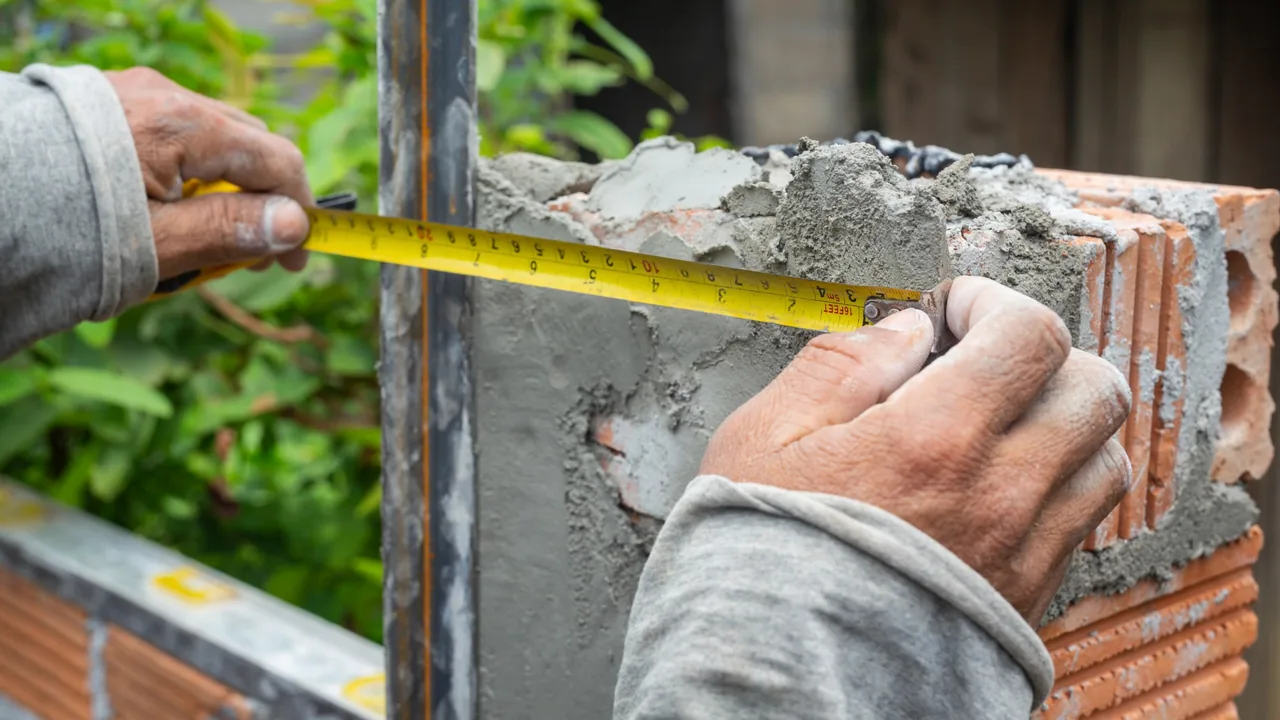
You can get an estimate for a slab yourself. It takes a few simple steps, and you only need a tape measure and a calculator.
1. Measure the Slab
Start by measuring how long and wide the slab will be. Multiply the two numbers to get square feet. Labor, mesh, and the vapor barrier are all priced by the foot, so you will use this number again and again.
2. Find How Much Concrete You Need
Suppliers sell concrete by the cubic yard, so square feet alone will not do. Multiply the area by the thickness (in feet), then divide by 27 because one cubic yard holds 27 cubic feet.
3. Add a Little Extra
The ground is never perfectly flat, and some concrete always gets spilled. Add 10 percent to your total so the truck doesn’t run short while the crew is still pouring.
4. Price the Concrete
Multiply the yards you are ordering by the price per yard. Ready‑mix usually costs about $160 to $195 per yard nationwide, but your local plant can give you the real number.
5. Add the Labor
Labor pays the crew for pouring, leveling, and finishing. It costs $2 to $3 per square foot, so multiply that by your area.
6. Add the Mesh and the Vapor Barrier
Wire mesh costs about $0.35 per foot, and the plastic vapor barrier under the slab costs about $0.50 per square foot. Both are costs, but they add up on a big slab.
7. Add It All Up
Start by adding up the concrete, labor, mesh, and vapor barrier costs. Then add the gravel base work and any site extras on top.
Example: A 20×30 Foot Slab, 4 Inches Thick
Say you are pouring a slab that’s 20 feet long, 30 feet wide, and 4 inches thick. The area is 20 × 30, which gives you 600 sq ft.
To get the volume, turn 4 inches into one‑third of a foot and multiply: 600 × ⅓ is 200 cubic feet, and dividing by 27 gives you 7.41 cubic yards. Add 10 percent for spills and uneven ground. You would order 8.15 cubic yards.
At $160 to $195 per yard, the concrete costs $1,304 to $1,589. Labor at $2 to $3 per foot comes to $1,200 to $1,800. The mesh adds $210. The vapor barrier adds $300.
Put those together. The slab costs about $3,014 to $3,899 before base work and site extras.
That total only covers the part of the slab. Thickened edges, footings, rebar overlaps, control joints, and a gravel base all cost extra, so use it as a starting point and ask for a written quote before you decide.
How Long Does Concrete Take to Cure?
You can walk on concrete after 1 to 2 days. But it keeps getting stronger for weeks. Cure time matters for cost because it decides when the forms come off and when the next crew can start.
About 1 Hour: Surface Water Dries
A little water rises to the top after the pour, then dries off. Now start curing. Cover the slab with wet burlap or spray on a curing compound. This keeps the moisture in so the concrete gets strong.
1 to 2 Days: Firm Enough to Walk On
The slab is hard now. You can walk on it, and the crew can take off the forms. Do not park anything heavy on it yet.
7 Days: Light Loads
The slab has about 70 to 75 percent of its full strength. It can hold light things, like bikes.
14 Days: Cars
The slab keeps getting stronger every day. After two weeks, cars can usually drive on it.
28 Days: Heavy Loads
Wait about four weeks before putting heavy things on the slab.
About 120 Days: Fully Dry
A 4-inch slab takes about four months to dry all the way through. Wait until then before you put down flooring that traps moisture.
Curing Is Not the Same as Drying
- Curing is what makes concrete strong.
- Drying is the water leaving the slab.
A slab can be strong long before it is dry. So the wait for strength and the wait for flooring are different.
Is 28 Days a Magic Number?
No. 28 days is just the day concrete strength is usually tested. Curing does not stop then. The National Precast Concrete Association says concrete reaches about 75 percent of its 28-day strength in 7 days. It keeps getting a little stronger for months. So you can use the slab well before day 28. Ask your contractor how long to wait before heavy loads.
What Cure Time Means for Your Budget
- A crew may need to come back to cut joints or seal the slab.
- Cold weather can delay the job and raise labor costs.
- Ask your contractor how they price weather delays.
How Much Will Your Concrete Slab Really Cost?
Get a clear, itemized concrete estimate today and plan your project with confidence.
Hidden Costs: Short Loads, Pump Trucks and Waste
The biggest surprises on a slab quote are fees that sit outside the price per square foot. Ask about each one before you sign.
| Hidden cost | Typical cost |
| Short-load or second-trip fee | $50–$200 each time |
| Pump truck rental | $150–$300 per hour |
| Hard site access (pump needed) | +$500–$2,000 per job |
| Sloped or uneven lot | +$10–$30% |
| Removing old concrete | +$2–$6 per sq ft |
| Power trowel rental | $75–$200 per day |
| Concrete saw rental | $50–$150 per day |
| Skid steer rental | $200–$500 per day |
Poured vs. Precast Concrete Slabs
According to Angi, a poured slab costs about $6 per square foot including labor. A precast slab costs $20 to $30 per square foot. That is three to five times more.
Precast slabs are made in a factory and delivered to the site. They may suit a job where you cannot wait on cure time. Most homes use poured slabs because of the price. Ask a supplier for a written quote before you decide.
Common Types of Concrete Slabs
Not every slab uses the same mix. The mix changes how strong the slab is and how much it costs per square foot. Most homes only need the basic type, and the stronger types are for special jobs.
Standard Concrete
This is the everyday mix, and it’s what most patios, walkways, and sheds are built with. It’s also the cheapest of the group, so unless your job has a special need, this is where you start.
Rebar-Reinforced Concrete
Steel bars are set inside the slab to help hold it together. You’ll pay about $7 per square foot for it, which is a small step up from the basic mix.
High-Strength Concrete
If the slab has to carry something heavy, like part of a multi-story house, this is the usual choice. It costs about $8 per square foot.
Fiber Mesh Concrete
Tiny fibers are mixed through the concrete to make the slab tougher. It’s the priciest of these at about $10 per square foot.
Permeable Concrete
This mix lets rain soak through instead of running off the surface, which helps with drainage. It costs more than regular concrete, so it makes the most sense where runoff is a problem.
DIY or Hire a Concrete Contractor?
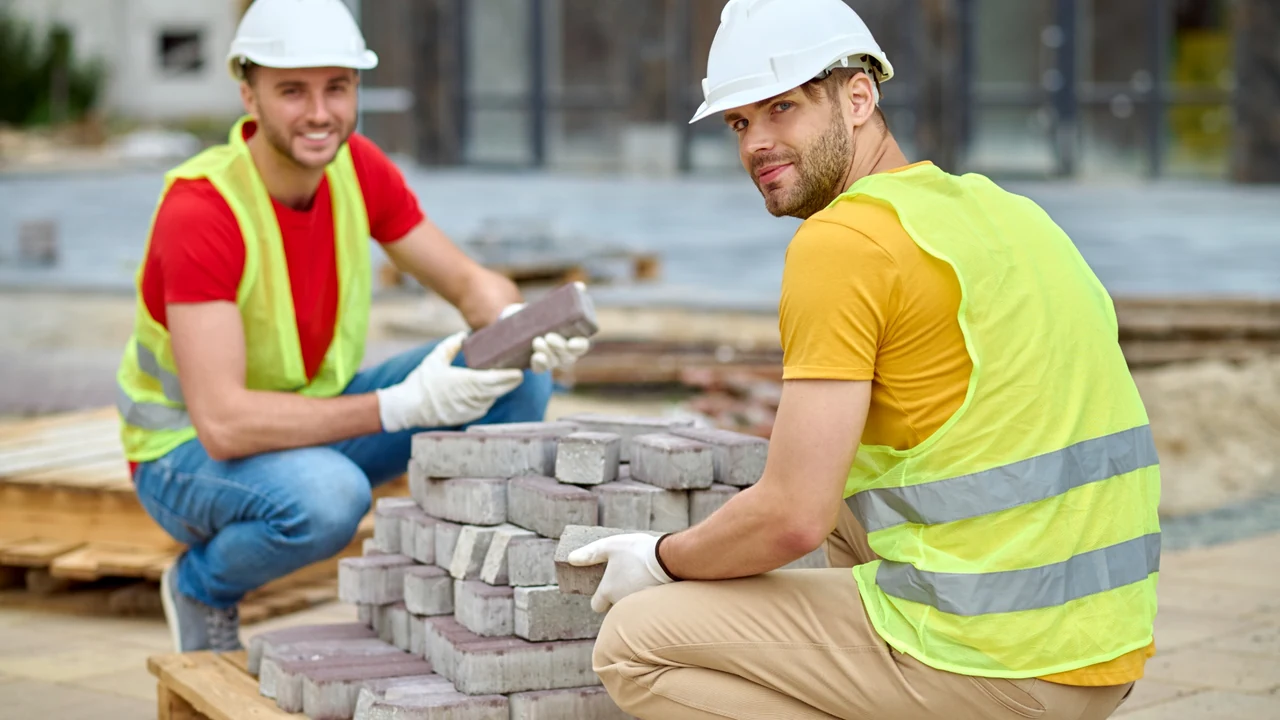
Pouring a slab yourself can save about $2.55 per square foot in labor. On a 600 sq ft slab, that is about $1,530. That is our math.
The savings shrink once you add the costs of doing it alone:
- You still pay for concrete and materials.
- You may rent a power trowel (75–200 per day) and a concrete saw (50–150 per day)
- A professional job takes about 24 to 48 hours of work. A DIY job takes longer.
- A mistake can mean a second load or a tear-out.
Our advice: small pads and walkways are fair DIY jobs. Hire a pro for driveways and garage floors.
Not sure which side of the line your job falls on? Send us your plans, and we will show you how much concrete it needs.
How to Save Money on Concrete Slab Costs
You can lower the cost without cutting corners:
Clear the site first
If you move the plants or break up the old slab yourself, the crew has less work to bill you for. Check with your contractor before you start, so you don’t get in their way or leave a mess they have to clean up.
Order what you need, plus a little extra
Too much concrete is money wasted, but running short in the middle of a pour can mean a second delivery fee. A small cushion keeps you safe from both problems.
Pick a simple shape
A plain rectangle is quicker to build forms for and to finish than a curved slab, so the labor costs less. If the design allows it, straight lines are the cheaper choice.
Choose flat ground for small pads
A pad for an AC unit or a propane tank takes less digging and leveling when the ground is already level. That saves the crew time, and it saves you money.
Skip the fancy finish
Stamping and staining look nice, but they add to the price of the job. A plain broom finish costs the least and still gives you a good grip underfoot.
Look after the slab once it’s in
Sealing it and wiping up stains soon after they happen helps it last longer. That means fewer repairs later and less money spent over the years.
How to Compare Concrete Slab Quotes
Get two or three quotes. Then make sure that each quote covers the work. A low price often means something is missing.
What a good quote lists
Use this list to compare quotes. A full quote explains each of these items:
- Slab thickness and size
- Concrete strength
- Reinforcement type: fiber, wire mesh, or rebar
- Gravel base depth Who does the grading
- Forms and control joints
- Vapor barrier and any foam insulation
- Finish type and curing method or sealer
- Pump truck, short-load fees, and extra delivery charges
- Removing old concrete
- Permits and who handles them
Questions to ask every contractor
- Is the price per foot or a flat total, and what does it include?
- What is not included?
- How do you handle weather delays?
- What reinforcement do you use? How do you keep it in place?
- Can I see proof of liability insurance and workers’ compensation insurance?
- What does your state require for a contractor license?
A price below the $4 to $8 range is a reason to ask more questions.
Concrete Slab vs. Crawl Space Foundation: Which Costs Less?
A slab costs less than a crawl space. According to HomeAdvisor, a slab runs $5 to $16 per square foot, or about $5,200 to $13,000 for the whole job. A crawl space costs $6 to $18 per square foot, and the average job is about $10,000.
| Foundation type | Price per sq ft |
| Slab (one-pour) | $5–16 |
| Pier and beam | $6–12 |
| Crawl space | $6–18 |
| Concrete block | $9–15 |
| Basement | $20–37 |
Crawl Space Foundation Repair Cost
If you already have a crawl space, you may be wondering what a repair costs. According to Thumbtack, it usually runs $2,031 to $7,482. A small fix can start near $819, and a big one can reach $19,310. Angi lists the common repair jobs and their prices.
| Crawl space repair | Typical cost |
| Waterproofing | $2,000–6,000 |
| Vapor barrier replacement | $1,200–4,000 |
| Full encapsulation | $1,500–15,000 |
| Insulation replacement | $500–3,700 |
| Cleaning | $500–2,000 (up to $4,000 with mold) |
The price depends on the size of the space and the kind of damage. Mold, water, and structural problems cost more than a simple fix, so have a foundation specialist look at it before you agree to a price.
Most crawl space problems start with moisture. According to the U.S. Department of Energy’s Building America Solution Center, humidity above 50 percent helps mold grow. If you find mold, a certified expert should remove it before any other work starts. That’s why cleaning and vapor barrier work often show up on the same quote.
How Much Will Your Concrete Slab Really Cost?
Get a clear, itemized concrete estimate today and plan your project with confidence.
When a Professional Concrete Takeoff Is Worth It
A quote is only as good as the numbers that go into it. A takeoff is a count of everything a project needs: yards of concrete, rebar, forms, vapor barrier, and other items. Contractors and builders who submit bids often give this task to a professional Smart Constructs estimator.
A takeoff is most helpful when:
- You are bidding jobs at the same time and need the numbers quickly
- The slab has different thicknesses, thick edges, or footings
- The plans require specific strength, reinforcement, or base layers
- You need a number that you can explain to an owner
What we look at during every concrete takeoff
- The area of the slab and the thickness in each section
- Edges and footings
- The type and spacing of reinforcement
- Details about the base and vapor barrier
- The waste factor and delivery items
- Specifications that do not match the plans
Send us your plans, and we will calculate the cost of the job. We usually send estimates within 10 to 48 hours.
FAQs
How far apart should control joints be in a concrete slab?
Control joints should be spaced 2 to 3 feet apart for every inch of slab thickness. For a 4-inch slab, that means 8 to 12 feet apart. Never more than 15 feet. Keep the sections close to square so any cracks follow the joints.
Are cracks in a concrete slab normal?
Yes, small cracks in a concrete slab are common and usually do not affect the strength or the lifespan of the slab. These cracks often come from missing control joints, poor ground preparation, or improper curing. If cracks keep getting wider, it’s best to have someone take a look.
Do I need gravel under a slab?
Usually yes. If the ground is firm. You might not need gravel, but in most cases a gravel base is recommended. The base should be at least 4 inches thick and well compacted. Going thicker than that adds extra support. Ask your contractor what your soil needs.
How long does a concrete slab last?
Most concrete slabs last for decades. Driveways often last 40 years or more, patios 30 years or more, and sidewalks 20 to 40 years. Poor ground preparation, freeze-thaw cycles, and not sealing the slab can shorten that lifespan.
How many shingles are in a bundle?
The number of shingles in a bundle depends on the type. Most bundles hold between 20 and 29, and architectural shingles usually come in around 21. Either way, one bundle covers about 33 square feet of roof, so you’ll need three bundles for every 100 square feet.
How do I figure out what size heating and air conditioning system I need?
Don’t guess based on footage. Ask your contractor for a Manual J load calculation. This calculation determines how much heating and cooling your home needs. Guessing often leads to a system that’s too big, which costs more and doesn’t work as well.
