
Imagine the following: it is 9 pm, your estimator is still engrossed with blueprints and the bid is due at noon tomorrow. Sound familiar? All contractors are familiar with this scramble and that is why so many construction companies are reconsidering the way they bid.
Probably more so than most owners are aware, construction companies are losing money on slow and error-ridden estimates. One quantity missed on a takeoff could erase the profit margin of a project. That is the ugly truth of having an in-house estimating team that has inadequate bandwidth to support demand.
Outsourcing construction estimation alters that equation altogether. You do not have to stretch your staff to the limit or to pay full-time employees who are costly to hire and keep. You simply leave the number-crunching to experts whose day, night and weekends are filled with estimating construction costs. The result? Quicker bids, fewer mistakes and a healthier bottom line.
In this guide, a breakdown of how construction estimatingoutsourcing saves money, time and assists contractors to acquire more lucrative work is provided. You will also get the numbers in the real industry, a cost comparison side by side and a practical checklist on how to select the correct estimating partner.
What Does Construction Estimating Outsourcing Actually Mean?
Here are a few things to straighten out. Outsourcing construction estimating refers to employing the services of an external group of professional estimators to conduct quantity takeoffs, price the materials, calculate the labor, and develop a bid on your behalf. You remain in charge of strategy and client relationship and specialists take charge of the spreadsheets.
Consider it as having the services of a law firm rather than having a lawyer on payroll, one lawsuit per year. You can have professional deliverables but without the full-time burden. The outsourced estimators also work on dozens of projects each month and this implies that they identify pricing patterns, local rate changes and scope problems, which an overburdened in-house team may not identify.
This model is currently used by contractors of all sizes, both small remodeling outfits with three jobs a month and large general contractors with forty or more active bids. The scale varies yet the advantage remains the same: more accurate estimations, faster and at a reduced cost.
What’s Actually Included in the Service?
The actual service typically entails much more than mere number entry. An efficient provider will look at architectural drawings, conduct a detailed material and labor quantity takeoff, get the current supplier pricing, estimate equipment and subcontractor costs and prepare the final bid package to submit. There are even companies that keep track of addenda and revisions during the bidding process and automatically update numbers as new scope changes are received.
That is why the model applies to so many different niches in construction as well. Electrical, plumbing, drywall, roofing, civil and MEP estimating have their own pricing peculiarities and code. A devoted outsourcing partner may have estimators who are specialists in their field. This implies that your drywall bid and your electrical bid will be reviewed by someone who is actually familiar with that area of work, not a generalist who is being pulled in several directions at the same time.
The Hidden Cost of Keeping Estimating In-House
Salary Isn’t the Whole Story
And here is something that most owners do not compute: an in-house estimator costs much more than his or her salary. Based on industry wage rates, a full-time construction estimator in the United States makes about $80,000 to $95,000 annually before benefits, software license, training and office overhead are included.
Now take that times the slack months. That payroll continues to make it into your books every payroll period even when the bid volume is low. You are paying full price for an in-house estimating team that may be either too busy or waiting around until the next project falls.
Turnover and Equipment Costs Add Up
The problem is aggravated by turnover. Estimating is a craft, and the departure of a single seasoned employee can delay your bidding pipeline by months as you seek, train, and onboard a new employee. In the meantime, competition with outsourced estimating proceeds unabated.
Another side of the equation is the equipment side, which is often not considered in the true cost of an in-house hire by the owner. Another $5,000 to $8,000 per estimator annually can be readily added to a work station, two monitors, a license of takeoff software, plan-room subscriptions and continuous professional development training. All that does not come out in a job-cost report but it is all eroding total profitability.
The Workload Imbalance Problem
The second cost is hidden, and this is the workload imbalance. As the bid season kicks into high gear, one in-house estimator can only work so fast on twenty simultaneous opportunities. Rush estimates cause line items to be missed and line items missed cause thin or negative margins after construction. The number is usually found to be damaged after the project has been started and contractors are often left with no option other than to move on with it.
How Outsourcing Saves Time on Every Bid
1. Faster Turnaround on Complex Takeoffs
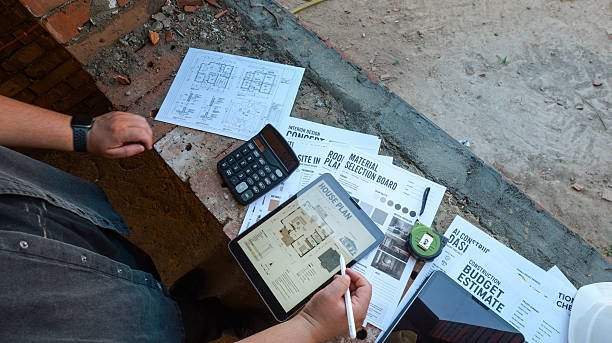
Speed wins jobs. Outsourced estimating companies have their own working teams and work in shifts meaning that what would take your own staff a week to complete can be delivered to you in 24-48 hours. That quicker estimating turnaround time allows you to take on more projects without overloading your core staff.
2. Your Team Stops Drowning in Spreadsheets
Spare your project managers late night takeoffs. By outsourcing construction estimation, your in-house team will focus on client meetings, site oversight and deal closing rather than tallying sheets of drywall in the middle of the night.
3. Parallel Processing of Multiple Bids
A single in-house estimator can only bid on one bid. With an outsourced provider, you have many specialists on your account and as a result you can pursue five opportunities at the same time and not just one and hope that it will work.
4. Less Time Spent Chasing Supplier Quotes
Current material pricing is consuming hours each week. The outsourced estimating teams are connected with suppliers and subscribe to real-time pricing databases. Thus, they can fetch correct numbers within minutes rather than spending days waiting to receive calls. That one benefit is capable of reducing a typical commercial bid timeline by one entire day.
5. Faster Response to Last-Minute Addenda
The deadlines of bids do not remain in place. Architects make addenda, owners revise the scope and plans are revised days before submission. An outsourced team dedicated to taking in these changes at the last minute and recalculating the whole estimate in a matter of minutes. Whereas an already-stretched in-house estimator may not have time to rework numbers before time runs out.
How Outsourcing Reduces Construction Costs
1. No Salaries, Benefits or Idle Payroll
Only pay for what you use. Outsourced construction cost estimating is based on a pay-as-you-go or subscription rate, erasing the fixed payroll of a full-time employee. You save on the recruitment fee, health insurance, paid leave and retirement contribution.
2. Lower Software and Technology Overhead
Software estimation is not a cheap affair. The cost of licenses such as PlanSwift, Bluebeam, or ProEst can cost between $2,000 and $5,000 per seat. Outsourced companies already have these licenses and educate their employees on them; the cost is eliminated from your budget altogether.
3. Fewer Costly Estimating Errors
Mistakes are expensive. One inadvertent figure will cut your profit margin thousands of dollars on a mid-sized job. Specialized outsourced estimators adhere to standardized review procedures that help to uncover any mistakes before they make it to the client and safeguard your margins on any bid you present.
4. Better Bid-Win Rates Mean Lower Cost Per Project Won
Getting more bids diffuses your overhead. A case study of outsourcing consultancy in 2025 indicated that one contractor engaged to work with a far-off outsourcing team saved about 30% in estimating expenses whilst providing correct preconstruction figures on a business venture. With a year of bidding, such savings accumulate quickly.
5. No Investment in Office Space or Equipment
All internal recruits require a desk, a work-station and good hardware. Outsourcing eliminates that physical footprint, which is even more important to smaller companies working out of cramped offices or job-site trailers. You release budget and square footage to revenue-generating activities.
6. Predictable Budgeting
The cost can be easily estimated as fixed monthly retainers or open-per-project pricing, which are easy to predict. You are sure of the cost of estimating before even the work has started rather than estimating how the payroll, overtime, and software renewals will impact your overhead every quarter.
The following is a brief side-by-side comparison illustrating the true savings when you switch to an outsourced model as opposed to an in-house model.
| Factor | In-House Estimating | Outsourced Estimating |
| Average annual cost per estimator | $80,000 – $95,000 plus benefits | Pay-per-project, often 30-50% lower |
| Turnaround time per bid | 3-7 days, depending on workload | 24-48 hours, even for complex bids |
| Software and licensing | $2,000 – $5,000 per seat, annually | Included in the service fee |
| Scalability during busy seasons | Limited by staff headcount | Flexible, scales up or down on demand |
| Risk during slow seasons | Idle payroll costs continue | Pay only for the estimates you need |
Accuracy: The Overlooked Reason Outsourcing Pays Off
Bad numbers are more expensive than slow numbers. Accuracy estimation can either make a project remain profitable or it can silently drain the finances as it is being erected. Outsourced estimators are focused on a single thing, so they can identify scope gaps, regional changes in the price of materials and labor cost changes that a generalist in-house employee may miss.
There are also specialized estimating firms that monitor real-time material pricing throughout the regions and this is of the essence due to the fluctuating prices of Lumber, steel and concrete over the last couple of years. According to a survey conducted on construction trades, almost 35% of the contractors refer to faulty estimates as a major reason behind project overruns. Partnering with experienced estimators directly tackles this risk.
Additional protection is provided by quality control. The majority of the established outsourcing companies have a two-step review process, whereby a second senior estimator reviews all the takeoffs before their departure from the building. Those additional eyes will see the little errors, something overlooked in the door schedule, a wall section that was mis-measured, before they ever get on your client’s desk.
Raw accuracy is no more important than consistency. With the same trained team working on all your estimates, you will have the same numbers, in terms of format and methodology, with all your bids. It is much easier to compare historical project data, optimize pricing strategy through time and identify trends where project types generate the highest margins, with that consistency.
Real-World Impact: What the Numbers Show
No opinions can make any story better than numbers. The industry statistics are all indicating a quantifiable increase to be achieved if contractors outsource estimating work to dedicated contracting providers. Take into account the following statistics that are reported by contractors who switch regularly.
- Approximately, a few days become less than 48 hours of estimated turnaround time, enabling the teams to bid on many more opportunities in a month.
- Eliminating salaries, software and overheads will mean that annual estimating costs can decrease by approximately 30-40%.
- On contractors, there is a measurable improvement in bid-win rate with the change to specialized estimating support because the rapid and more accurate bids are delivered to the clients before the competitors can do so.
These results compound with time. A company that secures at least two or three other contracts annually by bidding more quickly and sharply is likely to recoup much more in income than it could ever spend on contracted estimating charges.
It is worth bearing in mind that these are trends in the industry, not that every single contractor would be guaranteed by them. The outcomes depend on the type of project, area and how familiar a provider is with your specific area of work. Nonetheless, the trend is similar throughout the industry: the speed of bids, reduced overhead and increased margins are more likely to pursue the direction once estimating transactions go to specialized professionals.
Who Benefits Most from Construction Estimating Outsourcing?
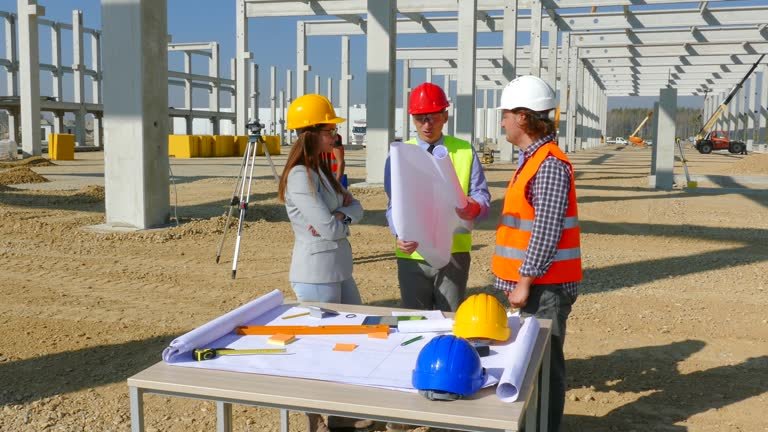
This is not a setup that all contractors require but most contractors benefit in some way. The most obvious time savings are experienced by general contractors who have many bids that are going on at the same time. Trade subcontractors such as electrical, plumbing or drywall, can scale up capacity without seasonal workers during peak bidding periods.
The return is particularly high in small and mid-sized firms since they may not be able to afford a full-time estimating department to begin with.Smart Constructs Outsourcing Estimating provides these smaller crews with equal access to the knowledge that large national contractors have at their disposal, bringing them to the same level on the bid day.
The expanding companies entering new markets also have a certain benefit. Expanding to a new territory implies having to operate in new labor rates, supplier chains and cost-allowances. A seasoned outsourcing partner already knows about those regional variables, which reduces the learning curve dramatically as opposed to developing local market knowledge through internal development.
Even the large contractors with their own well-established estimating departments usually outsource some overflow work in their peak bidding seasons. Instead of taking in seasonal workers who have to be trained and then retrenched after a couple of months. They direct the additional volume to an outsourced team and maintain their core unit small throughout the year.
How to Choose the Right Estimating Outsourcing Partner
Value is not equal among all providers. Check off this list prior to signing a contract and you will weed out serious estimating partners and companies that are merely resellers of generic spreadsheets.
- Look into their experience in your particular trade or type of project, be it commercial, residential or industrial.
- Inquire about the typical estimating turnaround time and seek references with existing customers.
- Ensure that they are using the estimating software and whether it can be integrated with your current systems.
- Check their quality control procedure for detecting takeoff errors before delivery.
- Explain pricing model: per-project, monthly retainer or hourly and align it with your bid volume.
- Communication rate when selling the product, as this normally determines how responsive they will be in the future.
- Inquire about their data security, confidentiality agreements, and storage of sensitive project drawings.
- Ask them to provide a sample estimate to be able to directly assess their formatting, level of detail, and accuracy before committing.
During onboarding, be ready to share your historical job-cost data and pricing preferences with your new partner. The more information an outsourced estimating team obtains regarding your pricing of labor, markup of materials and how you organize overhead, the sooner they will be able to present bids to meet your company’s needs in terms of style and margin.
What the Outsourcing Process Actually Looks Like?
Starting is not as difficult as most contractors suppose. The process is usually based on a distinct, repeatable workflow that can be easily integrated into your ongoing bidding process rather than arising as a disruption.
You provide your provider with project drawings and specifications and any scope clarifications, often via a safe upload portal or shared drive. Second, the estimating team assigned does a complete quantity takeoff, drawing current material and labor costs in your location. Third, they prepare an itemized estimate that is detailed and resend it to you to review, usually within 24 to 48 hours based on the complexity of the project.
Thereafter, you look at the numbers, ask to make changes, accept the final bid and submit the final bid. A revision window is also available at no additional cost with many providers, so any last-minute scope changes or addenda do not disrupt your schedule. With time, as the relationship develops, your outsourced team understands your desired markup structure, preferred formatting, and risk tolerance so that every future estimate goes through quicker and more accurately matches your behavior of pricing work.
This can be repeated rhythm, which is exactly why so many contractors remain in an outsourcing way after their initial project. Once the workflow has been dialed in, a new bid can be as easy as forwarding a set of plans and seeing a polished and accurate estimate drop back into your inbox.
Here, communication channels are important as well. The most effective outsourcing connections establish a point of contact, be it a project coordinator or senior estimator, such that you are not left without someone to communicate with on what is going on in your project, without you having to start all over again explaining your project to a new individual each time you hand in plans. The continuity breeds trust and accelerates any subsequent bid you place with them.
Common Concerns About Outsourcing, Addressed
Will I Lose Control Over My Bids?
No, you won’t. You also check, revise and accept all estimates before submission to a customer. Hands off the number-crunching, not the decision-making but to outsourcing.
Is My Project Data Secure?
The reliable providers sign non-disclosure contracts and have safe file-sharing platforms to safeguard your drawings and pricing information. This should always be verified in writing before sending sensitive project documents.
What If I Only Need Help Occasionally?
That is where outsourcing shines the most. The majority of providers have flexible and project-based contracts and therefore will increase the support when bidding is brisk and reduce the support when work is slow without incurring the cost of idle capacity.
How Quickly Can I Get Started?
The majority of outsourcing relationships are initiated in days, rather than months. After you present your project drawings and pricing preferences, a knowledgeable provider can normally provide your initial estimate within the same week, most times even sooner when you have a tight bid deadline.
Does Outsourcing Work for Small Renovation Jobs Too?
Absolutely. Scaling of outsourced estimating is as easy to scale down as it is to scale up. Small contractors who need help with kitchen remodeling or an addition to a single-family home enjoy the same precision and turnaround time as companies that bid on large commercial construction but on a smaller, less expensive scale.
The lesson is simple, and it needs to be repeated: increased speed of bids and reduced overhead is no longer a privilege of large contractors. They can be offered to any company that is ready to reconsider the way the estimates are constructed.
Final Thoughts
Math is easy when you lay it out. Construction estimating outsourcing saves on payroll, accelerates your bidding time, and enhances the precision of each number you turn-in. Those contractors who switch record higher bid-win rates and healthier profit margins in the initial year.
Any dollar you save on overhead is a dollar you can reinvest into equipment, marketing, or hiring experienced tradespeople who, in fact, swing hammers and pour concrete. Estimating does not have to be the choke point to your growth. It is one of your best competitive advantages with the right partner instead.
Construction is a business of relationship which is founded on trust and time. The contractors who have been able to make correct and properly prepared bids by the time they are due and thus able to secure a repeat client and continuous referrals are the ones who get the repeat business. All outsourcing does is to eliminate the friction that would have previously existed between a great opportunity and a great bid and to allow your best work to speak on its own.
In case spending late nights fixing takeoffs twice appears tiresome, maybe it is time to consider reevaluating your estimation-building strategy. Outsourcing Construction Estimating Services allows your staff the room to concentrate on what will truly expand your business, building great projects and getting the next great client.
Smart Constructs can assist the contractors in the estimation process, bid smarter and win more lucrative work without having the overhead of a complete in-house estimating department.
