
Bridge construction costs are hard to pin down. A single bridge can involve deep foundations, steel tonnage, concrete mixes, and permits that stack up fast. Getting the number right takes more than a rough guess. It takes a method tied to real codes and real site conditions.
This guide walks through how professional estimators break a bridge project into parts. Each part follows a different code, a different material grade, and a risk level. Skip one, and the budget falls apart later.
What Are the Key Steps to Estimating Bridge Construction Costs?
To create an accurate bridge budget, stop guessing and start calculating based on three specific parts: the bridge itself, the equipment used to build it, and the mandatory testing required by law. If you are managing a large project, using professional bridge estimating services is a smart move. It ensures every technical detail is covered, which helps you avoid costly surprises and keeps your project profitable.
Calculate the Direct Structural Costs
First, determine the cost of the actual materials that will remain as part of the finished bridge.
- Foundation & Substructure: List every cubic yard of concrete and pound of rebar for piers and abutments. Refer to IBC Chapter 18 (Sections 1803-1810) to ensure your soil and foundation estimates meet local safety standards.
- Superstructure: Pricing for steel girders or trusses in the superstructure should be determined using AASHTO M270 grades. Be certain to account for the cost of protective coatings, such as hot-dip galvanizing (ASTM A123), to prevent corrosion.
- Deck & Bearings: List items like expansion joints and bearing pads as individual units. These are specialty items that often require long lead times from suppliers.
Price the Temporary Construction Needs
This is where most budgets fail. You must pay for the tools and site access required to build the bridge, not just the bridge materials.
- Site access and crane pads: Since cranes are extremely heavy, there’s a need to allocate a budget for building a solid base for the equipment, like renting heavy-duty timber mats or spreading gravel to stop the machinery from sinking into the soil.
- Falsework & Formwork: If you are pouring concrete, you need temporary structures to hold it in place. Calculate the rental costs of these support systems based on ACI 347R safety standards.
- Equipment Rental: Calculate the cost of cranes, hydraulic gantries, and pile drivers, and make sure it is calculated on the basis of the actual cycle time needed to complete the work, rather than just applying a flat monthly fee.
Budget for Testing and Paperwork
Bridge projects require strict proof that the work was done correctly. You must include the cost of this “proof” in your initial bid.
- Testing Fees: Set aside money for experts to test all steel welds (using AWS D1.5 rules) and to use sound waves (CSL) to make sure concrete foundation pillars are solid (using ASTM D6760 rules).
- Compliance Labor: Doing DOT reports and records takes a lot of time. Pay for a staff person to handle these papers. This keeps the project moving on time.
- Permit Costs: Do not forget to pay for environmental permits. This includes setting up special curtains in the water to keep the area clean and safe under Section 404 of the Clean Water Act.
A Step-by-Step Guide to Parametric Bridge Estimating
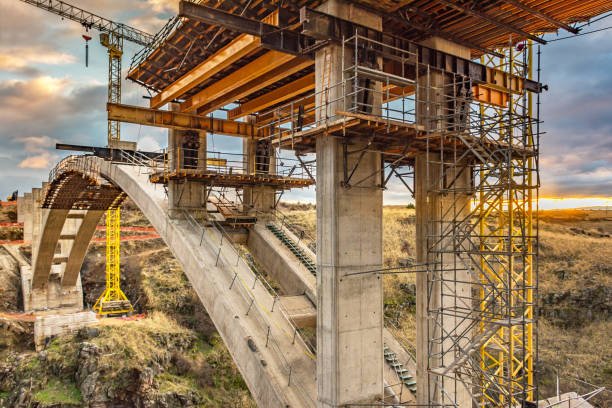
To move away from static, error-prone numbers, transition your estimation process into a parametric model. This approach ensures bids adapt automatically to site conditions, market fluctuations, and project-specific risks.
Centralize Global Factors
Instead of hardcoding prices, create a Global Factors tab to serve as the control center. Updating one cell here will propagate changes across every line item.
- City Cost Index (CCI): Link estimates to local market data (e.g., RSMeans) to normalize base costs.
- Cost = Base_Cost × (Local_CCI / 100)
- Labor Productivity Multiplier: Account for location-based efficiency drops. Apply a multiplier (e.g., 1.10 for a 10% reduction) to increase labor hours in remote or high-demand areas.
- Escalation Factor: Protect long-term profit margins from inflation. Apply an annual adjustment tied to indices like the ENR for any work scheduled 12+ months out.
Implement Complexity and Access Coefficients
Assign numerical values to site conditions to scale labor and equipment costs mathematically rather than through estimation guesswork.
| Access Type | Coefficient | Description |
| Standard | 1.00 | Open site, flat ground, clear staging area. |
| Restricted | 1.10–1.15 | Tight footprint, limited crane swing, urban constraints. |
| Remote/Difficult | 1.20–1.40 | Canyon, high-altitude, or barge-access only. |
- Automation Logic: Use a dropdown menu in the spreadsheet’s “Difficulty” column linked to an IF or VLOOKUP formula, which automatically scales labor and equipment hours upon selection.
Utilize Automated Contingency Logic
Replace lump-sum guesswork with dynamic contingency buffers linked to specific, high-risk bridge components.
- Phase-Specific Buffers: Apply higher contingencies only where necessary.
- Contingency = IF(Foundation_Type = “Drilled_Shaft”, 0.20, 0.15)
- Geotechnical Triggers: If reports indicate high uncertainty (e.g., expansive clay), isolate a 10% risk contingency specifically against the total foundation cost to ensure the bid remains competitive while remaining protected.
Match Your Estimating Method to the Bridge Type
Every bridge type has its own cost drivers. A beam bridge does not price out like a suspension bridge. The estimating method has to match the structure.
- Beam and girder bridges (I-girder or box girder) rely on crane lifting capacity and radius. Estimators calculate steel by grade under ASTM A709/A709M and rebar under ASTM A615/A615M. Transport of over-length girders adds cost, and so does precise bearing pad installation.
- Arch bridges need temporary falsework, the support structure holding concrete in place while it cures. Formwork follows ACI 347. Complex curved geometry means more labor hours and denser reinforcing steel cages.
- Suspension and cable-stayed bridges use high-strength steel tendons specified under ASTM A416/A416M. Pylon foundations must handle massive loads. Damping systems are also required to control aeroelastic flutter, the wind-driven vibration that can damage cables over time.
- Incremental launching bridges (also called slide-in bridges) use hydraulic gantry systems to push spans into place. This method needs a specialized casting yard. Duct placement, grouting, and tendon stressing all follow Post-Tensioning Institute (PTI) standards.
Pick the wrong method here, and every number downstream will be off.
Codes That Can’t Be Skipped While Preparing Bridge Construction Estimates
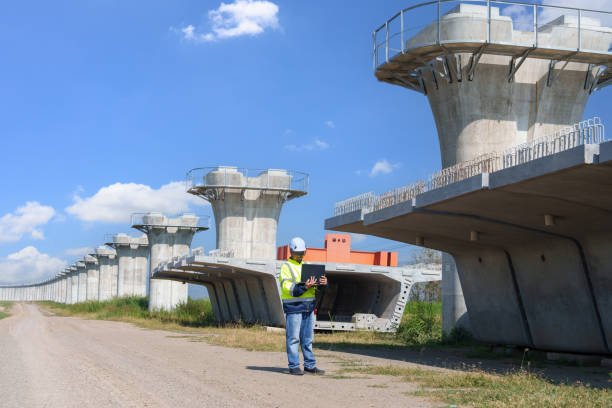
A bridge estimate without code references is not a real estimate. It’s a guess dressed up as a number. Reviewers and agencies expect specific standards cited by name.
- The AASHTO LRFD Bridge Design Specifications determine the load and resistance factors for the entire project. Each material quantity is directly linked to these limits.
- IBC Chapter 18 (Section 1803-1810) governs soils and foundations. This section influences earthwork pricing and deep foundation expenses like driven piles or drilled shafts.
- ASTM C33/C33M and ASTM C150/C150M specify aggregate quality and cement type. Poor aggregate leads to freeze-thaw failure, so this is not an area to cut corners.
- AWS D1.5, the Bridge Welding Code, applies to all steel fabrication. It mandates non-destructive testing (NDT) and certified welders, both of which incur costs.
- AASHTO M270 defines steel grades for bridge components, including Grade 50, 50W, and high-performance steel (HPS).
Each code changes material cost, labor cost, or both. Estimators who skip this step underprice the job.
What are the Hidden Costs That Ruin a Bridge Budget?
Some costs hide below the surface, literally. Deep foundation work, corrosion protection, and expansion joints get missed more often than people think.
- Deep foundation pricing follows ASTM D1143, the static load test standard. This cost includes pile-driving rigs, vibratory hammers, and splicing for long piles. Skipping a proper load test estimate is one of the most common budget mistakes on bridge jobs.
- Expansion joints and bearing systems get priced by thermal movement capacity. These are long-lead items, and prices swing based on supplier backlog. Ordering late can delay an entire project.
- Corrosion protection matters most near water or in coastal air. ASTM A123 covers hot-dip galvanizing, while epoxy coating systems handle marine exposure. Bridges near salt water need this line item every time.
- For slide-in construction, a system redundancy allowance should sit at 8% of the gantry equipment value. This covers backup hydraulic power and emergency sensors in case the main system fails mid-launch.
Bridge Construction Estimation Framework by Phase
Here is how the estimation phases map to technical metrics and code references.
| Estimation Phase | Key Technical Metric | Standard / Code Reference |
| Foundation | Allowable Bearing Capacity | IBC Table 1806.2 |
| Superstructure | Steel Tonnage / Grade | AASHTO M270 / ASTM A709 |
| Concrete | Compressive Strength (fc’) | ACI 318-25 / ASTM C39 |
| Steel Joints | Weld Inspection Hours | AWS D1.5 |
| PT Systems | Tendon Stressing Cycles | PTI / Post-Tensioning Manual |
This table works as a checklist. If a phase doesn’t have a code attached to it, the estimate is missing something.
Let’s Get In Touch
Contact The Team And Get A Code-Compliant Bridge Construction Estimate!
What are the Risk Factors That Push the Price Up
Weather, soil, and steel markets all add uncertainty that a smart estimator prices in ahead of time. Bridge costs move for reasons beyond materials and labor.
A geotechnical contingency of 15% should sit on top of foundation costs. This covers unforeseen subsurface obstructions, things like buried rock or old debris that soil borings sometimes miss.
Labor productivity also shifts by location. RSMeans heavy civil factors adjust labor hours for specific states, and a “Difficulty of Access” coefficient accounts for tight or remote sites. A bridge over a canyon costs more per labor hour than one over flat ground.
For projects running past 18 months, the ENR Cost Index forecast tracks steel and cement price trends. Long jobs need this escalation built in, or the final invoice won’t match the original bid.
How Local Conditions Change the Budget Calculation Upside Down
- Regional rules shape bridge estimates just as much as national codes do. A drilled shaft foundation in coastal soil behaves nothing like one in dry inland clay, and permitting timelines differ by state and by district.
- Coastal projects involve exposure to saltwater, constrained tidal work schedules, and more rigorous environmental assessments. Section 404 permits under Section 404 of the Clean Water Act are required whenever fill material comes into contact with a waterway, and obtaining these permits can take several months.
- Local soil reports matter too. Expansive clay in one region needs deeper piles than sandy soil in another. Skipping a local geotechnical review to save time almost always costs more later in change orders.
State Departments of Transportation each publish their own standard specifications. Caltrans, FDOT, and PennDOT all have different requirements for materials, testing, and inspection frequency. An estimator working across state lines has to check the local spec book every time, not just default to a generic national standard.
Mandatory QA/QC Documentation & Independent Testing
Bridge projects are record-intensive. The cost of proving the work was done correctly often rivals the cost of doing the work itself. Estimators who miss the “paperwork” phase are left with massive overhead gaps.
Technical Testing & Documentation Requirements
- Non-Destructive Testing (NDT) Overhead: Beyond simple visual inspection, bridges require ultrasonic testing (UT) and magnetic particle testing (MT) on all primary structural welds. These are performed by certified third-party labs. Your estimate should include the daily rates for these labs, not just a materials figure.
- Concrete Batch Plant Inspections: Per ASTM C94/C94M, bridge-grade concrete requires strict batch plant certification. Estimators must include the cost of having an independent inspector on-site at the batch plant to verify mix proportions and moisture content before the trucks even leave for the bridge site.
- Post-installation reports: For foundations, each driven pile must have a pile driving analyzer (PDA) test along with a matching report. Regarding drilled shafts, crosshole sonic logging (CSL) may be necessary to confirm there are no gaps in the concrete. These are expensive, specialized services that should be listed as event-specific line items in the cost estimate.
What are the Technical Variables Professionals Track Closely
Some line items look small but carry large risks. The table below covers the variables that separate a rough estimate from a defendable one.
| Technical Variable | Estimating Metric | Professional Consideration |
| Piling / Drilled Shafts | Linear Foot | Account for casing type (permanent vs. temporary) and slurry disposal |
| Bearing Pads | Each / Unit | Elastomeric pads sized by Durometer hardness for temperature range |
| Expansion Joints | Linear Foot | Modular joints need manufacturer installation supervision |
| Concrete Curing | Days / BTU | Winter work needs blanketing or heating under ACI 306R |
| Structural Testing | Flat Fee / Event | Includes ASTM D1143 load tests and ultrasonic weld testing |
Every row in this table represents a place where estimators either add margin or lose it.
A Quick Checklist Before You Finalize Your Estimate
Before submitting your bid, run through these categories one last time to make sure nothing was missed:
- Price out your materials based on official grades, add labor hours for dangerous or high work, and include the cost of all heavy equipment.
- Include the cost to move your equipment to the site (like barges or large cranes) and all environmental protection, such as silt curtains near the water.
- If building near active roads, add the costs for temporary roads, traffic signals, and lane closures.
- Add a 10% to 15% safety fund for unexpected ground issues and check current market prices for steel and concrete parts.
- Make sure the crane you picked for your budget can actually fit on the site. A crane that is too big won’t work if there is no room to set it up.
Get Your Bridge Estimate a Precision-Testing
Bridge estimating is not just a single number pulled from a spreadsheet. It is a big stack of decisions. Every choice is tied to a safety rule, a specific material, or the condition of the ground at the job site. If a rule is missed, testing costs are forgotten, or a permit deadline is ignored, the final cost will be much higher than the first bid.
Smart Constructs estimators treat every part of the project like its own small, separate job. Before a price is written down, every detail is checked against the rules from AASHTO, ACI, ASTM, and the local state transportation office.
A strong, reliable bridge estimate requires careful planning. Reviewing the project scope helps identify exactly where numbers need to be tougher to ensure the budget stays on track.
Let’s Get In Touch
Contact The Team And Get A Code-Compliant Bridge Construction Estimate!
Frequently Asked Questions
How to differentiate between superstructure and substructure costs?
The substructure includes foundations and piers in the ground. The superstructure includes the beams and deck above. Make sure to separate these costs for clear budgeting.
Why is the Welding Code AWS D1.5 important for steel bridges?
It sets safety rules for welding steel. It requires paying for certified experts to inspect welds. Skipping this leads to unexpected, high-cost testing fees later.
How much additional funding should be allocated for foundation work?
Set aside a 15% contingency fund. Excavation frequently uncovers hidden rocks or debris not shown on maps, which can rapidly deplete a project’s budget if not anticipated.
Why is there a need to get a static load test (ASTM D1143)?
It verifies foundation strength by applying pressure to piles. This confirms they will not collapse under the bridge’s load, ensuring ongoing safety and structural stability.
What makes coastal bridge projects more expensive?
Saltwater causes rapid rust and concrete decay. Projects require expensive protective coatings and must follow stricter environmental rules to protect local water and sea life.
