
Walk onto any job site in America and ask anyone, ‘What is a cinder block?’ They will point at a gray rectangular block that is actually a concrete block. This happens because these two terms are used so interchangeably that most homeowners or contractors never learn the real difference between them. That mix-up matters more than it seems because true cinder blocks and modern concrete masonry units don’t perform the same way under load or fire.
This guide shares what a cinder block actually is and how it is made. It also covers where these blocks still make sense to use, and where they don’t. You will also get straight answers on cost, strength, and how cinder blocks compare to the concrete blocks that have mostly replaced them.
What Is a Cinder Block? A Basic Understanding
A cinder block is a masonry unit made from:
- Portland cement
- Water
- Cinders (the leftover ash from burned coal).
The ash from burned coal gives the block its name and its lighter weight. This mix gets poured into molds and left to cure until it hardens into a block with two or three hollow cores running through the middle.
The term goes back to the early 1900s, when coal plants and industrial furnaces produced tons of ash as waste. Someone figured out a use for it. Since then, cinder blocks have been a cheap and lightweight option for foundations and small buildings for decades.
That has mostly changed now. Coal furnaces are not as common, and the ash needed to make a true cinder block is harder to find in bulk. The EPA reports that coal-fired power plants generated roughly 63.6 million tons of coal combustion residuals in 2024, but only part of that is actually usable as construction-grade aggregate. That shortage is a big part of why most cinder blocks for sale today are really concrete masonry units.
Cinder Block vs. Concrete Block: What is the Real Difference?
Cinder block and concrete block are often confused, but the two materials are not identical. Here is a side-by-side look at how they actually compare.
| Feature | Cinder Block | Concrete Block (CMU) |
| Aggregate used | Coal cinders / bottom ash | Sand, gravel, crushed stone |
| Typical weight (8x8x16 in.) | 20–25 lbs | 30–55 lbs |
| Compressive strength | Lower, generally not load-bearing | Around 1,900–2,500+ PSI |
| Moisture resistance | Weaker, more porous | Stronger, denser |
| Fire resistance | Moderate | Higher, often rated 2–4 hours |
| Common today? | Rare, mostly legacy structures | Industry standard |
| Best for | Non-structural, lightweight uses | Foundations, load-bearing walls |
If you are staring at a wall in an older house built before the 1970s, there is a decent chance it really is made of cinder blocks. If you are buying new blocks at a supply yard today, you are almost certainly getting a concrete masonry block, even if the clerk calls it a cinder block out of habit.
How Cinder Blocks Are Made
Understanding the manufacturing process of these blocks helps explain both the strengths and the limitations of this material.
- Mixing: All components (cement, water, and cinder aggregate) are combined in ratios. Getting them in the proper ratio controls the final weight and strength.
- Molding: The wet mix then goes into steel molds, which shape it and form the hollow cores.
- Compaction: Vibration and pressure are applied to these molds to push out air pockets and pack everything tight.
- Curing: Blocks cure for a set period with steam, so the cement fully hardens.
- Quality checks: Finished blocks get checked for size and strength before they ship.
Since cinder aggregate is lighter than crushed stone, the finished block ends up lighter too. But that lower density is exactly what caps its load-bearing strength.
Common Sizes and Types of Cinder Blocks
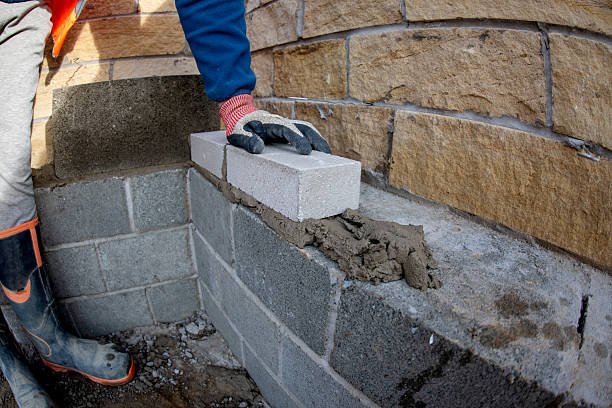
Cinder and concrete blocks both come in a handful of standard sizes, though the actual dimensions run a bit smaller than the nominal size to leave room for mortar. Look at the most common types and sizes in which cinder blocks are available.
| Block Type | Nominal Size (L x H x W) | Typical Use |
| Standard hollow block | 16 x 8 x 8 in. | Walls, foundations |
| Half block | 8 x 8 x 8 in. | Corners, end sections |
| Solid block | 16 x 8 x 8 in. (solid core) | Higher-load applications |
| Cap/paver block | 16 x 4 x 8 in. | Wall tops, edging |
| Partition block | 12 x 8 x 4 in. | Interior, non-load-bearing walls |
Actual size is usually about ⅜ inch smaller than the nominal size across the board; that is standard throughout the masonry industry, not just for cinder block.
Cinder Block vs. Brick: Another Common Mix-Up
People also mix up cinder blocks and bricks, even though they are not really related. Brick is fired clay, baked in a kiln at high heat. Cinder block is cast and hardens through a cement reaction, not heat. Here is a brief comparison of these two:
| Feature | Cinder Block | Clay Brick |
| Raw material | Cement, water, cinder aggregate | Fired clay |
| Unit size | Large, hollow-core | Small, solid |
| Installation speed | Faster, fewer units per wall | Slower, more units and joints |
| Appearance | Plain, usually covered or painted | Often left exposed |
| Typical use | Utility walls, foundations, partitions | Facades, veneers, decorative walls |
Neither one beats the other across the board. Brick usually wins on looks when left exposed. Block wins on speed and cost when the wall’s going to be stuccoed or painted anyway. A lot of homes actually use both: block for the structural bones of a wall and brick as a thin veneer layer on top for curb appeal. That combination gets you the cost and speed of a block with the finished look of brick, without paying to lay an entire wall out of small clay units.
Key Benefits of Cinder Blocks
Cinder blocks still offer a handful of real advantages that keep them relevant for the right projects, despite being less common in new structural work. Key advantages of using these blocks include the following points.
Lightweight and Easier to Handle
A standard cinder block weighs significantly less than a comparable concrete block. These blocks are 10 to 20 pounds lighter per unit than solid concrete blocks. That difference adds up fast on a big project. Lighter blocks are easier to lift manually, which speeds up labor-intensive projects like garden walls or small shed foundations where a crew lacks any heavy construction equipment.
Lower Material Cost
Because cinder aggregate was once a waste byproduct from coal plants, it was cheap, sometimes nearly free for manufacturers to acquire. That kept the finished block’s price below the stone-based concrete block for years. Cost gaps have narrowed as true cinder aggregate has become scarce, but where it is still available, cinder blocks tend to sell for less than dense concrete blocks.
Decent Insulation Properties
Cinder blocks are more porous than solid concrete blocks. This porosity traps small air pockets inside the material. Furthermore, those pockets act as a mild insulator and give the cinder block a slightly better natural R-value than a dense concrete block of the same size. It is not a substitute for real insulation, but it is a modest built-in advantage for interior partition walls or unheated structures like sheds and garages.
Sound Dampening
That porous structure of cinder blocks helps absorb sound rather than reflecting it. That is one reason older cinder block walls were common in basements and shared walls between units. It won’t match purpose-built acoustic panels, but it outperforms thinner materials like drywall alone.
Fire Resistance
Like most masonry, cinder blocks are non-combustible. They won’t catch fire or feed a blaze the way wood framing can. They also hold up reasonably well under sustained heat, even though their fire-resistance rating typically falls short of that of a dense, solid concrete block.
Puts Industrial Waste to Use
From a sustainability angle, cinder blocks repurpose ash that would otherwise sit in a landfill or holding pond. The American Coal Ash Association’s (ACAA) 2025 Production and Use Survey found that fly ash used in concrete production rose to about 14.6 million tons in 2024 — up from 11.9 million tons the year before.
Separately, EPA data show that about 37% of bottom ash produced by utilities is reused rather than landfilled, much of it going into concrete, blended cement, and structural fill (EPA, TENORM: Coal Combustion Residuals). Put simply, cinder block production directly benefits from that recycling stream.
Workable and Easy to Modify
Cinder blocks can be cut and shaped with standard masonry tools without much fuss. That makes them suitable for DIY projects where a perfect factory fit isn’t realistic, such as custom garden edging or small outbuildings.
Common Uses of Cinder Blocks
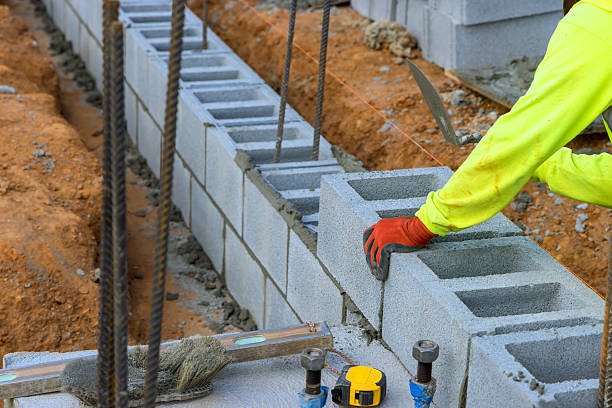
Even with concrete blocks dominating structural work, cinder blocks show up in more places than people expect. Here, they are still a sensible choice.
Residential and Backyard Projects
- Garden beds and retaining borders: Stacked without mortar for raised beds or low garden walls.
- Sheds and small outbuildings: Non-load-bearing walls or foundation piers for lightweight structures.
- Fire pits and outdoor kitchens: Their fire resistance and low cost make them a popular DIY base.
- Fences and privacy screens: Especially in warmer climates where masonry fencing is common.
Non-Structural Interior Work
- Partition walls: Dividing storage rooms or basements where load-bearing strength is not required.
- Utility and mechanical rooms: Fire resistance and sound dampening make cinder block practical around HVAC or electrical equipment.
Landscaping and Decorative Applications
- Bench and furniture bases: Sturdy bases topped with timber for simple outdoor seating
- Vertical gardens and planters: Custom garden displays using hollow cores as built-in pockets
- Steps and pathway edging: Low-cost boundary solutions used for functional outdoor hardscape designs
None of this requires a professional crew, either. Many of these projects, especially the garden and landscaping ones, are built by homeowners over a weekend with basic hand tools. That is part of why block, cinder, or concrete remains popular for backyard projects, even though it has fallen out of favor for anything structural.
Where Cinder Blocks Should Not Be Used
This is the part a lot of guides skip over. Cinder block is not rated for load-bearing use under most modern codes, so keep it away from:
- Foundation walls holding up a house
- Load-bearing exterior walls
- Retaining walls dealing with real soil or water pressure
- Multi-story structural walls
For all mentioned structures, you need a concrete masonry unit that meets ASTM C90. Skipping that step is not just a code violation on paper. It is the kind of shortcut that shows up years later as a cracked wall or a failed inspection when you go to sell the house.
Limitations and Drawbacks to Know Before You Buy
Nothing is perfect for every job, and cinder block has some real drawbacks worth knowing before you buy.
- Lower strength: Cinder blocks can crack or crumble under loads. This risk is lower with concrete blocks.
- More porous: Because this block is porous, it absorbs significantly higher surface moisture. This raises the risk of freeze-thaw damage in cold climates and can lead to mold or efflorescence over time.
- Hard to find: Real cinder aggregate is scarce, so most blocks labeled “cinder” at the store are actually concrete.
- Shorter lifespan in wet spots: Water gets into this block faster and breaks it down quicker than dense concrete.
- Code restrictions: Most U.S. jurisdictions won’t allow it in structural applications due to its lower strength and higher porosity.
How to Maintain Cinder Blocks?
Cinder blocks are definitely not maintenance-free structural building materials. They require routine care, especially when installed in outdoor environments. Skipping necessary upkeep is one of the fastest ways to shorten their overall service lifespan.
Below are some effective tips to help you maintain these blocks, which can improve their longevity.
- The white, powdery residue on the block’s surface is mineral salt left behind as water evaporates from the block. That is efflorescence, which is a sign of ongoing moisture intrusion worth addressing.
- Small surface flakes or hairline cracks tend to worsen with repeated freeze-thaw cycles if left unsealed. Prompt inspection and patching help prevent structural deterioration over coming winter seasons.
- Installation of a breathable masonry sealer every few years helps block moisture without trapping vapor inside the wall.
- Deteriorating mortar is often the real point of failure, so repointing cracked joints early prevents bigger structural issues later.
- Grading soil away from block walls and adding weep holes where needed reduce standing water against the surface.
With reasonable upkeep, cinder or concrete block walls can last several decades, but neglected moisture problems will shorten that timeline far more quickly than the material’s reputation for durability suggests.
Cost of Cinder Blocks and Installed Walls
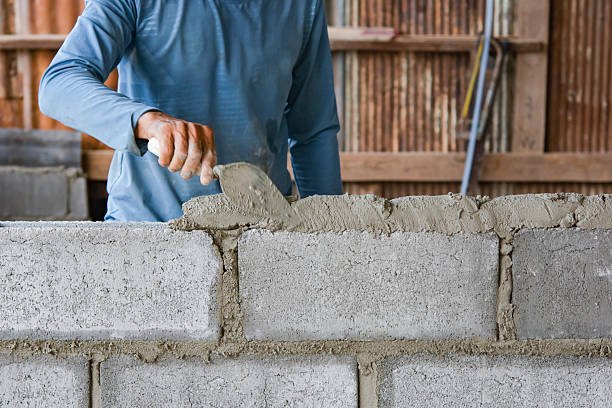
Pricing of cinder blocks varies by region, block size, and whether you are buying raw units or paying for an installed wall. The table below breaks down typical costs by category.
| Cost Factor | Typical 2026 Range |
| Single standard block (8x8x16 in.) | $1.50–$3.50 per unit |
| Mason labor rate | $58–$96 per hour |
| Installed 8-inch CMU wall (materials + labor) | $14–$32 per square foot |
How to Choose the Right Block for Your Project
Many people get stuck comparing cinder and concrete blocks before a project even starts, unsure which one fits their needs. If you are struggling to decide on the right block for your project, ask yourself the following key questions.
- Is this a load-bearing application? If yes, use a code-compliant concrete masonry unit, not a lightweight cinder block.
- Will the structure sit below grade or be exposed to heavy moisture? Choose a denser, less porous block to reduce the risk of water damage for a below-grade structure.
- Do you need better sound or thermal performance? A more porous block, or added insulation to fill in the cores, will help.
- What does your local building code require? Many municipalities specify ASTM C90-compliant CMUs for any structural application, regardless of personal preference.
- What is your budget and labor capacity? Lighter blocks reduce handling time and physical strain, which matters on DIY jobs without equipment.
If in doubt, ask the supplier directly whether the “cinder block” on the shelf is a true cinder-aggregate block or a standard concrete block sold under that common nickname. Given how rare genuine cinder aggregate has become, there is a good chance it is the latter.
It also pays to ask about the manufacturer’s compressive strength rating in writing rather than relying on a verbal estimate. Suppliers serving structural contractors should be able to hand over a spec sheet referencing ASTM C90, and if they can’t, that is a sign the block probably is not meant for load-bearing work in the first place.
None of this needs to turn into a huge research project before you head to the supply yard. Most of these questions take thirty seconds to answer once you know your project, and getting them right up front saves a lot of hassle down the line.
For anything beyond a small backyard job, it is also worth running the numbers past a professional before you order material. Masonry estimating services from Smart Constructs’ experts can size up your block count, labor, and total project cost so you are not guessing at quantities or over-ordering on a supply run.
Basic Installation and Handling Tips
- Always wear gloves and eye protection when cutting or drilling blocks; the dust is abrasive and can irritate skin and lungs.
- Use a masonry blade or block splitter for clean cuts rather than trying to snap blocks by hand.
- Lay a solid, level base before stacking, whether that is a poured footing or compacted gravel for a non-structural garden wall.
- Stagger the joints between rows (running bond pattern) for better stability, even in low, unmortared walls.
- Seal exposed block in outdoor or below-grade applications to reduce water absorption and efflorescence over time.
Are Cinder Blocks Still Sold and Used Today?
Yes, but with an asterisk. Genuine coal-cinder aggregate blocks are increasingly rare because coal-fired power generation has declined and the specific ash needed for this product is not as widely available as it once was. What is commonly labeled and sold as “cinder block” at most home improvement stores and masonry suppliers today is a standard concrete masonry unit made from sand, gravel, or crushed stone. The name has stuck around out of habit even though the material behind it has largely changed.
If your project is decorative, non-structural, or budget-driven, the block you buy under either name will likely perform fine. If it is structural, the material composition matters far more than what it is called, and a certified concrete block is the safer, code-compliant choice.
This shift also connects to broader construction trends. Market analysts tracking concrete masonry unit demand point to continued growth in residential and commercial building activity through the late 2020s, driven partly by urbanization and partly by contractors favoring CMUs for their consistent, code-tested performance over legacy materials like true cinder block. That steady demand is one more reason cinder aggregate hasn’t made a comeback, even as coal ash volumes fluctuate year to year.
Conclusion
Cinder block built its reputation as a cheap, lightweight building material, but the product has evolved beyond what the name suggests. Real coal-cinder blocks are hard to come by now, and most of what is sold under that label is actually a concrete masonry unit built for more strength and durability.
That difference matters most when strength or code compliance is on the line. For foundations and load-bearing walls, use certified concrete blocks. For garden walls, raised beds, and other lightweight builds, a lighter cinder-style block still does the job for less money. Knowing which one you are actually buying, and where each one belongs, is what keeps a project from needing to be redone.
Frequently Asked Questions
What exactly is a cinder block made of?
A real cinder block is made from Portland cement, water, and cinders (the ash byproduct from burning coal). That is different from a concrete block, which uses sand, gravel, or crushed stone as the aggregate.
Are cinder blocks strong enough for a house foundation?
No. Cinder blocks have lower compressive strength than concrete masonry units and are not recommended for load-bearing foundations or structural walls. Most codes require ASTM C90-compliant concrete blocks for that.
What is the difference between a cinder block and a concrete block?
It comes down to the aggregate. Cinder blocks use coal ash and end up lighter but weaker. Concrete blocks use stone or gravel and offer more strength and better fire ratings.
Can I still buy real cinder blocks today?
It is tough. The coal cinder supply has dropped so much that most products sold as cinder blocks are actually concrete masonry units. True cinder-aggregate blocks mostly show up in older, existing buildings now.
What are cinder blocks best used for now?
Nowadays, these blocks are used for non-structural jobs, such as garden walls, raised beds, fire pits, partition walls, and other lightweight projects where high compressive strength is not the priority.
