
Building multi-unit residential properties in 2026 isn’t just one financial category. A fifty-unit, low-rise community in a Texas suburb might cost significantly less than fifteen million dollars. However, the same number of units in central Los Angeles could easily exceed forty million dollars. This disparity isn’t due to chance or choice. It’s a result of construction style, workforce availability, local regulations, and the overhead expenses that many novice developers greatly misjudge.
2026 Apartment Complex Build Cost
| Building Type | Cost per Sq. Ft. | Cost per Unit (Avg.) | Total (50-Unit Est.) |
| Garden-Style (Low-Rise) | $180 – $260 | $80,000 – $200,000 | $4M – $10M |
| Mid-Rise (4–7 Stories) | $240 – $380 | $200,000 – $400,000 | $10M – $20M |
| High-Rise (8+ Stories) | $350 – $700+ | $350,000 – $700,000+ | $17.5M – $35M+ |
What Is the Real Cost Per Square Foot to Build an Apartment in 2026?
In 2026, the price of building apartments ranges from $180 to over $700 per square foot, a figure determined solely by the project’s type and its geographical placement. These aren’t merely estimations. They come from cost databases, including RSMeans, and reports from professional estimators active in today’s market. The broad spectrum arises because a Type V wood-frame walk-up and a Type I concrete high-rise represent entirely distinct structural entities, irrespective of their shared function of delivering rentable apartment dwellings.
- Garden-style complexes feature wood construction and at-grade parking. They keep structural costs low. These are well-suited for areas on the outskirts of cities where real estate costs are lower.
- Mid-rise buildings, usually spanning four to seven levels, frequently feature a wooden framework erected upon a concrete base. This base, while contributing significantly to the expenses, enables the inclusion of ground-level shops or organized parking facilities below the living spaces.
- High-rise buildings use either concrete or structural steel for their framework. These buildings necessitate elevators, intricate mechanical, electrical, and plumbing (MEP) setups, and fire protection systems that are stipulated by IBC Type I construction requirements.
Professional estimators calculate expenses based on Gross Building Area (GBA). GBA encompasses shared hallways, entryways, equipment spaces, and stair enclosures. This distinction is significant because the usable space is invariably less. A project with 50,000 sq. ft. of GBA may only yield 40,000 sq. ft. of rentable space. If you calculate your budget against the rentable area only, you will undershoot the real number.
| Asset Class | IBC Structure Type | Cost per Sq. Ft. | Primary Cost Driver |
| Garden-Style | Type V – Wood Frame | $180 – $260 | Land & site work |
| Mid-Rise | Type III/V over Podium | $240 – $380 | Podium slab, structured parking |
| High-Rise | Type I – Steel/Concrete | $350 – $700+ | Structure, MEP, elevators |
What Does the Full Budget Actually Look Like?
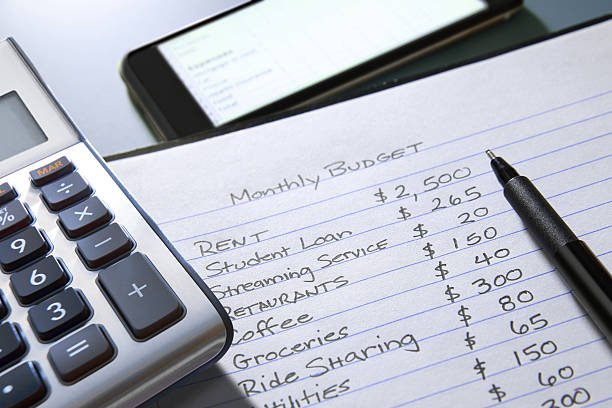
A professionally built apartment complex budget divides into three cost pillars: hard costs at 70–78%, soft costs at 15–20%, and contingency at 5–10% of total project value. These are not arbitrary targets. They are the industry benchmarks professional estimators use to spot problems in a pro forma before a project ever breaks ground.
Hard Costs:
Hard costs cover everything physically built on site. This includes site work, the foundation, framing, the outside walls, interior work, and all the pipes and wires. By 2026, the building shell and systems are expected to see the most price changes. Meeting the 2021 energy rules requires better insulation, more efficient windows, and tighter seals to stop air leaks.
Building an apartment in 2026 requires adding a 3–5% yearly cost increase to contracts to cover rising prices for items like steel and copper. Experienced builders use guides like the National Cost-Effectiveness of the Residential Provisions of the 2024 IECC to carefully track how new energy rules and building codes change their total project budget. These smart planning steps help builders avoid running out of money and keep their projects on time despite changing market prices.
Soft Costs:
Soft costs cover everything non-physical. This includes architectural and engineering fees, legal entitlements, permit fees, environmental reports, insurance, and financing costs. Architecture and engineering alone run 5–8% of total hard costs. Legal fees for complex urban entitlements can push well past that in cities with active zoning boards or strong community opposition. For projects using public subsidies, tax credits, or tax-increment financing (TIF), prevailing wage requirements apply. Prevailing wage mandates union-scale labor rates, which can raise the labor portion of hard costs by 20–40%.
The single largest hidden soft cost is the carry cost during permitting. Every month of delay while waiting for plan checks or agency approvals adds interest on borrowed capital. In a high-interest-rate environment, this is not a footnote. For a $15 million project, a six-month permitting delay at a 7% loan rate adds roughly $525,000 in pure carry cost before a shovel touches the ground.
Contingency:
Professional estimators separate contingency for hard and soft costs. A standard hard cost contingency runs 5–7%, covering material price swings and field-condition surprises. Soft cost contingency runs 2–4% for regulatory changes and design revisions. For brownfield sites with environmental remediation requirements, contingency must be higher and is frankly unpredictable. Budget high and treat remediation as a separate risk item.
| Cost Category | % of Total Project | Key Line Items |
| Hard Costs | 70% – 78% | Site work, structure, MEP, finishes |
| Soft Costs | 15% – 20% | A&E, permits, legal, financing interest |
| Contingency | 5% – 10% | Material volatility, delays, and scope changes |
Let’s Get In Touch
Get Precise & Accurate Cost Estimates to Build an Apartment Complex Now!
How Much Do Location and Region Change the Final Number?
Location can shift your cost per square foot by 30–60% compared to the national baseline. Coastal and primary metro markets carry the highest multipliers. Sun Belt and Mountain West markets stay near or below the national average. This is not just about land value. It reflects local wage rates, union density, seismic code requirements, and the efficiency of local permitting authorities.
A project in coastal California faces prevailing wage requirements on most publicly assisted developments, seismic Zone D detailing, and a UC Berkeley Terner Center study found that impact fees in California averaged nearly $20,000 per unit for affordable housing projects between 2020 and 2023, with 134 projects paying over $30,000 per unit. On the other end of the spectrum, a similar project in a secondary Midwest market faces lower union density, simpler foundation requirements in stable soil conditions, and impact fees that can be a fraction of coastal numbers.
| Market Type | Cost Multiplier | Primary Driver |
| Coastal CA / NYC | 1.30 – 1.60x | Prevailing wage, seismic codes, high-impact fees |
| Northeast / Pacific NW | 1.10 – 1.25x | Union labor, strict energy codes |
| Sun Belt / Mountain | 0.90 – 1.05x | Lower labor costs, moderate regulation |
| Midwest / Secondary | 0.85 – 1.00x | Variable climate, deep foundation requirements |
(Note: Multipliers apply to the national average baseline cost per square foot)
Climate matters beyond permits. In Midwest markets, frost depth drives deeper foundations and heavier waterproofing details. In the Southeast, hurricane wind load requirements add structural cost to exterior framing. In arid Mountain West markets, thermal mass and passive cooling strategies can offset some IECC compliance costs. Local environmental factors consistently adjust the broader, average condition. Properties situated near the coast necessitate particular types of fasteners that resist rust, barriers to stop moisture penetration, and systems for anchoring against high winds, all of which are overlooked in projects located further from the sea.
What Codes and Regulations Drive Up Apartment Building Costs?
Building regulations like the International Building Code (IBC) and the International Energy Conservation Code (IECC), along with any local modifications, establish the fundamental baseline for all financial choices in apartment development. Ignoring or underestimating compliance costs is the most common reason a pro forma fails during design development.
IBC Occupancy and Fire Requirements
In the IBC, multifamily residential buildings are classified under Group R-2. This classification significantly impacts mandated fire resistance periods, requirements for escape paths, and structural criteria tied to construction types I through V.
For residential structures exceeding three stories, the two-staircase provision is generally required. Installing a second staircase reduces the usable area available for rental. A less efficient layout means more cost spread across fewer revenue-generating units.
IECC 2024 Energy Compliance Costs
The 2024 IECC raises the bar on building envelope performance, HVAC fault detection, and air leakage testing. It requires increased ceiling insulation in Climate Zones 2–8, higher continuous insulation on frame walls in Climate Zones 4–5, and lower window U-factors in Zones 3–4. ASHRAE 90.1-2022, which governs mid- and high-rise multifamily buildings with four or more stories, adds further mechanical and lighting requirements. Buildings over 100,000 sq. ft. must include Fault Detection and Diagnostics (FDD) within HVAC equipment. These are not optional in code-compliant design.
Impact Fees and Local Permitting Charges
Impact fees are one-time charges levied by local governments when a new development connects to municipal infrastructure. The Federal Highway Administration defines them as charges tied to a rational nexus test that links the fee to actual infrastructure costs created by the development. In practical terms, this means developers pay for roads, sewer capacity, schools, and parks that new residents will use. In significant metropolitan regions, combined impact fees frequently surpass $20,000 to $50,000 per dwelling. Developments in smaller markets encounter lesser charges, but this specific expense still necessitates prompt confirmation with the relevant local Authority Having Jurisdiction (AHJ) before the finalization of any financial plan.
| Regulatory Item | Typical Cost Impact | Applies To |
| IBC Type I Fire Resistance Requirements | Adds $20–$40/sq. ft. vs. Type V | High-rise, mid-rise above 4 stories |
| Two-Staircase Rule | Reduces rentable ratio by 5–10% | Buildings over 3 stories |
| 2024 IECC Compliance | ~$7,200/unit upfront (HUD data) | All new federally assisted housing |
| ASHRAE 90.1-2019 HVAC | Varies by system complexity | Mid-/high-rise 4+ stories |
| Municipal Impact Fees | $5,000–$50,000+ per unit | All new development, AHJ-specific |
| Prevailing Wage (public funds) | Increases labor cost 20–40% | Tax credit, subsidy-funded projects |
How Do You Estimate Waste and Material Quantities Correctly?
Material waste factors are a required part of any accurate quantity takeoff for multifamily construction. Every trade has standard waste allowances. Skipping them in your estimate creates a budget shortfall that shows up mid-project.
| Material | Standard Waste Factor | Reason |
| Concrete (slab/foundations) | 5 – 8% | Overbreak, form spillage, pour variation |
| Structural Lumber (framing) | 10 – 15% | Cuts, defects, miscuts |
| Drywall / GWB | 8 – 12% | Offcuts around windows, doors, and corners |
| Ceramic / Porcelain Tile | 10 – 15% | Pattern cuts, edge breakage |
| Roofing Membrane | 5 – 10% | Seams, penetration flashing, perimeter |
| MEP Rough-In (pipe/conduit) | 5 – 7% | Fittings, adjustments, re-routes |
| Insulation Batts | 5 – 10% | Cuts around framing members |
(Waste factors per RSMeans cost data standards and standard industry quantity-takeoff practices.)
A 10% wastage allowance for timber might seem insignificant. However, for a project with 50 units requiring 200,000 board feet, this means an additional 20,000 board feet. At today’s prices, that is a real dollar figure that changes your hard cost total.
Smart Constructs experts deliver waste-adjusted quantity surveys for each trade, ensuring your budget accounts for material deliveries, not solely design schematics.
Let’s Get In Touch
Get Precise & Accurate Cost Estimates to Build an Apartment Complex Now!
How Do Estimators Build an Accurate Apartment Cost Model?

Professional estimators build apartment cost models using parametric data, site-specific adjustments, and compliance overlays, not a single national average. Each variable layer narrows the estimate from a broad range to a defensible project-specific number. Skipping any layer leaves a budget gap that surfaces during construction.
Step 1: Anchor to Parametric Cost Data First
The parametric approach begins by selecting cost-driving factors derived from past information on similar structures. A cost estimator planning a 75-unit mid-rise complex in Phoenix would retrieve cost data for a Type III building from a reference source, factor in the regional cost adjustment for Phoenix, modify it based on the precise apartment layouts and features, and subsequently validate the resulting figure against current bids from local contractors. This sequence produces a budget tied to real project inputs, not a guess from a national average.
The unit mix matters more than most developers expect. A building with 60% one-bedroom units has a very different MEP layout and finishes cost per square foot than a building with 60% three-bedroom units. Parking configuration changes the structural cost baseline entirely. Surface parking, podium parking, and below-grade parking each sit at different price points and require different structural systems. All of these variables belong in the parametric model from the start.
Step 2: Adjust for Site Type and Logistics Complexity
Site type sets a cost multiplier on top of the parametric baseline.
- Greenfield Site
A greenfield site in a suburban market is the cost floor. Open access, room for material staging, and no existing structures to demolish or work around keep site costs predictable. An infill site in a dense urban core adds 15–25% to logistics, material storage, and site access costs. Crane picks cost more when the street is the only laydown area. Concrete pours happen at night to avoid traffic restrictions. Every hour of restricted access is a billable hour for the crew standing idle.
- Brownfield Site
A brownfield site with contamination is a separate risk category entirely. Environmental remediation cost and duration depend on soil testing results that may not be complete until after the land is under contract. Budget this as a standalone contingency item, not a percentage of hard costs. Greenfield, infill, and brownfield are three different financial products. They do not belong in the same column of a cost spreadsheet.
Step 3: Layer In Subsidy Compliance and Prevailing Wage Costs
Projects using Low Income Housing Tax Credits (LIHTCs), Section 8, or any form of federal or state subsidy carry a compliance cost stack that market-rate projects do not. The Davis-Bacon Act requires prevailing wage rates on federally funded construction. Prevailing wage can raise the labor portion of hard costs by 20–40% compared to market-rate labor. This is not a soft cost. It directly inflates the hard cost total.
Tax credit equity structure also affects the allowable development budget through the qualified basis calculation. Cost certifications must align with what the tax credit allocation agency approved. This means the cost model used for the application must carry through to the final construction budget. A late-stage value engineering change that reduces the certified eligible basis can reduce the equity raise and trigger a funding gap. The construction estimating process for any subsidized deal must account for these overlapping compliance requirements from the first cost model, not as a revision after the application is filed.
What Are the Biggest Budget Mistakes Apartment Developers Make?
The most common and costly mistake is calculating the budget against the net rentable area instead of the gross building area. The second is treating national averages as project-specific numbers. The third is failing to verify impact fees and prevailing wage requirements before signing a purchase and sale agreement on the land.
Material escalation is the third major blind spot. Trade contracts in 2026 include 3–5% annual escalation clauses for metals, refined minerals, and key mechanical components. A two-year construction timeline means your Year 1 material budget cannot be used for Year 2 procurement. Model escalation into every line item that involves a material with a commodity-linked price. Our multifamily cost estimating services include escalation modeling as a standard deliverable for any project with a timeline exceeding 12 months.
When Does a Project Become Financially Viable?
A multifamily project is viable when total sale or refinance proceeds at stabilized occupancy equal or exceed total project costs plus the developer’s target profit margin. This is the core feasibility test. Everything else feeds into it.
In high-cost markets where per-unit development costs exceed $400,000–$500,000, the rental rate required to support that cost structure must be verified against actual market rents for the submarket. Assumptions about lease-up speed, vacancy rates, and exit cap rates must be grounded in recent comparable transactions, not optimistic projections.
Get Your 2026 Apartment Cost Estimate Right the First Time
Apartment complex construction in 2026 rewards preparation. The cost variables are real, the code requirements are non-negotiable, and the labor market will not loosen in the near term. ABC projects the workforce shortage rising from 349,000 in 2026 to 456,000 in 2027. That means subcontractor bids will stay elevated, and schedules will stay tight. The developers who move forward successfully are the ones who enter feasibility with site-specific numbers, not national averages.
Smart Constructs delivers detailed, trade-by-trade cost estimates for multifamily projects at every scale. Whether you are scoping a 12-unit walk-up or a 200-unit mid-rise, our estimates give you the numbers you need to make a sound investment decision.
Reach out today for a multifamily residential project estimate and know your real cost before you commit.
Frequently Asked Questions
Q1: What is the average cost per unit to build a mid-rise apartment complex in 2026?
Mid-rise apartments cost between $200,000 and $400,000 per unit in 2026, with the national average near $310 per square foot based on Gross Building Area, excluding land and owner-paid financing.
Q2: How much do architectural and engineering fees add to a multifamily project budget?
Architecture and engineering fees run 5–8% of total hard costs for standard multifamily projects, rising higher for complex urban infill sites with challenging site conditions or unusual zoning variances required.
Q3: What is the difference between a greenfield and an infill site for cost purposes?
Greenfield sites set the cost baseline. Infill urban sites add 15–25% to logistics and staging costs. Brownfield sites with contamination require unpredictable remediation budgets treated as separate risk line items.
Q4: How does the IBC two-staircase rule affect apartment construction budgets?
The two-staircase rule reduces rentable floor plate efficiency by 5–10% in buildings over three stories, increasing gross construction cost per rentable square foot and reducing revenue potential from the same building footprint.
Q5: When should escalation clauses be included in multifamily construction contracts?
Escalation clauses should be included in any trade contract exceeding 12 months. In 2026, standard clause language includes 3–5% annual price escalation for metals, mechanical components, and refined minerals.
