
Interior doors look simple until the budget starts fluctuating. Problems come when one opening has gone well, and the next one is demanding extra expense. This mostly happens when you only calculate the cost of doors, not other factors, such as installation. Simply put, it is essential to start with project scope analysis, estimate materials and labor cost, consider site conditions, etc, to keep the project budget under control. Let’s start with the average cost of door installation in the US!
Average Cost to Install an Interior Door
Many factors can affect the interior door installation cost (will be explored in the next section); here is the table showing the average cost.
| Project Scope | Installation Cost Range |
| Basic interior door swap | $150–$800 |
| Typical interior door installed | $362–$1,233 |
| Average cost to install interior doors | About $797 |
| Specialty or custom opening | $1,350–$5,000+ |
What Factors Affect the Cost to Install an Interior Door
Material of the Door
Material of the door drives a big share of the budget because it changes both the product price and the handling time.
- A lightweight hollow core unit installs faster.
- A dense solid wood piece takes more care, and that affects the labor cost to install interior doors.
- Composite wood stays budget-friendly.
- Fiberglass and steel usually belong in more demanding or specialty applications.
Below is the table showing the cost range of each.
| Door Material | Installation Cost Range |
| Hollow core | $150–$450 |
| Solid core | $250–$900 |
| Composite wood | $180–$800 |
| Steel | $350–$1,500 |
| Fiberglass | $450–$2,500 |
| Solid wood | $400–$2,000+ |
Below are the pros and cons of each door material so that you can choose the best option for your building.
Composite Wood
Composite wood gives you a useful middle ground. It looks cleaner than a hollow core, yet it usually costs less than real wood. That makes it common in multifamily work, specific homes, and repeat interior projects. It also helps when a project needs a consistent appearance across several openings. For budgeting, composite wood works well when you need a dependable door without premium finish expectations.
Solid Wood
Solid wood belongs in projects where appearance matters and the client expects a richer feel. It also carries better mass, which helps with sound control. Therefore, it costs more to buy, move, and hang. So the final cost increases once you add finishing, hardware, and a careful fit.
Fibreglass
Fiberglass is not the first pick for every interior opening, but it can work in wet or demanding spaces. It resists moisture better than many wood-based products. It also supports design goals when a project needs a durable, stable door surface. Because this material is often considered in premium or specialty scopes, the installed cost usually moves above standard interior ranges.
Steel
Steel usually appears in tougher-use environments or where impact resistance matters. It is not the everyday choice for a quiet bedroom package, but it does bring durability. The downside is weight, which can raise handling time and hardware demands. So the estimate should allow for sturdier hinges, better alignment, and careful finishing around the opening.
Solid Core
Solid core is one of the smartest choices for privacy. It fits bedrooms, bathrooms, offices, and media spaces well. The door feels heavier, so installers need a little more time and care. Still, many teams choose it because it balances performance and price better than solid wood. When someone asks how much a door for a bedroom costs, solid core mostly takes the first position.
Hollow Core
Hollow core is the budget leader, and it works well where sound transfer does not matter much, e.g., closets, utility rooms, or light-use partitions. It installs easily, and the hardware load stays modest. That makes it a practical choice when the goal is to keep the door installation costs under control without losing basic function.
Type of Door
Door type changes everything regarding costs because the opening mechanism controls labor, hardware, and framing work. A standard swing door is usually the simplest route. French doors, barn doors, sliding systems, and bifolds all need more precision. That is why the cost to install interior doors can shift from one opening to the next.
Here is a table showing the interior door installation cost range, depending on type.
| Door Type | Installation Cost Range |
| Standard interior doors | $150–$800 |
| French doors | $2,000–$5,000 |
| Barn doors | $1,350–$5,000 |
| Sliding doors | $380–$2,500 |
| Bifold doors | $100–$300 |
Below are the pros and cons of each door type so that you can pick the best one for your project.
Standard Interior Doors
Standard swing doors cover most residential openings. They move quickly through procurement, and installers understand the workflow well. That keeps risk low and pricing predictable.
French Doors
French doors move the installation job into a higher scope because alignment matters more. It involves balancing 2 leaves, more glass, and more hardware detail. They also create a stronger architectural statement, which means the client can expect a cleaner finish.
Barn Doors
Barn doors save floor space, but they do not save complexity automatically. Track alignment, wall support, and hardware quality all affect the final bill. They look simple from a distance, yet they need careful layout to avoid rubbing, noise, or poor closure. For that reason, barn doors take a premium side when it comes to estimation.
Sliding Doors
Sliding systems work well when space is tight. Closet applications often lead this category, especially mirror or panel doors. Pocket doors increase the expense because the wall cavity work adds labor. In other words, the opening mechanism decides the budget faster than the slab alone.
Bifold Doors
Bifold doors remain popular for closets and utility spaces because they fold neatly away. They are usually cheaper than many specialty alternatives, but the track still needs precise installation. When the casing is out of square, the labor time grows fast. That is why a small opening problem can change the full estimate.
Size of Door
The size of doors matters because it affects material quantity, labor time, and the chance of frame changes. Most bedroom doors use common widths between 30 and 32 inches, while smaller rooms can use 24 to 28 inches.
Larger 36-inch units often support accessibility or a more open feel. The most common standard height remains 80 inches, although 84-inch doors are gaining ground in newer builds. That is why teams should not ask only how much it costs to have a door installed; however, they should also ask how wide, how tall, and how tight the opening is.
Here is a table showing the cost range of door installation, considering the different sizes.
| Door Size | Installation Cost Range |
| 24″ x 80″ | $150–$450 |
| 28″ x 80″ | $180–$550 |
| 30″ x 80″ | $200–$700 |
| 32″ x 80″ | $225–$800 |
| 36″ x 80″ | $275–$1,000 |
| 36″ x 84″ | $350–$1,300+ |
Note: A framed opening usually needs about 2 inches of extra width and 2 to 2.5 inches of extra height.
Door Customization Demands
Customization turns a predictable opening into a tailored one. Special trim, unusual sizing, glass lites, sound-control upgrades, and decorative hardware all increase the project cost. Custom doors can start around a few hundred dollars, then increase to the thousands when the design turns complex.
So when you ask how much it costs to install a prehung door, the number fluctuates with customization tasks, as shown in the table below.
| Customization Task | Installation Cost Range |
| Custom door design | $500–$10,000+ |
| Paint or finish | $50–$150 |
| Decorative hardware | $10–$300+ |
| Transition strip | $20–$100 |
| Special jambs | $150–$250 |
Local Labor Wages
Labor varies by metro, trade level, and job complexity. In fact, labor accounts for around 50% of the project’s total cost.
Below is the table showing the interior door installation labor cost.
| Labor Type | Door Installation Cost Range |
| Handyperson | $30–$40/hr |
| Door contractor | $40–$90/hr |
| Carpenter market median | About $40–$95/hr |
Location changes the story as much as trade type. Angi reports some states stay under $800 on average, while others sit around $2,400. That spread is exactly why local pricing matters.
Frame & Jamb Condition
A clean opening saves money while a damaged opening increases the interior door installation cost. If the door frame and jamb already fit, the project can stay in the lower range. However, if they need replacement, the budget moves up.
Below is the table showing the cost of interior door installation, considering the frame and jamb condition.
| Frame/Jamb Condition | Door Installation Cost Range | Note |
| Jamb replacement needed | About $250+ | More carpentry time |
| New opening adjustment | About $900 avg | Higher scope and finish work |
| Existing frame but same-size swap | $60–$500 before labor | Good for simple replacements |
Note: Many contractors ignore this point, but this must weigh more than material counts simply.
Hardware and Finishing
Hardware and finishing choices significantly affect the costs to replace an interior door. Hinges, knobs, locks, trim, paint, and transition pieces all influence the final project cost. See the table below for cost ranges.
| Hardware/Finish Item | Door Installation Cost Range |
| Hinges | $2.50–$30 |
| Knobs and locks | $10–$300 |
| Transition strip | $20–$100 |
| Deadbolt add-on | $50–$100 |
| Paint or finish | $50–$150 |
Finishing also takes time, which costs money, too. That is especially effective when trim needs caulk, patching, sanding, and paint touch-up.
Additional Work
Extra work during interior door installation often hides in the margins. Old door removal, disposal, framing corrections, drywall work, and wall modifications can turn a simple estimate into a small remodel budget.
So, when you ask how much it costs to install an interior door, you must consider the following table for additional expenses.
| Additional Work | Cost Range |
| Old door removal | $40–$200 |
| Junk removal | About $60 |
| Drywall work | $150–$500 |
| Framing/structural work | $250–$500 |
| New opening modification | About $900 avg |
Tips to Save Money on an Interior Door Installation Project
Opt for Pre-Hung Doors
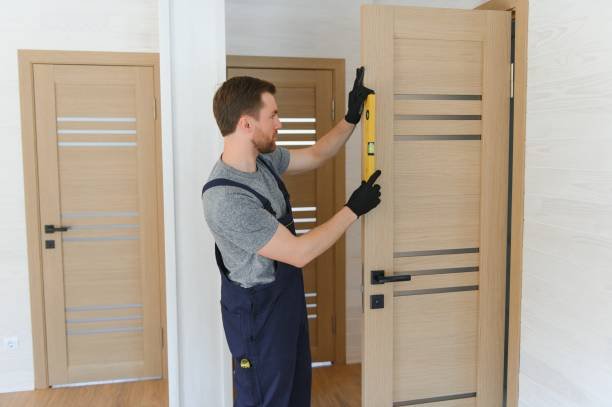
Prehung units come with the slab already set in the jamb. That saves setup time and cuts alignment risk. It also helps when the opening already needs a clean, matched set.
If someone asks how much it costs to install a prehung door, the answer often comes out friendlier than a slab-only job with field carpentry. Prehung systems work best when the existing opening already fits reasonably well.
Choose Standard Sizes
Standard door sizes reduce waste, delay, and custom carpentry. They also make ordering easier, which matters in multi-unit or fast-track work. A 30-inch or 32-inch width often covers common bedroom openings, while 24 to 28 inches suits compact spaces.
Reuse Existing Hardware/Frames
Reuse only when the parts still perform well, meanings that good hinges, a square jamb, and usable trim can save money. Remember that reuse fails fast when the frame has rot, twist, or prior patchwork.
Buy Unfinished/Prime Doors
Unfinished or primed doors let the field team control the final appearance without paying for factory finish complexity. That can help with large residential projects and repeat units. It also lets painters coordinate the finish with the rest of the scope. The savings are modest on one opening, but they add up across the complete project.
Bundle Installations
Multiple openings usually cost less per door than isolated jobs. When you plan in multiples. The labor already has the setup, tools, and material flow in place. So bundling reduces mobilization waste and repetitive travel.
Use Affordable Materials
Use the right material for the right room. Hollow core works in low-privacy spaces; Solid core works better where sound control matters; Composite wood often gives a decent visual result without premium pricing. So, whenever you are struggling with how much a door is for a bedroom, consider the best material considering the needs of the room.
Plan for Off-Season
Trade availability shifts through the year. When the market gets busy, labor pricing and lead times both get tighter. Scheduling during the off-season can help you avoid rushed procurement and premium labor. It also gives the estimator room to compare alternatives instead of accepting the first quote that lands.
DIY Installation
DIY can help with simple, non-structural interior door replacements. But the savings disappear fast when the opening is out of square, or the wall needs correction. A small mistake can create sticking, gaps, or uneven reveals. So DIY makes the most sense only on clean, predictable openings with basic hardware.
Start with Door Estimation
Start with a precise and accurate estimate, as it helps save a lot of time and money. List proper takeoffs to check door size, type, finish, hardware, and field conditions before starting installation. This is where opening estimating services helps contractors and owners spend less and achieve the desired level of quality.
Benefits of Openings Cost Estimation
Effective Cost Planning
Reliable estimating gives the team a realistic target before procurement starts. That matters because construction budgets are often affected when contingency and actual changes do not match. According to a study, contingency averages ~5.24%, and contract variations average ~9.92%. This means that comprehensive cost planning is essential before the project starts.
Reduced Waste
Waste usually starts with inaccurate quantity assumptions. When opening, estimates miss material needs, teams overbuy or go for extra supply. But waste control improves when teams estimate more accurately. So, do consider estimates to reduce waste and increase your margin.
Risk Mitigation
Accurate estimating helps owners and contractors see trouble earlier. That includes opening adjustments, labor shortages, and door-system changes. Risk-based cost estimating supports lower exposure to disputes and overruns because it forces the team to price uncertainty before it becomes a change order.
Better Project Cost & Timeline Management
When the project scope and pricing stay aligned, schedules stay on point. Door projects can delay near-finish trades if measurements are off. But accurate openings estimates help the team sequence framing, trim, hardware, and paint in a more controlled way. That keeps the project moving without unnecessary reworks.
Increased Profitability
Profit is generated when estimates are precise. When contractors know the actual material and labor load, they protect their margin instead of hoping the estimates will work out. Accurate estimating also helps set the right base cost and markup for each opening. That matters more in repeat work, where a few small misses can significantly affect the profit.
Competitive Bidding
A dependable estimate makes a bid easier to defend for contractors. Overpricing can lose you the job, while underpricing can win the job but can destroy the margin. Reliable openings data gives bidders a sharper edge because it grounds the estimates in actual project scope, not guesses.
Improved Client Trust
Clients trust estimates that make sense with precision and accuracy. They trust them even more when the estimate explains the opening condition, the hardware jobs, and the finish scope. So, on-point estimates reduce confusion, and that reduces pauses later.
How to Estimate the Cost of Door Installation?
Identify Door Type and Material.
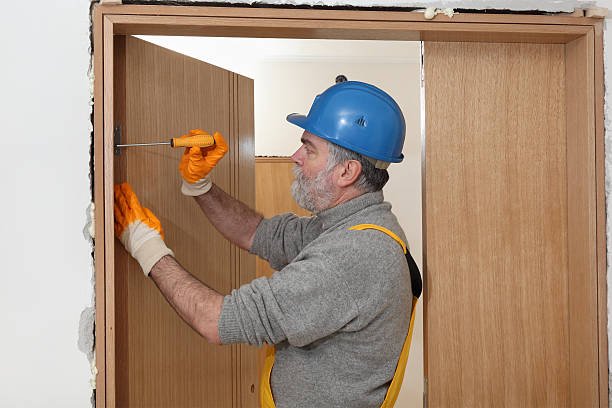
Start by identifying the exact system your client needs. A slab replacement, prehung unit, French pair, barn door, or pocket door each carries different labor and hardware. Material matters just as much. Hollow core, solid core, wood, fiberglass, and steel all bring different handling and cost behavior. This first step is the foundation for real-world estimates.
Take Accurate Measurements.
Measure width, height, thickness, and rough opening. Remember that the rough opening usually needs more room than the door itself. That extra space decides whether the unit fits cleanly or needs framing changes.
Assess Structural Condition.
Check the jamb, studs, and wall surface before you price labor. A clear, same-size swap is one thing,g and a wall that needs correction is another. If the opening is damaged, the estimate should include frame repairs, patching, and possible adjustment work.
Include Hardware and Finishing Cost.
Add hinges, knobs, locks, trim, paint, and any transition pieces in the assessment. These items may look minor, but they affect both procurement and labor time. Therefore, your estimate should show those pieces clearly.
Account for Removal and Disposal Cost.
If the old door comes out, budget for removal, hauling, and junk disposal. These are the line-items, which must be part of your estimates, so you can manage projects without running over budget.
Sum Up All Expenses
Use a simple formula:
Total Door Installation Cost = Door + Labor + Frame/Jamb Work + Hardware + Finishing + Removal/Disposal + Structural Changes + Contingency
This will give you the total interior door installation cost.
Hire Openings Estimators for Precise & Accurate Door Installation Budgeting!
If you do not have time for all these headaches, outsourcing becomes a practical move. A dedicated estimating team can handle takeoffs, estimates, scope review, alternates, and bid support without slowing your internal staff.
Outsourcing helps when you are struggling with bid dates, client questions, and field demands at the same time. It also reduces the chance of missing small items that turn into big cost surprises later.
Conclusion
The interior door installation cost significantly depends on many factors. Standard sizes, simple swaps, and low-maintenance materials stay on the lower end. However, specialty systems, custom details, poor frame conditions, and extra finish work increase the project cost. Therefore, many contractors start the project with a budget estimation. They measure takeoffs carefully, check the jamb, and carry the right labor allowance from the start.
Ready to price your project with confidence? Contact Smart Constructs today and get a fast, accurate estimate to keep your project on track.
FAQs
What is the cheapest interior door option for most projects?
Hollow core usually costs the least because it uses lighter construction and installs faster. It works best in closets, pantries, and low-privacy spaces. For simple jobs, it often gives you the lowest total installed price without much complexity.
Are solid-core doors worth the extra cost for bedrooms?
Yes, usually. Solid core doors give better sound control and feel more substantial. They also hold up better in rooms that get frequent use. That makes them a strong choice for bedroom doors, bathrooms, and offices.
How long does a basic interior door installation usually take?
A basic door job can take about 3 hours for an experienced pro. More complex work takes longer, especially when the opening needs correction or the system uses specialty hardware.
What rough opening should I plan for a standard interior door?
A common rule is to allow about 2 inches of extra width and 2 to 2.5 inches of extra height. So a 30-by-80 door typically needs a larger rough opening. This extra space lets the jamb fit properly and gives installers room to make fine adjustments.
When does a door replacement cost more than a repair?
Replacement costs more when the opening has rot, warping, or structural damage. Small repairs can stay cheap, but a bad frame or jamb pushes the job into replacement territory fast. If the fit fails repeatedly, replacement usually makes more sense than repeated fixes.
Why do contractors use an interior door installation cost calculator?
Because it helps them test the project scope quickly; a calculator can compare material, labor, size, hardware, and opening conditions before bidding. That makes it easier to catch price fluctuations early and avoid low-margin estimates.
How much contingency allowance should I consider in opening estimates?
5–10% is standard. You should consult your interior door installation cost estimators for the exact number; they will provide the right estimate so you can go with the most accurate one while keeping your margin up.
