
A developer once walked a shell and counted doors twice. The framing looked fine, but the budget told a different story. An estimating plan shows these gaps when a planner skips takeoff, misses the utility run, or considers a wrong finish allowance. This small mistake can change everything on the site and affect the project budget significantly.
But there is a reliable solution to avoid cost overruns: knowing the quadplex building cost upfront. This will not only answer how much it costs to build a quadplex, but also help avoid time and budget overruns.
Let’s dive into the details of the fourplex building construction costs in the US.
Average Cost to Build a Quadplex
In 2026, most quadplex projects in the US cost between $300,000 and $1,300,000, with an average of $750,000, or about $187,500 per unit. In per square foot, it is roughly $120 to $300 per square foot, depending on the project location, layout, and finishes.
See the table below for more details.
| Scale | Total Cost of Project | Cost per unit | Cost per sq. ft. | Best For |
| Low End | $300,000 | $75,000 | $120 | Basic shell build |
| Average | $750,000 | $187,500 | $200 | Turnkey standard build |
| High End | $1,300,000 | $325,000 | $300 | Custom or high-end build |
What Factors Affect the Cost to Build a Quadplex
During budgeting, professional estimators always consider the following factors to avoid miscalculations and get accurate cost data, which ensures your bid wins.
Project Location
As a contractor, you know how project location changes everything regarding building expenses. Urban lots usually cost more, and they often bring tougher code review, tighter logistics, and slower deliveries. However, rural land may look cheaper, but hauling materials and tying into utilities can erase that advantage fast.
In addition, redevelopment sites carry demolition, soil work, and utility relocation. See the table below for more details.
| Task | Cost Range |
| Demolition | $10,000 to $40,000 |
| Soil testing or site clearing | $5,000 to $20,000 |
| Utility hookups | $15,000 to $40,000 |
Construction Type and Design
Building design controls the hard cost curve estimates. A simple two-story box with stacked plumbing stays efficient, while a custom layout with split levels, fire-rated assemblies, balcony details, and complex roof geometry brings cost up. Turnkey projects also cost more than shell-only builds because the estimate carries cabinets, flooring, fixtures, appliances, trim, and final paint.
This means that standard designs stay closer to the lower end, while custom layouts and advanced systems move the budget higher. For a quadplex, every extra corner matters. Every stair, chase, and offset adds labor and waste. Therefore, considering the type of construction and the design of the building is necessary when estimating the project cost.
Material Choice
Materials expense is central in quadplex construction cost. According to NAHB data, residential building material price growth has stayed above 3% since mid-2025. Its 2026 update also shows inputs to new residential construction up 4.2% year over year, with goods up 3.4% and services up 5.5%. That means small estimating mistakes compound quickly and lead to bid loss.
Finishes Level
For a quadplex, framing lumber, insulation, windows, drywall, cabinets, flooring, and appliances all affect the project cost. Higher finish levels hit harder because 4 kitchens and 4 baths multiply every selection. If one unit gets upgraded hardware, all 4 usually need consistency. That is where quantity control saves actual money.
Related reading: How Many Screws Do You Really Need for One Sheet of Drywall?
Labor Wages
According to NAHB, builders still face labor shortages, with nearly 300,000 construction job openings reported in December and a need for roughly 740,000 workers a year to keep pace. That pressure shows up in wages, laborer availability, and overtime risk.
Professional Fees
Professional fees belong in the estimate from day one. See the table below for the trends in 2026.
| Professionals | Cost Range |
| General contractors | 10% to 20% of the construction total cost |
| Architectural | $8,000 to $25,000 |
| Structural engineering | $2,500 to $8,000 |
Similarly, surveying, civil work, and interior design each add another layer of expense, especially on complex lots.
Permits, Fees, & Soft Costs
Soft costs can significantly affect prices to build a quadplex. Permits, inspections, financing, insurance, legal work, and utility coordination do not look important on paper. But, they can take a high cost of the project’s total. In numbers, soft costs can cost 20% to 30% of the project’s total budget, depending on scope and jurisdiction.
For a quadplex build, permit fees range from $10,000 to $40,000. That range can stretch when zoning review drags, utility approval stalls, or local impact fees rise. So, as a smart constructs professional, you must treat soft costs as a hidden factor.
How to Estimate Cost to Build a Quadplex?
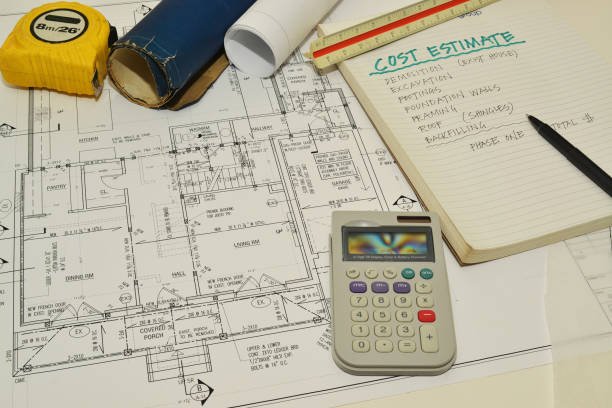
Determine the square footage of the Project.
Start by measuring the gross square footage. Next, decide whether the project is basic, mid-range, or premium. Professional quadplex estimators start with this step to take the initiative solidly and streamline estimating phases ahead.
Get Site-Specific Estimates.
After determining the square footage of the project, price the site. That means checking grading, access, utilities, soil, demolition, and local code requirements.
Budget for Soft Costs.
Soft costs need a separate line in the estimation report, carrying permits, plan review, design fees, title work, insurance, lender charges, and legal support. If the project is in a dense city, add more room for review delays and utility coordination.
Account for Holding Costs.
Holding costs grow while the site waits. Loan interest, insurance, taxes, security, and admin overhead continue whether framing moves or not. If permits drag for 2 months, those costs still show up. That is why schedule risk belongs in the estimate from the start.
Calculate Total Project Cost.
Now, add everything together. Hard costs cover structure, labor, materials, and equipment, while soft costs cover approvals, professional fees, and finance. Then, add contingency for waste, weather, and price movement. The result gives you the on-point estimates.
Let’s Get In Touch
Contact Us for Precise & Accurate Residential Estimates for Your Quadplex Project!
Mistakes to Avoid When Creating a Quadplex Building Budget
Not Conducting a Site Visit
A site visit is not optional on a quadplex building project. It tells you how trucks will enter, where material will land, and what the ground is really doing. If you skip this, you will miss many points, and those points will become expensive once construction starts.
Furthermore, a good visit also protects your schedule. You can spot access limits, neighboring constraints, and utility conflicts before they become change orders. That early clarity is worth more than guesswork.
Inaccurate Quantity Takeoffs
Misreading drawings, using wrong units, missing waste, and overlooking small items are common problems. Quantity takeoffs drive the whole estimate. If the count is off, every downstream cost moves with it. On a four-unit building, even tiny misses stack up fast.
The fix is simple, but it takes discipline. You need to use takeoff software, cross-check the estimates, and refresh pricing databases often. That practice will keep your estimate tied to the reality of the construction project.
Ignoring Addenda
Addenda update the contract set. If you skip them, your budget shifts away from the real scope of the project. Missed addenda can hide new material specs, changed deadlines, and revised scope items, which ultimately cause project loss.
Therefore, always track every revision. Also, confirm you estimate the latest issue, not the first one. That tiny discipline can save a whole project from rework.
Failing to Assess Risks and Create Contingencies
Every quadplex construction carries risk. Weather, supply shocks, code changes, and labor gaps can all push the budget off track. Experts suggest proper risk review and contingency allowances because projects with no flexibility waste significant money.
Tips to Save Money in the Quadplex Construction Project
Choose the Right Location
The cheapest land is not always the cheapest project. A better location can save on utility hookups, grading, and hauling. It can also simplify inspections and reduce schedule drag. So, look for sites with straightforward access, good soil, and clear zoning.
Design a Simple Quadplex Floor Plan
Simple plans build faster and waste less. Stacked wet walls, repeated unit layouts, and clean spans reduce labor hours. They also cut material costs, coordination headaches, and revision risk. A simpler plan usually estimates better, too.
Buy Bulk Materials
Bulk buying helps when the design repeats the same items four times. Windows, doors, fixtures, and drywall are easier to estimate in quantity. Suppliers often sharpen rates when volume is clear. The estimator’s job is to capture those savings before procurement starts.
But bulk only works when the project scope stays stable. Otherwise, leftovers and swaps can make the discount useless.
Source Local Suppliers
Local suppliers usually shorten lead times and trim freight. They also react faster when a product needs replacement or a shipment slips. That matters in 2026, because transport and delivery costs are moving with fuel and freight conditions. Local quotes can also reveal realistic lead times. That alone can protect the schedule and keep holding costs down.
Negotiate Smart Contractor Deals
A sharp deal does not mean the lowest expense on paper. However, it means a balanced contract with a clear scope of work, fair allowances, and clear exclusions. When that happens, you reduce disputes and protect the budget. This is also the place where building estimating services pay off. A precise and accurate estimate gives both sides a better starting point. That usually leads to fewer surprises later.
Use Energy-Efficient Upgrades
Energy upgrades cost more up front, but they can support financing and the long-term value of the building. Better insulation, efficient HVAC, LED lighting, and smarter envelopes reduce operating costs. In multifamily housing, that can matter just as much as first-cost savings. The trick is choosing upgrades that pay back. Do not buy every feature, but buy the ones that reduce the project’s expense.
Let’s Get In Touch
Contact Us for Precise & Accurate Residential Estimates for Your Quadplex Project!
Benefits of Fourplex Building Construction Estimation
Better Financial Planning
A right estimate gives the whole team a map. Owners can judge land, financing, and exit value with more confidence. Builders can plan worker needs and cash flow without guessing. Both forces combine and make the project an ultimate success.
Accurate Budget Control
When the estimate is on point, change orders are reduced prominently. That keeps the team performance up, particularly when it comes to project scope. It also gives project managers a well-structured roadmap to compare planned costs with actual spendings.
Improved Investment Decisions
Investors need estimates that survive pressure. If the quadplex only works on a spreadsheet, this means it is not ready to be presented to the client. Make sure that your estimates are accurate so that they show whether the deal still works after a real margin is added.
Easier Loan Approval
Lenders look for order, not optimism. A detailed estimate shows project scope, contingencies, and allowances in a way they can follow. That helps the file move faster and with fewer questions, making loan approvals hassle-free.
Reduced Risk of Delays
When an estimator catches utility, permit, and material issues early, the field team gets fewer surprises during construction. That lowers the odds of stop-and-start work and protects the completion date.
Pro Tip: You should hire quadplex cost estimators to experience all these benefits.
Conclusion
Quadplex costs in 2026 come down to site, scope, and discipline. The range is wide because every project carries its own mix of land, labor, material, and soft-cost pressure. Still, the estimator’s job stays the same; break it down, price it accurately, and protect the contingency.
If you need reliable construction estimating services, Smart Constructs can help you tighten your numbers before the bid goes out. That is the difference between a hopeful budget and a buildable one. And in this market, that difference matters.
Smart Constructs delivers detailed estimating support for contractors, builders, architects, engineers, and developers. When your quadplex needs sharper quantities, cleaner pricing, and fewer surprises, the team gives a steadier path forward.
FAQs
What is a quadplex?
A quadplex is a single residential building with four separate living units. People also call it a fourplex. Its layout helps owners spread land and construction costs across four rentable spaces.
What is the average cost to build a quadplex in the US in 2026?
It ranges from $300,000 to $1,300,000, with a midpoint around $750,000. Location, design complexity, finishes, and utility work can cause a significant up or down in the budget.
What is the cost per square foot for building a quadplex?
Most 2026 quadplex budgets land around $120 to $300 per square foot. Simple builds stay at lower, while custom plans, tougher sites, and premium finishes increase the budget.
Is it cheaper to build a quadplex than separate homes?
Usually, yes. Shared foundations, roofs, utilities, and structural systems lower the cost per unit. Still, the savings depend on land, zoning, and how much design complexity the project carries.
