
Budgeting in 2026 is more significant than ever due to increasing labor rates, higher borrowing costs, stricter energy codes, and volatile material prices. You have to know the actual figures of construction prices in case you plan to build a retail plaza, office building, warehouse, restaurant or healthcare facility. This guide describes the commercial building cost to build based on real market benchmarks, cost tables and specific examples. You will also get to know how the costs and locality differences will influence your final budget.
Above all, this blog does not just provide general ranges. It describes the flow of money, the influencing factors in pricing, and the steps to estimate the costs in a professional manner to prevent under-budgeting and high change orders.
Average Commercial Building Cost Per Square Foot in 2026
The average commercial construction cost per square foot in 2026 would be based on the purpose of the building, the complexity of its structure, finishes and the needs in terms of mechanical systems. A simple shell of a warehouse is much cheaper than a medical clinic since the clinic needs a high filtration of the HVAC system, strict plumbing arrangements, and high electrical load capacity. In the US, the median range of commercial projects ranges between $110 and $450 per square foot based on the type of buildings and the extent of the project.
The other significant consideration is constructing above or below the ground. The ones underground need to be excavated, waterproofed, and ventilated, which makes it very expensive. In the majority of situations, underground commercial buildings could be 30% to 70% percent higher than above-ground constructions.
Commercial Building Cost Per Sq Ft
| Construction Category | Typical Cost Per Sq Ft | Best For |
| Basic shell building | $110 – $170 | Warehouses, storage, simple commercial shells |
| Mid-level commercial build | $180 – $250 | Offices, retail spaces, and standard restaurants |
| Premium/specialty commercial | $260 – $450+ | Hospitals, hotels, laboratories, and luxury projects |
| Underground/basement builds | $300 – $500+ | Parking garages and basement commercial storage |
Commercial Construction Cost Breakdown
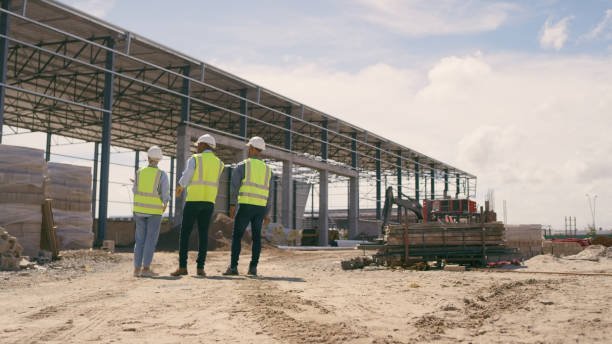
The intelligent developer does not budget concrete, steel and labor only. A complete commercial project has both hard costs and soft costs, and one of the greatest pitfalls new investors make is to overlook the importance of soft costs. Hard costs are actual construction work, which includes foundations, framing, roofing, HVAC installation, plumbing, and electrical work. The soft costs can be defined as the non-physical costs such as design costs, permits, inspection, insurance, financing costs and project management.
In most projects, hard costs can take up about 60% to 70% of the budget, and soft costs can take up about 30% to 40%. High-regulation cities can even have projects at 45% soft costs, particularly where the zoning approvals are taking longer than anticipated.
Hard Costs vs Soft Costs
| Cost Category | Typical Percentage | What It Includes |
| Hard Costs | 60% – 70% | Labor, materials, equipment, MEP systems |
| Soft Costs | 30% – 40% | Permits, architecture, engineering, insurance, and legal fees |
| Contingency Reserve | 10% – 15% | Inflation buffer, change orders, and unexpected site issues |
Cost to Build a Commercial Building by Type
Commercial estimating works best when costs are analyzed according to the building type. A retail store needs storefront finishes, storefront glass, lighting design, and parking lot compliance. An office building requires structured cabling, zoning of HVAC, and layouts that are conference-ready. A warehouse does not need as much interior finishing and might need heavy slab reinforcement and loading docks.
During 2026, the building type is among the most cost-sensitive factors as the code requirements are inconsistent. The example is that hospitals should have fire safety and ventilation standards, and restaurants should have grease pits, exhaust hoods, and commercial-grade plumbing systems. These specifications cost thousands of dollars in a short time and may raise the cost by 25% to 50% when compared to a conventional office building.
Commercial Construction Cost Per Sq Ft by Building Type
| Commercial Building Type | Cost Per Sq Ft (USD) | Why It Costs This Much |
| Retail Building | $180 – $260 | Storefront finishes, lighting, and ADA compliance |
| Office Building | $160 – $240 | HVAC zoning, data infrastructure, partitions |
| Restaurant | $220 – $350 | Kitchen equipment support, ventilation, plumbing |
| Medical Clinic/Hospital | $280 – $450+ | Compliance, filtration, HVAC, and high plumbing demand |
| Warehouse/Industrial | $110 – $180 | Open layout, limited finishes, basic systems |
| Hotel/Hospitality | $250 – $400 | Room finishes, amenities, complex fire systems |
Commercial Building Cost by Size (Small vs Mid vs Large Projects)
The total cost and the cost per square foot are strongly influenced by the size of your commercial project. Small buildings are also more expensive on a per square foot basis since fixed costs such as mobilization costs, permits, engineering costs and utility connection costs are the same irrespective of the size of a building. With larger projects, economies of scale are at work since contractors are able to buy materials in large quantities, they gain better control over labor and also are able to distribute soft costs over a wider area.
As an example, a 5000 sq ft retail building could be more expensive per sq ft than a 50,000 sq ft warehouse. This is because with large projects, contractors can lower the unit pricing of structural steel, concrete pouring, and mechanical systems. Most developers in 2026 note that larger projects over 40,000 sq ft frequently experience a 10-18% cost-per-sq-ft savings relative to smaller projects.
Commercial Cost Estimates by Building Size
| Building Size | Estimated Cost Per Sq Ft | Total Cost Range |
| 5,000 sq ft | $180 – $260 | $900,000 – $1.3M |
| 20,000 sq ft | $160 – $240 | $3.2M – $4.8M |
| 50,000+ sq ft | $150 – $220 | $7.5M – $11M |
What Factors Increase Commercial Building Construction Cost the Most?
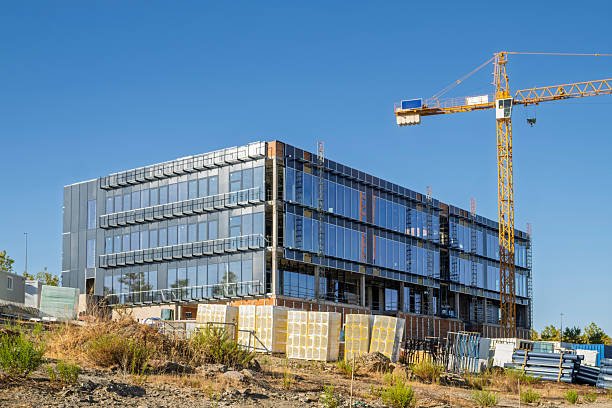
In order to do proper budgeting, you have to be aware of what factors have the greatest influence on cost. Most investors have been thinking that materials make the price go up; however, in 2026, labor and compliance costs have been as strong. Talented trades including electricians, HVAC workers and plumbers, tend to have shortages to make their hourly wages increase. Also, building regulations have become more focused on energy performance, fire protection and accessibility upgrades.
Soil conditions, location of the project, height of the building and complexity of the mechanical system are the most common cost additions. You can add 10-25% straight away to your project should your site need deep foundations. In the same manner, the multi-story construction will include elevators, heavier framing, and elaborate fire-resistant systems that may increase the cost by 15% to 40% of a single-story building.
Major Cost Drivers That Raise Budgets
- Land conditions and soil type: excavation, stabilization and retaining walls
- Project location: urban labor premiums, higher permit fees
- Building height: elevators, fire stairs, stronger structure
- Steel vs concrete structure: cost changes based on material market pricing
- MEP complexity: HVAC filtration, electrical loads, plumbing density
- Local labor market: union labor vs non-union labor pricing
- Inflation and material volatility: steel and concrete fluctuations
Hidden Commercial Building Costs Most People Forget
Most commercial projects do not go over budget due to significant design revisions, but rather as a result of minor secret expenses that accumulate. When developers are budgeting early, exterior work, connections of site utilities, and compliance upgrades are frequently omitted. These are things that may not be visible in the initial drawings, and when the construction starts, contractors sell them at a high price.
In illustration, a stormwater drainage system may cost tens of thousands of dollars in accordance with the local regulations. Parking lots and outside lighting can be more expensive than anticipated, especially if you require reinforced asphalt, curbing, and ADA striping. Hotels, medical clinics and office buildings also face major expenses of furniture, fixtures and equipment.
Hidden Costs to Include in Your Budget
- Utility connections and impact fees
- Demolition and site clearing
- Stormwater drainage and retention ponds
- ADA compliance upgrades
- Fire sprinklers and alarm systems
- CCTV, security access control systems
- Parking lots, sidewalks and exterior lighting
- Landscaping, signage and fencing
- Furniture, fixtures and equipment
Cost Breakdown by Construction Phase A Step-by-Step Budget Structure
It is a method to break commercial construction costs into phases, so you can manage your funds and budget the construction. All projects have predictable stages and each stage is allocated a percentage of the total budget. The first stage is site preparation, excavation and foundation work, which, again, can be a source of the most significant surprises in the case of poor soil conditions. Mechanical and electrical installations usually come next in size to structural framing, which takes the greatest part of hard costs.
Updates to energy codes and modern building automation requirements have increased the cost of MEP systems in 2026. Depending on the type of building, HVAC systems can be 8-15% of the total project cost. Interior finish is also quite different and high-quality finishes may cost twice as much as the normal finishes.
Construction Phase Cost
| Construction Phase | Typical Cost Percentage |
| Site prep & excavation | 5% – 10% |
| Foundation & slab | 10% – 15% |
| Structural frame | 20% – 25% |
| Roofing & exterior envelope | 10% – 15% |
| Electrical + plumbing + HVAC | 20% – 25% |
| Interior finishes | 10% – 20% |
| Fire protection & safety | 3% – 8% |
| Exterior work | 5% – 10% |
| Inspections & closeout | 1% – 3% |
Real Cost Examples (Commercial Building Cost Estimates With Tables)
It is far more comprehensible when you have actual examples. The following are three realistic scenarios of commercial buildings in the year 2026, using the market averages in the year 2026. These are labor, materials, MEP systems, and soft costs to help you get an idea of what a full budget would look like. These examples also demonstrate the change in the distribution of cost in the construction of the type.
The retail structure pays much attention to customer-prepared finishes and shopfront design. Lower finish costs are involved in the warehouse, but it needs heavy slab work and loading dock design. The medical clinic is the most expensive as it is based on compliance-related HVAC filtration, plumbing density, and specialized interior standards.
Example: 10,000 Sq Ft Retail Building Cost Estimate
| Cost Category | Estimated Cost |
| Structural & foundation | $550,000 |
| Exterior envelope | $280,000 |
| Electrical & lighting | $180,000 |
| Plumbing systems | $90,000 |
| HVAC system | $170,000 |
| Interior finishes | $400,000 |
| Permits, design & soft costs | $530,000 |
| Total Estimated Cost | $2,200,000 |
Cost Per Sq Ft: $220
Retail prices are not much lower due to the large amount of storefront glazing, lighting, floor and customer-facing finishing work that consume a big budget.
Commercial Building Cost Per Square Foot by Region
The issue of regional pricing disparities is more important in 2026 since the labor markets are not evenly distributed throughout the United States. States that have high union labour, have stricter energy codes and have high costs of permits normally experience high construction pricing. The logistics and transportation costs are also likely to be high in the coastal markets, particularly in steel and specialty mechanical equipment.
Conversely, the relatively lower labor rate and accelerated permit approval in many Midwest and Southern markets make the cost of the project less expensive. Nonetheless, low-cost areas may turn out to be costly when the location must be heavily graded, have stormwater or utility extension.
Regional Cost Comparison
| Region | Average Cost Per Sq Ft (USD) | Typical Cost Drivers |
| Northeast | $200 – $300 | Union labor, high permit fees |
| Midwest | $180 – $260 | Moderate labor costs, stable permits |
| South | $170 – $250 | Lower labor cost, expanding demand |
| West | $210 – $320 | Higher land prep costs, strict codes |
How do Permits, Zoning and Codes Affect Commercial Construction Cost?
The importance of permits and zoning is usually understated when planning projects at an initial stage. A lot of investors believe that permits are mere paperwork, whereas in reality, they manage time, approvals, and compliance costs. A zoning constraint could involve an additional number of parking spaces, more landscaping, or a reshaping of your building footprint. Such requirements add to the construction and design expenses.
Costs of permits may vary between $5000 and $50000 and above, depending on the size of the project and the requirements of the local authority. Sprinkler systems, fire-rated walls and emergency exits can also be added due to fire codes. The requirements on environmental review can slow down approvals and raise engineering costs.
How Long Does It Take to Build a Commercial Building?
Timelines of construction have a direct impact on overall cost. Longer plans make labor costs, equipment hires and interest on the financing. Commercial projects of 2026 are usually subject to lead times when electrical switchgear, HVAC equipment, and steel framing deliveries have long lead times. Numerous contractors are suggesting that major mechanical systems be ordered early to prevent months of waiting.
It can take 6 to 9 months on a small commercial building, but mid-size and large developments can take up to 12 months or more. Timelines in the north are also influenced by the weather. When it slows foundation work during winter, it costs more since he has to heat and the labor productivity is low.
Typical Commercial Build Timelines
- 5000 sq ft project: 6–9 months
- 20000 sq ft project: 9–12 months
- 50000+ sq ft project: 12–18 months
Commercial Construction Cost Estimation Methods and Which One Is Most Accurate?
The accuracy of all estimating methods is not equal. Quick feasibility studies can be conducted using some methods and final budgeting requires some methods. The most widespread method is the cost per square foot method, which gives a rough estimate using averages. Nonetheless, it usually lacks site work, specialty requirements and complexity of mechanical systems.
The unit pricing model is more precise since it quantifies the cost on the basis of assembly of construction such as concrete slabs, wall systems, roofing and finishes. The most precise one is the detailed quantity takeoff method. It estimates all material and labor items, giving a total estimate. Lastly, the contractor bid pricing offers actual market figures but can change according to competition and the workload of the contractors.
How to Reduce Commercial Building Construction Cost Without Sacrificing Quality?
Commercial construction cost reduction does not imply that they use low-cost materials. It involves smarter decisions in the planning phase. Numerous cost escalations occur due to either owners completing designs late or granting changes in construction. Change orders are costly since the contractors will have to halt and re-order materials and re-plan labor.
Value engineering is one of the best strategies. This includes examining the building parts to identify substitutes that are as effective and less expensive. Another powerful strategy is prefabrication. Ready-assembled wall panels, steel parts and modular mechanical systems save labor hours and decrease waste. Developers are also advised to work on MEP systems at the early stage since the HVAC and electrical modifications made in the construction process are very expensive.
5 Cost-Saving Decisions Made During Design
- Choose a simpler building geometry
- Reduce unnecessary ceiling height
- Standardize door and window sizes
- Use prefabricated structural components
- Design HVAC zones efficiently
Best Tools and Software for Commercial Cost Estimation
By 2026, professional estimating will cease to be manual. The digital tools are increasingly used by contractors and developers to track the accuracy, speed and costs. Takeoff software enables estimators to digitize the measurement of plans, which saves hours of human labor and manual work. Estimating platforms also assist teams in creating full cost breakdowns with the assistance of assembly pricing databases.
Estimating tools based on AI are gaining popularity as they enable the acceleration of material takeoffs and draw attention to uncovered scope items. Nevertheless, professional estimators are still necessary since software is unable to comprehend the complexity of projects, site conditions or local code requirements completely. The combination of technology and expert review is the best way.
To gain high-budget projects with BIM-based modeling and clash detection to avoid expensive rework and save change orders on a large scale.
Commercial Construction Budget Checklist
- Site preparation and excavation
- Utility connections (water, sewer, electric, gas)
- Foundation and slab work
- Structural framing and roofing
- Exterior walls and insulation
- HVAC system and ventilation
- Plumbing installation and fixtures
- Electrical wiring, panels, and lighting
- Fire safety systems and sprinklers
- Interior finishes (flooring, ceilings, paint)
- Parking lot, sidewalks, and landscaping
- Permits, inspections, and zoning approvals
- Contingency reserve (10%–15%)
Commercial Construction Cost Formula
Total Cost = (Sq Ft × Cost Per Sq Ft) + Soft Costs + Contingency
Example Calculation
A 20,000 sq ft office building at $220 per sq ft:
- Hard Cost = 20,000 × $220 = $4,400,000
- Soft Costs (30%) = $1,320,000
- Contingency (10%) = $572,000
Estimated Total Cost = $6,292,000
This method provides a strong baseline estimate before moving to detailed estimating.
Final Thoughts: What You Should Budget Before Starting a Commercial Project
A commercial property is a project that needs to be budgeted carefully in 2026, as cost fluctuations occur more rapidly than ever. The realistic plan should have both hard and soft costs, with a buffer of contingency against inflation and unexpected site conditions. The most secure way to do it is to begin with a realistic commercial building cost and develop benchmarks, and then tighten your budget using detailed takeoffs and contractor bids.
Never use cost-per-square-foot averages alone to get the correct figures. Rather, apply professional estimating techniques, check concealed cost areas and incorporate permit and schedule variances. Shrewd investors will always set aside a minimum of 10% to 15% contingency since something will go wrong even in projects that are planned.
Should you require a professional and correct estimate of the coming project, Smart Construct will assist you in preparing detailed cost breakdowns, material takeoffs and bid-level estimates which can be used in making sure decisions.
FAQs
What will be the price of a commercial building in 2026 per square foot?
In the majority of markets in the US, commercial construction cost per square foot is between $110 and $450+, which varies with the type of building. Warehouses and simple shells are the lowest priced, whereas medical clinics and hotels are pricier owing to the high compliance requirements. Regional labor rates, permits and changes in the prices of materials are also important in determining your final cost.
What is the most economical kind of commercial building to construct?
A warehouse or a light industrial building is typically the lowest-cost type of commercial building. These structures have fewer inside walls, less finishing on them, and less complicated systems. Warehouses, in most instances, can start as cheap as $110-180 per sq ft. Nonetheless, loading docks, reinforced slabs and heavy electrical demands may add expenses based on the demands of the tenant.
What are the building costs of commercial buildings?
An all-inclusive commercial construction budget covers site work, foundation, structural framing, exterior envelope, MEP systems, interior finishes, fire protection, exterior development, and inspections.
What would I need to budget for permits and design?
The combined permits and design fees in most commercial projects are usually between 10 and 15% of the project cost. This percentage can be increased in high-regulation cities. The architectural fees alone can be between 6-12% in terms of complexity. Engineering charges are another extra cost.
What can I do to cut down on the costs of building commercial buildings?
The most effective cost reduction method is avoiding change orders and enhancing design efficiency. Total costs can be significantly lowered by value engineering, prefabrication, standard building layouts, and early coordination of MEP.
What is the shell cost vs full build-out cost?
Shell cost is the foundation, basic structure, exterior walls, and roof. It does not involve tenant finishes, interior walls, flooring, lighting upgrades, or zoning of HVAC. Full build-out involves all the inside work that is required to make the building functional. A shell can range in price by $110-$170 per sq ft and a full build-out can cost over 250 per sq ft, depending on building use.
