
Constructing your own dream home is among the most exhilarating and costly processes that one will ever undertake. The majority of people do not estimate the cost properly, not because they are irresponsible but due to dozens of variables that overlap each other which change daily when it comes to house construction. Material prices spike. Your area is struck by labor deficits. Bedrock is determined by a soil test three feet below.
This manual cuts the clutter. You will have an accurate, technical analysis of each aspect of cost, a step-by-step cost estimation model, actual cost standards and professional-level measures to ensure your budget does not get out of control. It is the only guide you will need to estimate the cost of constructing your house whether as a small starter house or a big custom-made house.
What Does It Actually Cost to Build a House?
Numbers out of context are useless, so we should first establish the base. National data indicate that the average price of constructing a new single-family house in the United States is between $150 and $500+ per square foot and this varies according to the location, the intricacy of the design and the level of finishing.
The following is a brief tier breakdown:
| Build Tier | Cost Per Sq Ft | Example: 2,000 Sq Ft Home |
|---|---|---|
| Budget/Entry-Level | $150–$200 | $300,000–$400,000 |
| Mid-Range | $200–$325 | $400,000–$650,000 |
| High-End Custom | $325–$500 | $650,000–$1,000,000 |
| Ultra-Luxury | $500+ | $1,000,000+ |
Step 1: Start With the Floor Plan and It Determines Everything
Your floor plan isn’t just a drawing. It’s the financial blueprint of your entire project.
All the decisions you make in the design phase directly influence your construction price. The bigger the footprint, the greater the foundation work, roofing and exterior wall framing.
Key floor plan cost drivers to evaluate:
Square Footage
This is the most self-evident driver. The counterintuitive fact is that larger does not necessarily imply a higher price per square foot. A 3,000 sq ft rectangular home can be less expensive per square foot than a 1,200 sq ft home with tangled angles. The fixed costs such as foundation, HVAC and electrical panels, are divided up in a bigger house.
Number of Stories
A two story house that has a 1500 sq ft footprint will nearly always be cheaper per square foot. The rationale: the cost of the roof and foundation is the same but the two story provides twice as much space on top of the two anchors of fixed costs.
Shape Complexity
Any corner, jog, or bump-out of your floor plan will cost you. Rectangular or square-shaped homes are simple to frame and waterproof compared to homes with complex exterior geometry. Houses more than 32 feet could also necessitate specially designed roof trusses, which drives the expenses up.
Ceiling Heights
Vaulted ceilings, cathedral ceilings and great rooms which are two stories in height are hugely expensive in terms of materials and labor per square foot. Normal 9-foot ceilings are cost-effective; customized ones will be more expensive.
Action step
Before you fall in love with a design, compute the ratio of perimeter/floor area. The lower the ratio, the more economical the shape.
Step 2: Understand the Three Build Types and Their True Cost Implications
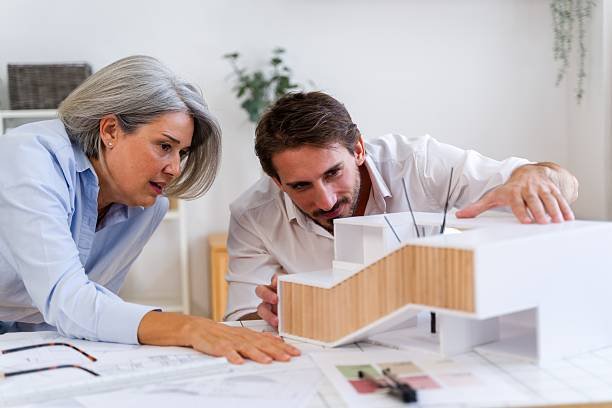
All home construction projects do not begin at the same location and it is the point where you begin that determines the level of cost risk exposure.
Custom Home Build
This is the most flexible, most expensive route. You start with a blank page with an architect and a general contractor. All the materials, layout choices, and options are a manifestation of your personal priorities. Custom builds are priced on a cost-plus basis, the actual cost of the contractor plus a management fee of 15-25%. The overruns in the budget are more prevalent here since all the decisions made are new to the builder.
Semi-Custom or Collaborative Build
It works by taking a builder library of a floor plan and modifying it. This strikes a balance between personalization and predictability. These plans have been constructed previously by builders and hence they will be able to give you a firmer cost estimation. Structural changes are an added expense; cosmetic items like countertops, flooring and fixtures are usually in an established selection budget.
Spec or Pre-Designed Home
The home is designed and even pre-started by the builder using standard specs. You can select finishes from a menu. This is the least managed direction, as all decisions and prices will be pre-determined. You give up design freedom and acquire budget predictability.
The financial implication
Custom builds generally need a 15-20% contingency buffer. Spec builds can run with a 5–10% contingency. This difference alone can mean $30,000–$60,000 on a $400,000 home.
Step 3: Break Down Every Cost Category, Line by Line
The majority of cost estimation guides will provide you with the overall percentage. This guide provides you with the real categories and the driving numbers behind each category.
Land and Site Costs
The purchase of land is independent of building, whereas site preparation is included in your construction budget. Site costs are vastly different depending on what your lot is:
- Clearing and grading: $1500-$8500 based on the density of the trees and the terrain.
- Excavation: $1400-$5800 under normal circumstances and much more when there is rock.
- Soil testing: $700–$2000 critical and don’t skip this
- Well installation (if no public water): $3,750–$15,000
- Septic system (if no public sewer): $3,000–$10,000
When you buy the raw land under the assumption that it is cheap, plan hard on-site work. An entry point is a $30,000 lot, which needs $25,000 for site preparation and the first wall will not be raised yet.
Foundation
The type of foundation is determined by your local soil depth of frost line and floor plan:
- Slab foundation: $4500–$21000 cheapest no crawlspace or basement
- Crawlspace foundation: $8,000–$25000
- Full basement: $18000–$35000
- Full basement: $35000–$90000+
Multiple jogs and bump-outs are complex floor plans, which raise the cost of the foundation in direct proportion. A 14-corner foundation is much more expensive than a 4-corner foundation.
Framing
Where your floor plan complexity will really impact the budget is in framing. This involves the structural framework of all walls, floors and roof structures.
- Framing cost range: $7–$16 per square foot
- Multiple roof lines and intersections: Add 15–30% to standard framing costs
- Engineered lumber like LVL beams and I joists: Add cost but reduce long term structural risk
- Roof pitch: Steep pitches add labor time and safety equipment costs
Roofing
Ordinary asphalt shingles are the most affordable. Metal roofing is also becoming a trend due to its long life which is 50 and above years, energy efficiency and snow-shedding in low temperatures at 2 to 3 times the initial cost.
- Asphalt shingles: $3.50–$6.50 per sq ft of roof surface
- Metal roofing: $7–$20 per sq ft of roof surface
- Tile or slate: $15–$30+ per sq ft
Exterior Finishes
The exterior options have an impact on the cost and the maintenance in the long run. Common options include:
- Vinyl siding: $2-5 per sq ft
- Fiber cement
- Engineered wood: $4- 8 per sq ft.
- Brick or stone veneer: $10-30 per sq ft
- Wood traditional: $6-15 per sq ft
Major Systems: HVAC, Electrical, and Plumbing
These three systems are necessary and add 15-25% of the total cost of construction. Corner cutting in this case generates costly problems in the long run.
HVAC: $7000–$16000 for a 2000 sq ft home using forced air. Geothermal systems cost between $20000 and $30000+ with a long term energy savings of 30-60%.
Electrical: $15000 to $8000 to install a typical residential system. EV charging, wiring solar panels, whole home generators or smart home infrastructure are expensive.
Plumbing: $4,000-$13000 based on the quantity of a bathroom, quality of the fixtures and the type of public water or well.
Interior Finishes
It is the point of individual preference against fiscal reality and at which the majority of cost overruns occur. Interior finishes are all that you can see after walking into the front door.
Flooring:
- Luxury vinyl plank has $3-7 per sq ft installed.
- Engineered wood has $6-12/ sq ft installed.
- Hardwood has $10-20 installed per sq ft.
- Tile has $7-20 per sq ft installed.
Cabinetry:
- Stock cabinets is 60-$200 per linear foot.
- Semi-custom is $100-650 per linear foot.
- Full custom is $500–$1,500+ per linear foot
Countertops:
- Laminate has $15–$40 per sq ft
- Quartz has $50–$120 per sq ft
- Natural granite/marble has $40-200 per sq ft.
Permits and Fees
All towns impose fees on the right to construct. The following costs differ:
Building permit: $500-7500+ can be a percentage of project value.
Zoning variance: $1000-5000 and possible legal expenses.
Utility connection fees: $1000–$10000+
Impact fees: New development impacts on infrastructure cost a minimum of $2000 to a maximum of $15000 in impact fees in some municipalities.
Do not believe that permits are nonexistent and unimportant. Illegal construction poses severe legal and resale issues.
Step 4: Calculate Your Cost Per Square Foot, The Right Way
The following is the formula most guides get wrong. They explain to you to calculate the total cost divided by square footage but they do not explain the square footage to use.
The correct formula:
Total Project Cost ÷ Heated Livable Square Footage = Cost Per Square Foot
Do not count garages or unfinished basements and covered porches in that denominator unless your contract expressly prices them as conditioned living space. When you combine these spaces with your square space, you are fattening your square space and making your cost per square foot appear artificially low and you can ask yourself why the final bill is not the same as your estimate.
Step 5: Account for Labor Costs and Market Timing
The most fluctuating part of your build budget is labor. And it can never be hedged against as material prices can be.
On average, labor constitutes 40-50% of the overall construction expense in residential construction. That means a $500,000 home includes $200,000–$250,000 in labor costs alone.
Several factors drive labor pricing:
Regional unemployment rates. Subcontractors are rare and prices are inflated when the economy is running hot and there is low unemployment in the area. Metros such as Austin, Nashville and Phoenix with high growth rates have experienced a 25-40% increase in labor costs in the last five years.
Seasonal demand. Most parts of the country are in peak construction during spring and summer. Late fall or winter may put you in a better position to get competitive subcontractor prices on your project but you also may have to pay to heat enclosed areas during cold-weather construction.
Trade specific shortages. You can schedule these subs at the early stage of your project and this will save your budget and your schedule.
Tip: Obtain at least three bids on the subcontractor of each major trade. A 10-15% gap between bids is typical; this further indicates that there is a large variation in scope interpretation or overhead structure.
Step 6: Build Your Contingency Budget And Actually Protect It
This is the reality that no contractor would like to tell you at the very outset: the initial price hardly ever matches the final price.
Finally, change orders, unexpected site conditions, escalation of prices of materials and addition of scope all increase the final costs beyond the initial estimates. It is not an indication of a poor builder; it is the fact of a complicated, custom building.
Standard contingency recommendations by build type:
| Build Type | Recommended Contingency |
|---|---|
| Spec/pre-designed home | 5–8% of the total budget |
| Semi-custom build | 8–12% of the total budget |
| Full custom build | 15–20% of the total budget |
| Historic renovation/addition | 20–25% of the total budget |
On a $450000 custom build a 15% contingency means holding $67500 in reserve. That will be conservative until you dig your grave to mysterious ledge rock and find it costs you an extra $18000 beyond budget. Or until the lumber prices go on a spurt in the middle of the project. Or until you fall in love with that natural stone fireplace surround rather than the tile you have budgeted.
Guard your contingency as though it were a spent thing. Do not consider it as additional money. Make it like money you have set aside to face reality.
Step 7: Review Your Contract Like a Financial Document
The only cost-control tool that you have is your construction contract. The majority of the household owners read it as a legal requirement. The intelligent house owners perceive it as a financial audit.
The following items should be mentioned in your contract:
-
- Allowance amounts for each selection categoryl like (flooring, cabinetry, fixtures, appliances and they must be realistic, not optimistically low
- How square footage is defined: does it include the garage? Basement? Porch?
- Whether land is included in the contract price
-
- The pricing of change orders includes labor rate per hour, markup percentage and approval process.
- Sitework inclusions are landscaping, driveway, sidewalk and retaining walls
- Transparency of costs incurred by subcontractors particularly cost plus contracts.
- Inflation protection provisions for projects with long timelines
- Liability insurance requirements: both builder and subcontractor coverage
- Utility connection and meter installation costs
Step 8: Compare Your Estimate Against Comparable New Builds
Do not trust your builder’s cost-per-square-foot estimate. Confirm it to the market.
How to benchmark your estimate:
- Find 3–5 recently completed new construction homes in your area that closely match your build in size, style, quality level and features
- Get their sale prices from public records or your real estate agent
- Subtract an estimated land value use recent comparable land sales
- Divide the adjusted price by their finished square footage
- Compare that cost-per-square-foot to your builder’s estimate
When your builder has a number that is 20% or less than the market comps, inquire as to the cause. It might have a valid justification; the builder owns land at a lower cost, has efficient systems and is a high-volume builder. Or the estimate can contain impractical allowances or omissions of items of scope.
The Hidden Costs Competitors Don’t Tell You About
The majority of the cost estimation manuals end with materials and labor. Such hidden expenses shock homeowners regularly:
Construction loan interest. When you finance the build using a construction loan, as the majority of people do, you pay interest on draws during the build period. On a 12-month build with a $400,000 loan at 7%, that’s roughly $14,000–$18,000 in interest before you even move in.
Builder’s overhead and profit margin. Overhead and profit charges are usually 15-25% above direct costs, according to general contractors. This is unlawful and requires knowing it will assist you in judging bids appropriately.
Temporary utilities during construction. During construction, your builder requires power and maybe water at the construction site. Budget $800–$2,500.
Dumpster and debris removal. It is built into some builders, not into many. Budget $1,500–$4,000 for a full build.
Final grading and topsoil. Once you have been built, you have to be graded, filled with topsoil and seeded off or sodded in. Budget $3000-$12000 based on the size of the lot and the level of finish.
Window treatments. Blinds and curtains for a new home cost $2,000–$10,000+. Only rarely part of construction contracts.
Appliances. Make certain that your agreement contains appliances or only appliance cutouts and connections.
Professional Estimation: When to Use Expert Services

Self-estimation is too risky at some point in the project scope and budget. It is here that professional cost estimating is not a luxury- but a necessity in terms of finance.
Professional Single Family Residential Estimating Services will give you a detailed, linFe-item takeoff of all the material and labor items that are in your proposed build. An independent estimator takes a look at your architectural plans and creates a scope-adjusted cost model that you can use to compare contractor bids.
This is what professional estimation can provide that self-calculation cannot:
- Quantity takeoffs: Accurate calculation of all quantities of materials, lumber board feet, concrete cubic yards, insulation R-values, roofing squares, calculated directly on your own plans.
- Current regional labor rates: Current pricing databases that portray the true prevailing wage rates within your particular market.
- Subcontractor bid validation: A standard to check on whether the bids received are competitive, reasonable or crazy.
- Value engineering opportunities: Recognition of design decisions that have disproportionate cost, but little functional or aesthetic value.
- Bid package preparation: Structured scopes of work providing apples-to-apples comparisons across bids of multiple contractors.
When projects exceed $300,000, the money spent on professional estimating services $500-$3,000 based on size) will pay back in tens of thousands in terms of tight bids and reduced change orders.
Style vs. Cost: The Architectural Efficiency Equation
Two houses of the same square footage may have a difference of 30-40% in the cost of construction due to the mere change of architectural style. Knowing this relationship can be used to make you design smarter.
High-efficiency architectural features:
- Simple rectangular or square footprints
- Two-story design over a single-story ranch
- Standard 9-foot ceilings throughout
- Hip or gable roofs with standard pitches (4:12 to 8:12)
- Grouped plumbing (bathrooms stacked vertically or back-to-back)
Cost-adding architectural features:
Complex rooflines with multiple intersections and valleys
Vaulted or cathedral ceilings
Curved walls or circular rooms
Extensive bump-outs and bay windows
Deeply recessed entries or elaborate exterior trim packages
Basements with walkout configurations (more excavation, more drainage)
This does not imply that you have to compromise design for cost. It implies that you ought to make design decisions consciously and you should be aware of their cost implications. Adding a cathedral ceiling to the great room may be worth $8,000 to you. Being aware of the fact that it is going to cost you $8,000 makes you able to knowingly make that tradeoff, as opposed to finding it in a change order.
10-Point Checklist: Are You Ready to Estimate?
Before you can sit down with a builder or estimator, be sure you have the answers to these questions:
- Do you have a finalized floor plan with dimensions?
- Do you know your lot’s soil conditions (have you done a soil test)?
- Have you confirmed whether public water/sewer is available?
- Do you know your local permit fee structure?
- Have you decided on your build type (custom, semi-custom, spec)?
- Have you set realistic allowances for each finish category?
- Do you have 3+ subcontractor bids for major trades?
- Have you built in a contingency (minimum 10–15% for custom builds)?
- Have you accounted for construction loan interest?
- Have you benchmarked your cost-per-square-foot against local comparable new builds?
When you can say yes to all ten, then you are in a place to make estimates with a real degree of assurance.
Final Thoughts: Estimation Is a Process, Not a Number
This is what makes the difference between homebuilders who complete on time and those who do not: they do not consider cost estimation as a single calculation.The estimate must be in a spreadsheet that gets updated each time you make a new decision. All change orders are logged. All allowances will be compared to actual selection costs. All subcontractor bids are recorded and compared.
Construction of a house rewards planning and punishes guesses. The more accurately you can establish your scope, design and choices before you begin the construction, the closer your final cost will be to your original estimate.
Start detailed. Stay disciplined. Whenever uncertainty arises, the team at Smart Constructs recommends involving professional estimating services early to identify potential risks, control costs and avoid commitments that may be difficult or expensive to reverse later.
FAQs
Q: Which is the most costly aspect of a house construction?
Framing and structural work are usually the largest single item of cost, followed by interior finishes and major systems (HVAC, electrical, plumbing). The three categories together account for 50-65% of the total construction cost.
Q: Which is cheaper to purchase or construct a house?
Most markets have a lower cost of purchasing an existing home in the short run. New will be modern and offer complete customization, less initial maintenance expenses in the first few years, and no other buyers will compete. The correct answer will be based on your local market situation and priorities.
Q: What is the accuracy of cost-per-square-foot estimates?
Only use them as a starting point. The possible cost per square foot is astronomical depending on the complexity of the design, the level of finish, location and the current market of labor and materials. Always confirm with a detailed line-item estimate from a qualified contractor or professional estimating service.
Q: How soon can you build a new home?
Most single-family homes require 9-18 months between the permit approval and move-in. Very custom designs may take 18-24 months. Include the interest of a construction loan in your calculations.
Q: What is the amount of contingency I should add to the estimate of a builder?
In the case of custom builds, allocate 15-20% over the base estimate. For semi-custom builds, 10–12%. In the case of spec homes that have limited customizations, 5-8%. Do not drop below 5% something invariably occurs in a building.
Looking for a precise cost estimate before you break ground? Professional Single Family Residential Estimating Services give you the line-item accuracy you need to negotiate confidently, avoid change order surprises and protect your construction budget from day one.
